


The Architecture of the Cathedral Complex
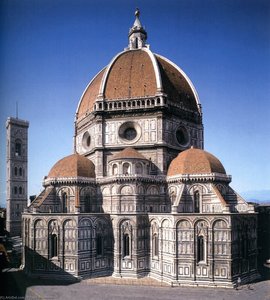
The silhouette of the Duomo is defined by the massive presence of its dome, the largest masonry dome ever constructed. This structure, engineered by Filippo Brunelleschi, remains a central feature of the Florentine skyline. The exterior walls are clad in polychrome marble panels, arranged in geometric patterns of green, pink, and white. These stones provide a rhythmic texture to the massive surfaces of the cathedral.
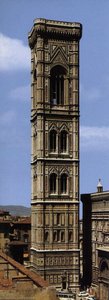
The western façade presents a 19th-century neo-Gothic design by Emilio De Fabris. This later addition provides a visual conclusion to the structure, contrasting with the older medieval elements. The complex extends beyond the main cathedral to include Giotto’s Campanile and the Florence Baptistery. These structures form a cohesive architectural group within the Piazza del Duomo.
The interplay of light and material is most evident in the way the marble surfaces catch the sun. The precision of the masonry and the scale of the dome reflect a specific era of engineering and mathematical intent. To observe the exterior is to witness the convergence of different historical styles, from the Gothic foundations to the Renaissance dome and the subsequent neo-Gothic façade.
The Museo dell’Opera del Duomo Collection
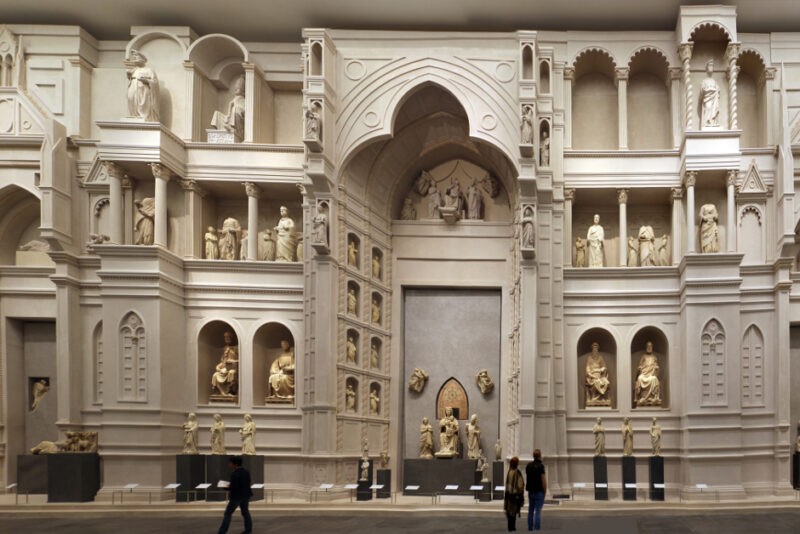
The museum functions as a repository for the original works of art created for the Florence Cathedral, the Baptistery, and Giotto's Campanile. Within its walls, approximately 3,000 artworks reside, including original sculptures, mosaics, stained glass windows, and architectural models. These pieces were often removed from the religious buildings to ensure their preservation, with replicas taking their place on the exterior facades. The collection brings together the hands of many significant figures, such as Arnolfo di Cambio, Donatello, and Michelangelo.
A central presence in the collection is the set of three original bronze doors for the Baptistery of Florence Cathedral. These doors, which once adorned the entrance to the Baptistery, are preserved here in their original state. The museum also holds significant works of sculpture and painting that reflect the evolution of Florentine religious art through the Middle Ages and the Renaissance.
- The Gates of Paradise, 1425-1452 - Lorenzo Ghiberti
- Penitent Magdalene - Donatello
- St. Mark - Donatello
Masterpieces of the Duomo Collection
The presence of Lorenzo Ghiberti’s Gates of Paradise commands the space, a pair of bronze doors that once adorned the Baptistery. Created between 1425 and 1452, these panels offer a detailed study of Old Testament scenes. The bronze surfaces hold the weight of centuries, preserved here after being replaced by newer doors at the site of the Baptistery.
Donatello’s influence is felt through the physical presence of his sculptures. The collection includes his St. Mark and St. Sebastian, works that demonstrate a profound understanding of the human form. Alongside these, the Penitent Magdalene appears in sculpted wood, a work that carries a different, more tactile intensity than the bronze or marble pieces. These figures exist as original survivors from the religious buildings of Florence.
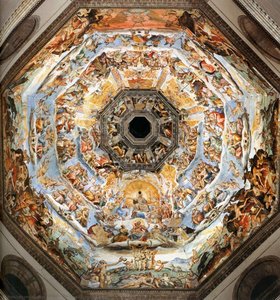
The collection also contains works from later periods, such as the Last Judgment (detail) by Giorgio Vasari, dating from about 1572. This piece provides a connection to the late Renaissance, existing within the same halls as the earlier medieval and early Renaissance treasures. The museum preserves these objects in their original context, having removed them from the cathedral and the Baptistery to ensure their survival.
- Gates of Paradise, 1425-1452
- Last Judgment (detail), about 1572