

A Thousand Years of Venetian Power: Unveiling the Palazzo Ducale
The Palazzo Ducale, or Doge’s Palace, isn't merely a building in Venice; it’s a living testament to the city’s extraordinary rise and enduring spirit. Rising majestically from St. Mark’s Square, this architectural marvel doesn’t simply stand – it breathes with the echoes of a thousand years of Venetian history, ambition, and intrigue. More than just a residence for the Doge, the elected ruler of the Republic, it served as the very heart of governance, diplomacy, and ultimately, the seat of an empire that once dominated the Mediterranean. Its story isn’t one of immediate grandeur; rather, it unfolded organically over centuries, shaped by fires, political upheavals, and a constant striving for power and prestige – a process culminating in the breathtaking palace we see today.
The origins of the Palazzo Ducale lie deep within Venice's early days, with a modest fortified castle constructed as far back as 810. This rudimentary structure gradually evolved through successive reconstructions, each iteration reflecting the Republic’s burgeoning wealth and influence. The initial building was tragically destroyed by fire in the 10th century, but its successor, begun under Doge Ziani in the mid-13th century, laid the foundation for the palace's iconic Gothic style. This wasn’t a sudden stylistic shift; rather, it represented a deliberate embrace of innovation and ornamentation – a conscious departure from the more austere architectural traditions of mainland Italy. The Venetian Gothic, uniquely adapted to the lagoon environment, is characterized by its delicate loggias, pointed arches, and elaborate facades, creating a visual symphony in pink and white Istrian stone that contrasts dramatically with the shimmering waters of the lagoon.
A Masterclass in Venetian Gothic Architecture
The Palazzo Ducale stands as an unparalleled example of Venetian Gothic architecture. Unlike its counterparts on the mainland, which often embraced a more imposing and fortress-like design, the Doge’s Palace embodies lightness, elegance, and a profound connection to the sea. The use of Istrian stone, prized for its luminous quality and durability, is particularly striking, lending an ethereal beauty to the structure. Look closely at the intricate details adorning the capitals – each carving tells a silent story, a subtle reminder of the immense skill and artistry that went into creating this masterpiece. The palace seems to defy gravity, rising from the water with an almost impossible grace, a testament to Venice’s unparalleled engineering prowess and its harmonious relationship with the lagoon.
The architectural innovations within the Palazzo are truly remarkable. Consider the ingenious system of windows designed to flood the interiors with natural light – a crucial element in showcasing the vast collection of art that would eventually fill its halls. The loggias, particularly the Grand Canal-facing facade, offer breathtaking views and serve as grand spaces for public ceremonies and diplomatic receptions. Even the layout itself reflects the Republic’s values: a complex network of interconnected chambers and corridors designed to facilitate both governance and display – a deliberate blend of functionality and spectacle.
A Treasury of Venetian Art
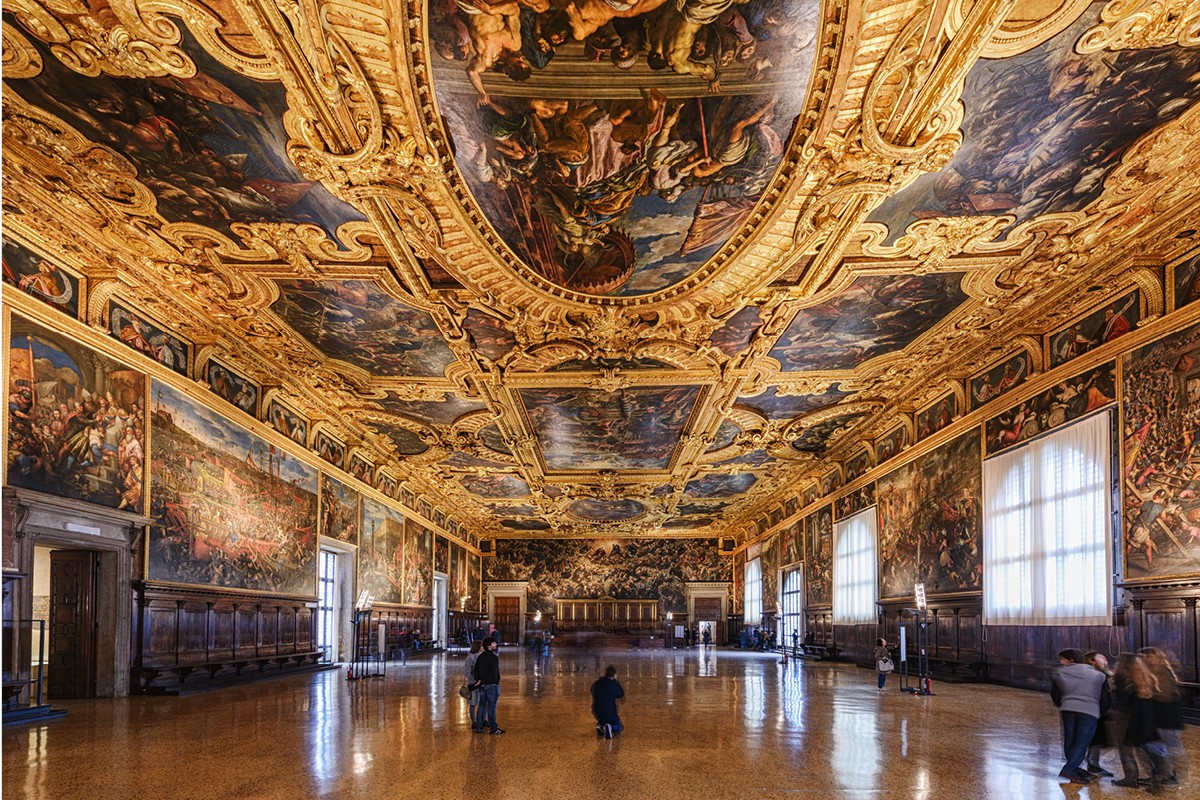
Within the palace walls lies an extraordinary collection of art spanning centuries, a vibrant reflection of Venice's role as a major center of artistic patronage. The State Rooms themselves are works of art in their own right, lavishly decorated chambers that once hosted dignitaries, ambassadors, and pivotal political events. Here, one can almost hear the echoes of diplomatic negotiations and grand celebrations – a tangible connection to the Republic’s illustrious past. But it is within the palace's galleries that the true artistic brilliance of Venice comes to life.
The collection boasts masterpieces by some of history’s greatest artists, including Titian, Veronese, and Tintoretto. Perhaps the most iconic work is Paolo Veronese’s monumental “Paradise,” one of the largest oil paintings in the world – a breathtaking spectacle of color, composition, and sheer artistic ambition. This colossal canvas depicts the biblical story of creation, overflowing with figures, allegories, and intricate details that demand careful study. Beyond this celebrated work, the palace houses an impressive array of sculptures, frescoes, and decorative arts, offering a comprehensive overview of Venetian artistic production from the medieval period to the 18th century – a testament to Venice’s enduring legacy as a cultural powerhouse.
Secrets Beneath the Surface: The Bridge of Sighs and Hidden Passages
The Palazzo Ducale holds more than just grand halls and masterpieces; it also harbors secrets within its walls. The infamous Bridge of Sighs, so named for the lamentations of prisoners being led to their cells, offers a poignant glimpse into Venice’s judicial history – a stark reminder of the Republic's pragmatic approach to justice. But beyond this well-known landmark lie hidden passageways, secret chambers, and interrogation rooms revealed only on the exclusive “Secret Itineraries Tour.” This guided tour unveils the darker side of Venetian power, offering a fascinating insight into the intricate network of surveillance and control that underpinned the Republic’s authority.
Exploring these clandestine spaces is like stepping into a historical thriller, uncovering the hidden mechanisms that shaped Venice’s destiny. The Institutional Chambers and Armoury further reveal the practical realities of governance, showcasing the weapons and tools used to enforce the laws and defend the Republic’s interests. These hidden corners offer a compelling counterpoint to the palace's grandeur, reminding us that even in the most beautiful of settings, power often operates in the shadows. The Palazzo Ducale is not simply a museum; it’s an invitation to delve deeper into the complex and captivating story of Venice itself.
Useful Links:
- Palazzo Ducale - Official Website
- Wikipedia - Doge’s Palace
- TripAdvisor - Doge’s Palace Reviews
- Hieronymus Bosch’s “Palazzo Ducale, Venice – Hell”