

History and Origins of the Museum
The origins of the Fine Arts Museum of Asturias can be traced back to 1969. During this period, the Diputación Provincial and the Ayuntamiento de Oviedo established the Fundación Pública “Centro Provincial de Bellas Artes,” which later became known as the “Centro Regional de Bellas Artes.” This foundational effort sought to organize the artistic holdings of the region into a formal institution. The museum was eventually inaugurated on May 19, 1980, following the allocation of funds from the former Diputación Provincial.
Today, the Fine Arts Museum of Asturias operates as an autonomous institution. It is governed through the cooperation of the Comunidad del Principado de Asturias and the Ayuntamiento de Oviedo. This administrative structure ensures the continued preservation of the works held within its walls. The institution remains a central presence in Oviedo, maintaining a presence that connects the city's historical foundations to its modern cultural administration.
The Architecture and Museum Buildings
The museum occupies a complex of structures that integrate historical presence with modern intervention. The site is distributed across the Palacio de Velarde and the Casa de Oviedo-Portal, alongside a contemporary extension. This arrangement allows the institution to exist within a layered urban fabric, where the existing facades of the historic buildings act as a backdrop for the newer architectural elements. The project, designed by architect Francisco Mangado, seeks to harmonize these disparate periods through a cohesive spatial logic.
The modern expansion introduces a new building into the urban complex, characterized by a facade of frameless openings. This design choice allows for a luminous construction, where glazed surfaces and reflections interact with the surrounding city. Light is a fundamental element of the interior, directed through skylights and glazed catwalks that connect the various buildings. These walkways transform the inner block courtyard into a central space for movement and encounter, linking the historic and the contemporary through voids and light.
The total area of the museum spans 11,142 m², encompassing both the historic structures and the modern additions. The architecture facilitates a dialogue between the old and the new, using the courtyard as a structural and conceptual anchor. The spatial organization relies on these connections to navigate the transition between the different architectural eras present in Oviedo.
The Diverse Art Collections
The collection spans a timeline from the 14th to the 21st Century, offering a presence that moves through the centuries. With over 15,000 works, the holdings encompass painting, sculpture, drawing, engraving, photography, and applied arts. A particular emphasis is placed on industrial arts, where the material weight of the objects remains palpable. The breadth of the selection includes significant representations from the Italian and Flemish schools, providing a window into the stylistic shifts of European history.
Within the various halls, the works exist as physical entities that reflect the evolution of artistic thought. The presence of the Italian and Flemish traditions allows for a direct encounter with the techniques of those specific regional schools. The diversity of the mediums ensures that the collection is not limited to a single discipline, but rather encompasses the breadth of human craftsmanship from the medieval period to the contemporary era.
- San Pablo 2
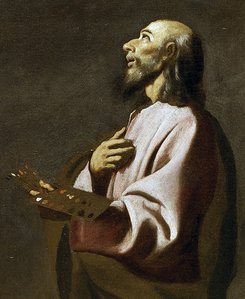
- Saint Matthew (Oviedo), about 1590
- Christ on the Cross, 1639
- Veil of Veronica, 1637
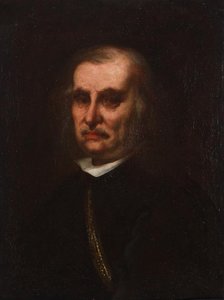
- Charles II as a child, 1671
- Magdalena penitente
Notable Masterpieces and Artists
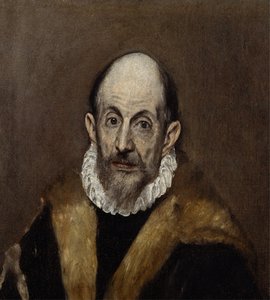
The presence of El Greco is felt most profoundly through one of only three complete Apostolados in existence. These works exist alongside a significant selection of Spanish and European art, including pieces by Goya, Sorolla, Zurbarán, Ribera, and Murillo. The collection also holds the work of Juan Carreño de Miranda, Miguel Jacinto, and Luis Meléndez. These artists represent a continuity of tradition that spans several centuries of European painting.
Modernity enters the space through the works of Picasso, Dalí, Miró, Tàpies, and Barceló. This breadth allows for a direct encounter with the evolution of form and expression from the Middle Ages through the 21st Century. The presence of these diverse voices creates a dialogue between the historical and the contemporary.
Specific historical artifacts provide a connection to local religious and artistic history. These include 18 tablets from the Santa Marina altarpiece, created by the Maestro de Palanquines. The museum also holds several significant works from its own catalog:
- Christ on the Cross, about 1639 - Francisco de Zurbarán
- San Pablo 2 - El Greco
- Saint Matthew (Oviedo), about 1590 - El Greco
- Veil of Veronica, about 1637 - Francisco de Zurbarán
- Charles II as a child, about 1671 - Juan Carreño de Miranda
- Magdalena penitente - Juan Carreño de Miranda
Major Acquisitions and Deposits
The foundation of the collection traces back to the funds of the former Diputación Provincial. Since its inception, the holdings have expanded through a steady accumulation of acquisitions, donations, legacies, deposits, and dations. This continuous growth has allowed the institution to build a significant presence within the local landscape of Oviedo, Spain.
A significant moment in the museum's development occurred in 1995, when the Pedro Masaveu collection was received as a deposit. This addition brought exceptional pieces into the institution's care, including eighteen tablets from the Santa Marina altarpiece created by the Maestro de Palanquines. The presence of such works provides a specific weight to the museum's holdings.
Physical expansion has also been driven by strategic acquisitions. In 1997, the museum acquired the Casa de Solís Carvajal to facilitate its growth. This acquisition allowed for the continued integration of diverse works into the permanent collection, ensuring that the space could accommodate the increasing number of pieces held within its walls.


