
The History and Origins of Fundació Joan Miró
The origins of the Fundació Joan Miró are rooted in the personal vision of the artist himself. Established in 1968, the foundation was conceived to preserve and promote a specific creative legacy. When the doors opened to the public on 10 June 1975, the institution held an initial collection consisting largely of the artist's private works. This foundation provided a permanent home for pieces that reflected a lifelong commitment to artistic exploration.
Located on Montjuïc hill in Barcelona, Spain, the institution has evolved from its initial purpose into a dynamic cultural hub. While its core remains tied to the artist's own output, its reach extends far beyond the permanent galleries. The space has grown to encompass a wide range of contemporary artistic activity, maintaining a presence in the modern era through continuous engagement with new creative movements.
The Architecture of the Sert Building
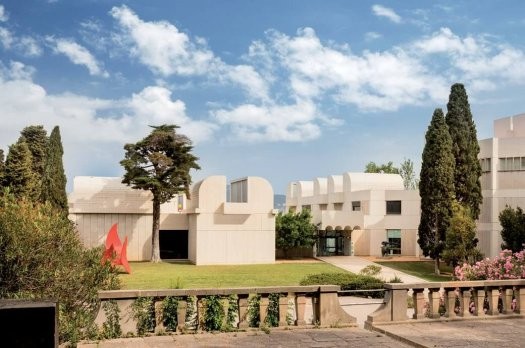
The structure is an outstanding example of rationalist architecture in Barcelona. Designed by Josep Lluís Sert, the building emphasizes a dialogue between the interior spaces and the surrounding landscape. Its layout is organized around a central patio containing an olive tree, which acts as a focal point for the movement through the site. This arrangement creates a series of interconnected spaces that facilitate a natural flow of light and air.
Mediterranean influences are present throughout the design, manifesting in the rooftop terrace, the skylights, and the specific use of ceramic floors. The building occupies an area of 24,000 ft², utilizing white concrete and functional forms to define its volume. The integration of large windows and various courtyards ensures that natural light remains a constant presence within the halls. While the original design established the core aesthetic, the footprint was expanded in 1988 and 2000 by architect Jaume Freixa to accommodate growing needs.
The Extraordinary Collection of Artworks
The collection encompasses over 10,000 artworks, including approximately 14,000 works by Joan Miró. These pieces trace a trajectory through Surrealism, Surrealist Expressionism, and Abstract Expressionism. The breadth of his experimentation extends beyond the canvas into the tactile realms of ceramics, textiles, and printmaking. Each medium offers a different way to observe the artist's evolving visual language.
Beyond the primary collection, the foundation houses works by international figures such as René Magritte, Mark Rothko, and Antoni Tàpies. This presence creates a dialogue between different movements and eras. The works exist in a space where the physical presence of the art is central to the experience of modernism.
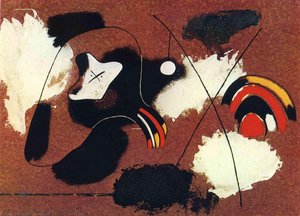
- Painting, about 1933 - Joan Miró
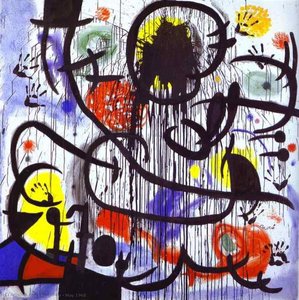
- May 1968, 1973 - Joan Miró
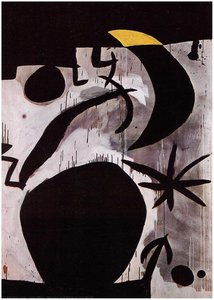
- Woman and Birds in the Night, 1974 - Joan Miró
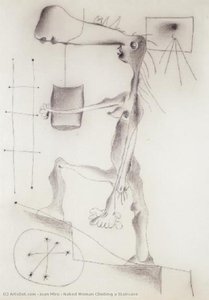
- Naked Woman Climbing a Staircase, 1937 - Joan Miró
Masterpieces and Notable Works
The presence of Dona i Ocell offers a profound encounter with a symbol of Catalan liberation. Nearby, El Nacimiento del Día presents a dreamlike state where scissors, stars, and red figures collide. These works exist as physical realities within the space, inviting a quiet observation of their form and color.
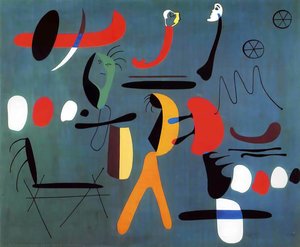
The evolution of the artist's language is visible in the transition from realism toward a surrealist vocabulary. Montroig, la iglesia y el pueblo captures this shift, blending the landscape with emerging surrealist elements. Other significant pieces include The Bottle of Wine from the Surrealist period and the Constellations series, which was painted during the Second World War.
- Painting, about 1933
- May 1968, 1973
- Woman and Birds in the Night, 1974
- Naked Woman Climbing a Staircase, 1937
Exhibitions, Research and Cultural Programs
The foundation functions as a living center for artistic discovery, extending its reach through the Espai 13 program to engage with the future of art. This commitment to contemporary excellence is further reflected in the biennial Joan Miró Prize, which honors innovation in the creative field. Beyond the permanent collection, the space hosts temporary exhibitions featuring emerging artists from the 20th and 21st centuries, ensuring a continuous dialogue between historical legacies and new movements.
Scholarly inquiry finds a home within the library, which contains over 10,000 items drawn from Miró's personal collection. This repository allows for a deeper understanding of the artist's meticulous process and intellectual development. The institution also fosters an appreciation for art across all ages through a variety of educational programs and workshops, creating a space where different generations can encounter the creative process firsthand.