
The History and Origins of Hamburger Kunsthalle
The origins of the Hamburger Kunsthalle trace back to 1849, emerging from the dedicated efforts of the Hamburg art association. In 1846, members of this association committed themselves to the establishment of a dedicated space for art, a movement that eventually led to the formal founding of the institution in 1850. This foundation was built upon the existing collections of the Hamburg Kunstverein, which provided the initial substance for the growing repository of works.
The name itself reflects its early identity as an 'art hall.' This designation points to its historical function as a space for public encounter with visual culture. As the art museum of the Free and Hanseatic City of Hamburg, Germany, the institution has grown from these mid-19th-century beginnings into a significant presence within the city's Altstadt district. The collection has expanded steadily since its inception, evolving alongside the shifting needs of the community it serves.
The early development of the institution was supported by the civic engagement of Hamburg's citizens. Many of the early acquisitions and the very existence of the halls were made possible through private donations. This history of communal support remains a fundamental part of its identity, linking the contemporary presence of the institution to the specific cultural ambitions of the 1840s and 1850s.
The Architecture of the Three Buildings
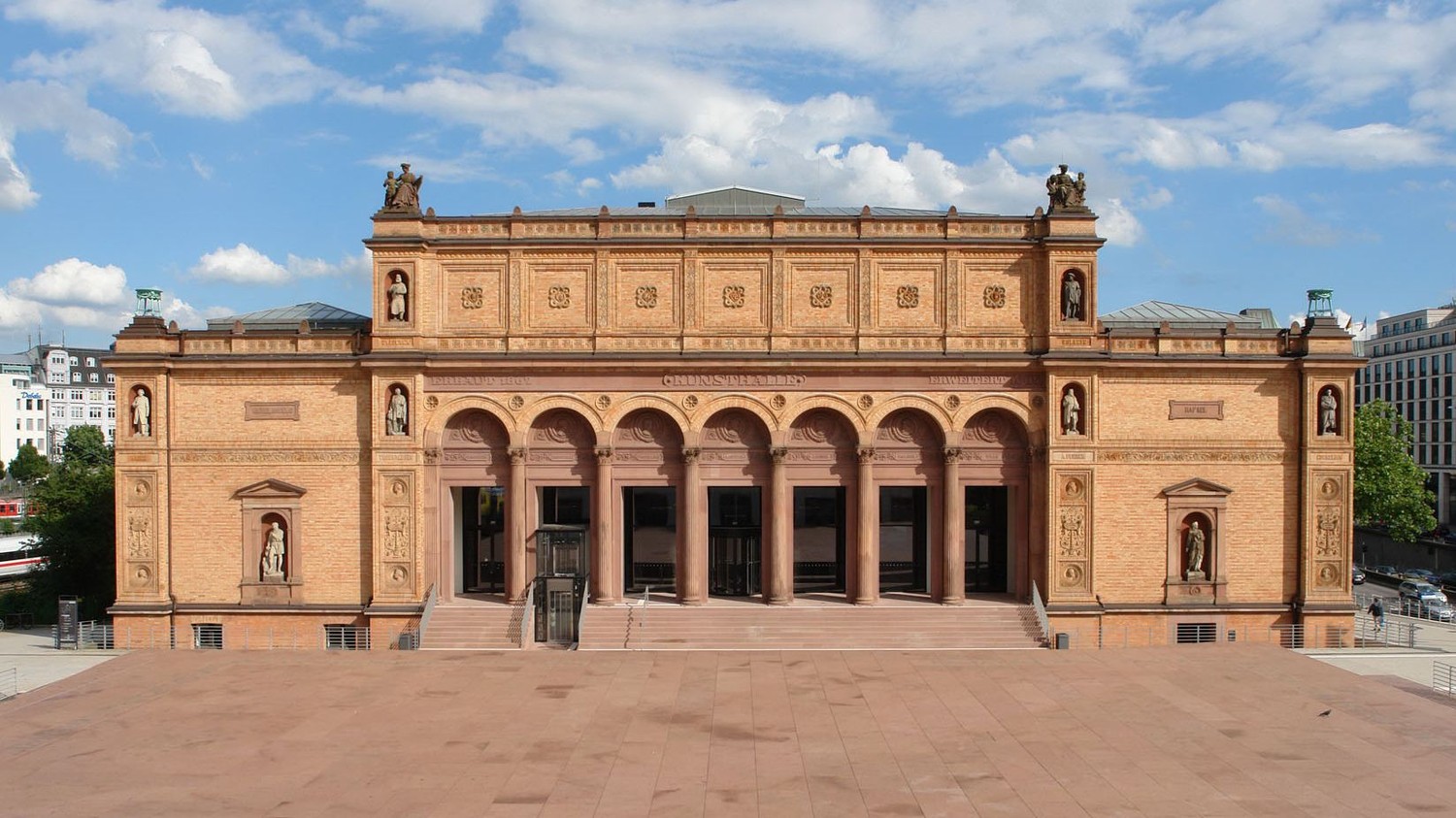
The Hamburger Kunsthalle occupies a significant position in the Altstadt district of Hamburg, Germany, situated between the Hauptbahnhof and the two Alster lakes. The institution is composed of three distinct, connected structures that reflect different eras of architectural thought. The original red-brick building remains a presence of 19th-century civic pride, providing a heavy, grounded foundation for the collections within. This structure anchors the site in the history of the city.
In 1921, the architectural profile of the site expanded with the addition of the Kuppelsaal. Designed by Fritz Schumacher, this magnificent domed hall introduces a sense of modernist ambition through its soaring height and grand scale. The interplay between the weight of the older brickwork and the volume of the dome creates a physical timeline of the city's development. It offers a space where light and shadow interact with the structural geometry.
The most recent addition is the Galerie der Gegenwart, completed in 1997. This strikingly modern building utilizes a geometric design and innovative spatial arrangements to house contemporary works. Its presence provides a lightness that contrasts with the earlier masonry. The progression through these three buildings allows for a direct encounter with the evolution of architectural form, from the solid brickwork of the 1800s to the precise, modern lines of the late 20th century.
A Journey Through Seven Centuries of Art
The collection traces a lineage of creativity through seven centuries of European art. It begins with the quiet devotion of North German painting from the 14th century. From these medieval origins, the focus shifts to the 16th and 17th centuries, where the presence of Dutch, Flemish, and Italian artists defines the halls. These works offer a study in the evolution of light and form across different eras and regional traditions.
The 19th century is represented through a significant selection of French and German drawings and paintings. This period marks a transition toward new ways of seeing, moving from the structured traditions of the past into the atmospheric explorations of the modern age. The institution continues this progression into the present, housing international modern and contemporary art that challenges established norms and invites dialogue with the current moment.
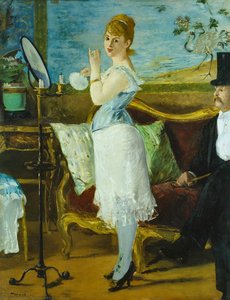
- Nana, 1877 - Édouard Manet
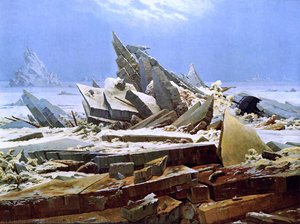
- The Sea of Ice, 1824 - Caspar David Friedrich
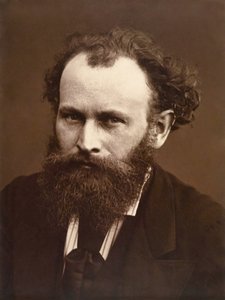
- Portrait of M. Henri Rochefort, 1881 - Édouard Manet
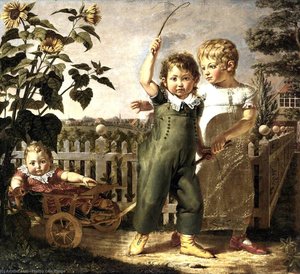
- The Hülsenbeck Children, 1805 - Philipp Otto Runge
Masterpieces Within the Permanent Collection
The Old Masters Gallery offers a space where the weight of history is felt through the presence of luminously rendered canvases. Here, the works of Rembrandt van Rijn, Peter Paul Rubens, and Jacob Isaacksz van Ruisdael invite a quiet contemplation of light and shadow. These paintings do not merely depict subjects; they capture a profound humanity and the fleeting nuances of emotion. Nearby, the intricate mastery of early German prints by Albrecht Dürer and Lucas Cranach the Younger reveals a different kind of precision, where fine lines define the evolution of visual storytelling.
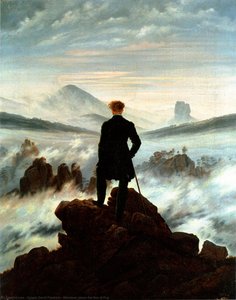
The collection moves from these historical anchors into the shifting light of the 19th century. The works of French Impressionists, including Claude Monet and Édouard Manet, introduce a focus on atmosphere and the ephemeral qualities of the natural world. This era also holds the spiritual yearning of German Romanticism, particularly in the haunting landscapes of Caspar David Friedrich. These pieces provide a sense of solitary beauty that lingers in the mind long after leaving the room.
In the Galerie der Gegenwart, the focus shifts toward the complexities of the modern and contemporary eras. The space hosts the influential visions of Pablo Picasso, Max Ernst, and Paul Klee. These artists represent pivotal movements that continue to challenge established norms and foster dialogue through their unique spatial arrangements and geometric designs. The transition from the heavy textures of the Old Masters to these contemporary expressions creates a continuous dialogue between the past and the present.
Notable Artworks in the Museum
The presence of Caspar David Friedrich within these walls offers a confrontation with the sublime. The Sea of Ice, dating from 1824, presents a fractured, chilling landscape that demands quiet contemplation. Nearby, Wanderer above the Sea of Fog (1818) and Drifting Clouds (1820) capture a specific, solitary relationship between the human figure and the vastness of the natural world. These works exist as heavy, atmospheric anchors in the collection, grounding the viewer in the emotional weight of German Romanticism.
In contrast, the works of Édouard Manet introduce a different kind of intensity. Nana, from about 1877, depicts a woman in a dressing room, her gaze directed outward with a startling, unblinking clarity. This sense of immediate, modern life is echoed in the 1881 Portrait of M. Henri Rochefort, where the subject's downward gaze suggests a private, internal thought. These paintings do not rely on grand historical narratives but focus on the subtle nuances of light and the psychological presence of the individual.
The collection also holds delicate studies of youth and movement. Philipp Otto Runge’s The Hülsenbeck Children (1805) provides a quiet moment of domesticity, while Pierre-Auguste Renoir’s Riding in the Bois de Boulogne (1873) captures the fleeting light of a Parisian afternoon. Each piece offers a distinct way of seeing, from the structured compositions of the early nineteenth century to the more fluid, impressionistic brushwork of later decades.
- The Sea of Ice, 1824 - Caspar David Friedrich
- Wanderer above the Sea of Fog, 1818 - Caspar David Friedrich
- Nana, about 1877 - Édouard Manet
- Portrait of M. Henri Rochefort, 1881 - Édouard Manet
- The Hülsenbeck Children, 1805 - Philipp Otto Runge
- Riding in the Bois de Boulogne, 1873 - Pierre-Auguste Renoir