

Origins and History of the Museum
The José Malhoa Museum is a regional museum located in Caldas da Rainha, in the Leiria district of Portugal. Situated within the D. Carlos I park, the institution occupies a significant place in the Estremadura province. Its establishment was formally authorized by a ministerial decree on 17 June 1933. This administrative step allowed for the creation of a dedicated space to house the works of the naturalist painter José Malhoa.
The institution holds a distinction in Portuguese architectural history as the first purpose-built museum in the country. Its development was tied to the local landscape and the specific needs of the region. In 1960, the institution was renamed the Museu de José Malhoa, a designation it maintains today. The museum serves as a repository for the artistic output of the artist and other significant works from the nineteenth and twentieth centuries.
The Building and its Architecture
The museum is situated in the green heart of Caldas da Rainha, located within the Parque D. Carlos I. It sits adjacent to the town’s historic thermal hospital. This site provides a quiet setting for the institution, which was the first purpose-built museum in Portugal. The definitive architectural project was completed in 1937 by Paulino Montês and Eugénio Correia.
Construction of the building was finalized in 1940. As the collection grew, the structure underwent expansions to accommodate its contents. These enlargement works took place in 1950 and 1957. The museum's physical footprint reflects the evolving needs of the institution over the mid-twentieth century.
Beyond the main interior spaces, the museum grounds include a collection of sculpture in the open air. These works are positioned within the park's landscape, integrating the architecture with the surrounding greenery of the D. Carlos I park.
Major Collections and Artworks
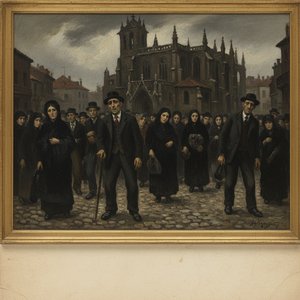
The museum houses the largest assembled collection of paintings by José Malhoa. His works represent a central pillar of Portuguese Naturalism, focusing on the authentic depiction of social life and the landscape. These canvases provide a detailed observation of the inhabitants and daily existence within the Portuguese context. Notable examples from the collection include:
- The Drunks, 1907 - José Malhoa
- Portrait of António Novais, 1901 - José Malhoa
- The Promises, 1920 - José Malhoa
- Portrait of Laura Sauvinet, 1888 - José Malhoa
- Júlia Malhoa, 1883 - José Malhoa
Beyond the works of Malhoa, the institution maintains a significant selection of Portuguese painting and sculpture from the 19th and 20th centuries. This collection is supplemented by ceramics and decorative arts, reflecting the local ceramic traditions of the region. The museum's holdings extend into the outdoor spaces, where the gardens contain a collection of sculpture in the open air.
Visiting: What to See First
The museum is situated within the D. Carlos I park in Caldas da Rainha, Leiria, Portugal. Visitors arriving during the week should note that the institution is open from Tuesday to Sunday. It remains closed on Mondays. The location within the park provides a specific context for the surrounding sculptures and the historic spa buildings of the town.
A visit begins with the primary collection of works by José Malhoa. These paintings reflect the naturalist movement and the artist's connection to the Portuguese landscape. The museum also houses Portuguese painting and sculpture from the nineteenth and twentieth centuries. These pieces are displayed alongside ceramics and decorative arts that reflect the local ceramic tradition of Caldas da Rainha.
The grounds contain a collection of sculpture in the open air. These works are positioned within the park setting, allowing for a transition between the indoor galleries and the external landscape. The museum's layout is designed to accommodate both the fine arts and the regional ceramic history of the area.