

Origins and History of the Church of Madeleine
The history of the Church of Madeleine is a chronicle of shifting political tides in Paris, France. Originally conceived by Louis XV, the project was intended to serve as the focal point for the newly planned Rue Royale. However, the momentum of this royal vision was abruptly halted by the onset of the French Revolution, leaving the foundations to wait through decades of upheaval.
The purpose of the site shifted significantly under the influence of Napoleon Bonaparte. In 1806, he decreed that the structure would be transformed into a temple dedicated to the glory of his Grande Armée. This imperial ambition sought to create a monument to military victory, a departure from its initial religious intent. Following the fall of the empire, the building was eventually returned to its Catholic purpose, and the Church of Madeleine was finally inaugurated in 1842.
The site has long been a place where the lives of significant figures find their final rest. On 30 October 1849, the funeral of Frédéric Chopin was held within these walls. The church remains a site of memory, having hosted the funerals of many notable figures throughout the centuries.
The Building and its Neoclassical Architecture
The architecture of La Madeleine follows a peripteral Greek temple plan, a design that places columns around all four exterior sides of the structure. This layout, conceived by architect Pierre-Alexandre Vignon, creates a sense of monumental stability. The façade is defined by fifty-two Corinthian columns, each reaching a height of 20 metres. These columns support a massive pediment, which features a detailed bas-relief of the Last Judgment. The scale of the masonry reflects a deliberate connection to classical antiquity.
The exterior has undergone recent preservation, with a full restoration of the façade occurring between 2021 and 2023. This work ensures the clarity of the neoclassical lines and the integrity of the stone. The building's presence on Place de la Madeleine is marked by this rigorous geometry and the rhythmic repetition of its vertical supports. It remains a significant example of the transition from imperial ambition to religious purpose in Parisian architecture.
Artistic Masterpieces and Interior Features
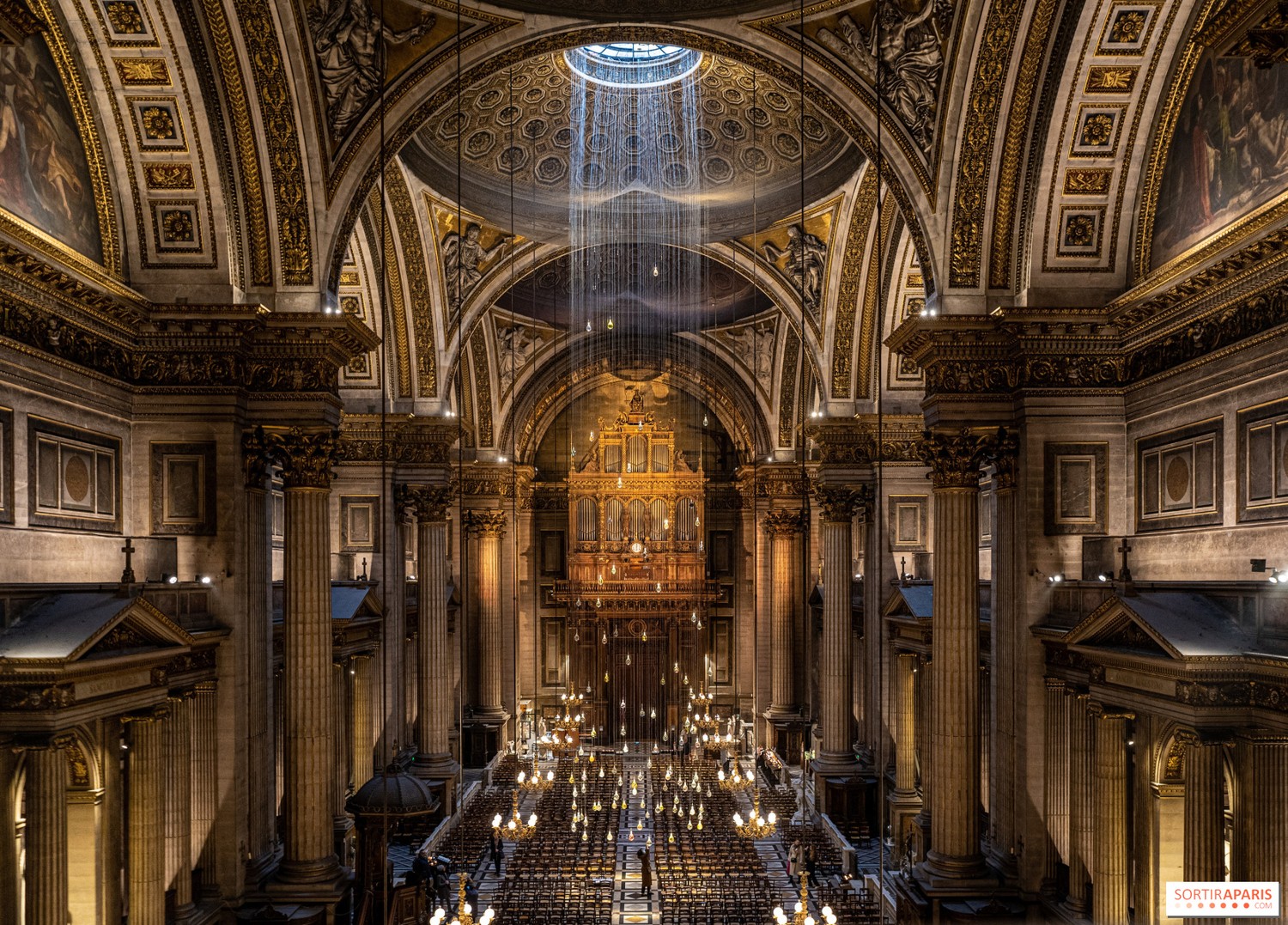
The interior atmosphere is shaped by a deliberate interplay of light and stone. Above the nave, a domed ceiling features frescoes by Antoine-Jean Courtois, which catch the light filtering through the high windows. Below, the floor of the main nave contains a mosaic by Charles-Joseph Lameire. This work depicts scenes from the life of Saint Mary Magdalene, rendered in a style that blends Byzantine and French traditions.
Sculptural presence defines the vertical spaces of the church. Monumental works by Françoise Rude and Carlo Marochetti are integrated into the architecture, providing a sense of weight and permanence. One such work, Mary Magdalen Exalted by Angels, was created about 1841. These figures exist as physical presences within the sanctuary, contributing to the solemnity of the space.
The acoustic character of the building is anchored by the large organ by Cavaillé-Coll, which was installed in 1846. Its presence is felt through the scale of the instrument and its role in the liturgical and musical life of the parish. The architecture and its adornments create a space where the material and the spiritual meet through precise craftsmanship.
Exhibitions and Cultural Significance
The acoustics within the nave create a space where sound carries with a specific, resonant clarity. This quality has made the church a significant venue for classical music, drawing musicians to its organ. Notable figures such as Camille Saint-Saëns and Gabriel Fauré have occupied the organ loft, contributing to the long history of musical performance held within these walls. The presence of the large Cavaillé-Coll organ, installed in 1846, remains central to these traditions.
Beyond its musical life, the church functions as a site for cultural inquiry. Temporary exhibitions frequently examine the intersections of French history, art, and religion. These displays often feature works by established artists, providing a way to engage with the past through a contemporary lens. The curation often reflects the complex layers of the building's own history, from its Napoleonic origins to its role as a place of remembrance.
- Mary Magdalen Exalted by Angels, about 1841 - Carlo Marochetti
Visiting Information and Access
Located in the 8th arrondissement of Paris, the church is open to the public every day from 9:30 am to 7:00 pm. Entry to the space is free. The interior remains accessible to those with limited mobility through the use of an elevator.
The atmosphere within the nave is shaped by the presence of significant works, including:
- Mary Magdalen Exalted by Angels, about 1841 - Carlo Marochetti
The site remains an active place of worship and a venue for classical music. It is a space where the weight of history is felt through the silence of the stone and the resonance of the organ. The building is open daily, providing a quiet space for reflection amidst the city.