
Origins and History of the Museum
The Kunst Museum Winterthur | Reinhart am Stadtgarten occupies a space deeply connected to the legacy of the Stiftung Oskar Reinhart. Formerly known as the Museum Oskar Reinhart, the institution opened its doors in 1951. At its inception, it held the distinction of being the first private museum in Switzerland. The building itself remains a physical connection to the history of its founding, having served as the historical seat of the foundation.
The collection and the institution are the result of the life's work of Oskar Reinhart (1885–1965), who acted as both a collector and a patron. His efforts helped shape the cultural landscape of Winterthur, Switzerland. The museum's presence in the Stadtgarten area reflects a long-standing commitment to preserving works that reflect the evolution of European art through the centuries.
Major Collections and Art Movements
The collection comprises approximately 600 works, spanning German, Swiss, and Austrian art from the 18th to the 20th century. Permanent exhibitions focus on the quiet intensity of Early Romanticism and the grounded presence of Realism. These movements find their expression through landscapes and figure paintings that define the museum's core character.
The Jakob Briner Foundation contributes Dutch Golden Age masters to the holdings, bringing 17th-century landscapes, still lifes, and figure paintings into the space. Alongside these, the museum preserves a selection of portrait miniatures from the Emil S. Kern and Jakob Briner collections. These small-scale works offer a different, more intimate scale of observation compared to the larger canvases.
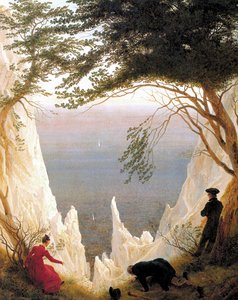
The presence of these diverse eras allows for a direct encounter with the evolution of European painting. One might find a Caspar David Friedrich landscape near the works of the Dutch masters, creating a dialogue between different approaches to light and nature.
- Chalk Cliffs on Rugen - Caspar David Friedrich
- The little knitters, 1875 - Albert Anker
- The artist's daughter Louise, 1874 - Albert Anker
- Creche, 1890 - Albert Anker
Masterpieces and Notable Artists
The presence of Caspar David Friedrich within these walls offers a specific encounter with the weight of Romanticism. His landscapes command a quiet attention, inviting a stillness that mirrors the vastness of the subjects he depicted. Alongside these works, the collection holds the art of Carl Spitzweg, whose contributions add a distinct layer to the museum's holdings. These artists exist here not as names in a textbook, but as physical presences that define the character of the space.
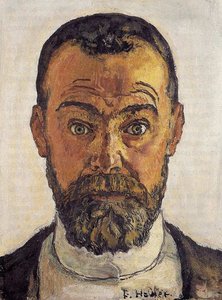
Ferdinand Hodler is another central figure in the museum's selection, providing a connection to the development of modern Swiss art. The works of this period allow for a slow observation of form and light. This dialogue between different eras is furthered by the inclusion of 17th-century Dutch Golden Age masters. These pieces, held through the Jakob Briner Foundation, consist of landscapes, still lifes, and figure paintings that bring a meticulous precision to the viewing experience.
The collection's breadth is anchored by these varied traditions. From the dramatic landscapes of the early nineteenth century to the detailed compositions of the seventeenth century, the art remains constant. Each work, whether a portrait miniature or a large-scale landscape, contributes to a continuous visual history held within the building. The arrangement of these pieces allows for a direct confrontation with the brushwork and intent of the artists who shaped European art.