
Origins and History of LACMA
The Los Angeles County Museum of Art emerged from a period of significant transformation for the city's cultural landscape. It was born from the shared ambition of Edward W. Carter and Howard F. Ahmanson Sr., whose vision helped shape the institution's early direction. Before becoming the independent, art-focused entity it is today, the institution evolved from the Los Angeles Museum of History, Science and Art. This lineage connects the modern campus to a long-standing tradition of preserving the region's diverse history.
In 1961, the Los Angeles County Museum of Art was founded, marking a departure from its previous multidisciplinary structure. By 1965, the institution moved to its current Wilshire Boulevard complex, establishing itself as a dedicated space for artistic study and observation. This transition allowed for a more specialized focus on the evolution of creative expression across millennia. Today, it holds the distinction of being the largest art museum in the western United States.
The Architecture of the Museum Campus
The museum's genesis is linked to William Pereira’s visionary architecture. This modernist campus is defined by soaring glass facades and geometric forms that establish a distinct presence within the landscape. The layout has evolved through several significant additions, each contributing a unique structural language to the site. The Robert O. Anderson Building for 20th-century art, designed by Hardy Holzman Pfeiffer Associates, provides a specific spatial logic to the collection. Nearby, the Pavilion for Japanese Art, designed by Bruce Goff, offers a different architectural rhythm.
Materiality and light define the more recent expansions. The Renzo Piano-designed Resnick Pavilion utilizes glass and stone construction to create a sense of permanence. In contrast, the Broad Contemporary Art Museum provides a high-ceilinged, column-free space that allows for an unobstructed view of the works within. These varied structures create a complex environment where different eras of design coexist.
A Diverse Range of Collections
The holdings encompass 6,000 years of artistic expression, containing more than 150,000 works. This breadth allows for a quiet confrontation with the evolution of human creativity across many eras. The European painting collection offers a significant presence within the halls, providing a direct encounter with the history of Western art. Nearby, the Asian Art collection presents intricate sculptures from Japan and China, where the weight and form of the material speak to centuries of tradition.
The regional identity of the area finds expression through the Californian art holdings. These works reflect the specific character of the landscape and the people of the region. Alongside these historical layers, the museum maintains a substantial presence in modern and contemporary art, where the dialogue between past and present remains constant. The physical presence of these objects creates a continuous timeline of human thought and visual language.
- Magdalen with the Smoking Flame, 1640
- Weeping Coconuts or Coconut Tears, 1951
- Portrait of Jacopo (Giacomo) Dolfin, 1532
- Jeannette I, 1913
- Tokugawa Iemitsu Receiving Lords in Audience, 1875
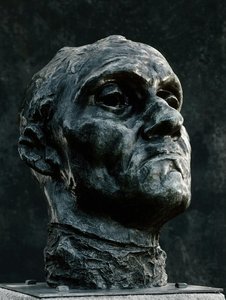
- Monumental Head of Jean d, 1971
Major Acquisitions and Donations
The foundation of the art collection began in 1918 with a donation of American paintings. This early influx of works helped establish a dedicated space for fine art within the institution. Later, the Balch collection brought a significant presence of Dutch and Flemish works to the halls, providing a focus on the technical precision of those traditions.
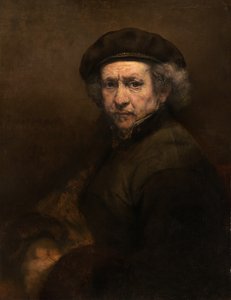
The presence of Rembrandt in the collection grew through several key contributions. In 1953, J. Paul Getty donated the 1632 Portrait of Marten Looten. This was followed in 1969 by the acquisition of the Portrait of Dirck Jansz. Pesser, provided by Armand Hammer. The Ahmanson Company contributed the Raising of Lazarus in 1972, further strengthening the holdings of the Dutch master.
Exhibitions and Public Art
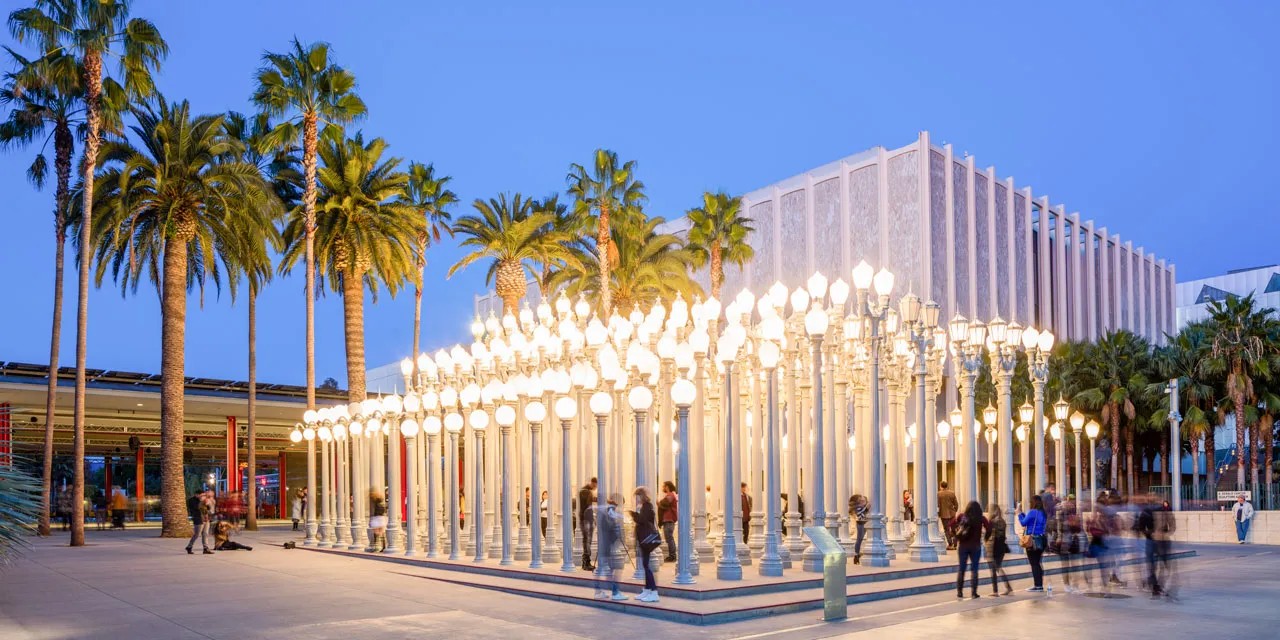
The campus extends beyond the interior galleries to include significant outdoor installations. At the front gates, 202 restored antique streetlamps are arranged in the Urban Light exhibit. This assemblage of light and metal provides a constant presence at the entrance. Nearby, the 340-ton boulder known as Levitated Mass by Michael Heizer rests above a 456-foot concrete pathway. The weight and scale of the stone create a specific gravity within the landscape.
Programming at the museum frequently moves between the visual and the auditory. The institution hosts film and concert series that utilize the campus spaces. Special exhibitions also bring contemporary subjects to the galleries, such as the Obama portraits. These rotating presentations ensure the atmosphere remains in constant flux.
Recent Projects and Future Developments
The campus is currently undergoing a significant transformation. A proposal by architect Rem Koolhaas suggests the creation of a single, tent-topped structure to redefine the site's spatial logic. This vision seeks to reshape how the institution occupies its space within the city. The architectural evolution continues as the museum adapts to new structural requirements and modernizing needs.
In April 2026, the David Geffen Galleries opened to the public. These spaces were designed by Peter Zumthor. The presence of these new galleries adds a contemporary layer to the existing architectural landscape. They offer a specific way to encounter the works held within the institution, providing a controlled environment for the observation of art.