

Origins and History of the Municipal Museum (Saverne)
The Municipal museum (Saverne) was founded in 1858. It holds the distinction of being the oldest museum in the historic Alsace region outside of Strasbourg and Colmar. The institution was established to preserve objects that testified to the grandeur and antiquity of Saverne. These early efforts focused on securing the local heritage discovered during various historical developments in the region.
The museum has maintained its status as a significant regional institution for over a century and a half. On September 17, 2003, it was officially designated as a Musée de France. This classification recognizes its importance within the national network of French museums. The museum continues to manage its collections from its established position in the Bas-Rhin department of France.
The Building and its Architecture
The museum is housed within the former Rohan Castle, situated at Place du Général de Gaulle, 6, 67700 Saverne, France. This episcopal residence has served as the museum's home since 1952. The architecture reflects the historical importance of the site within the Bas-Rhin department of the Grand Est region.
The interior layout is organized by departmental function across different levels of the structure. The archaeological department is located in the vaulted basement, utilizing the original stone caves of the castle. The art and history department occupies the second floor, providing a setting for the permanent collections of paintings and religious sculptures. A third section, dedicated to the Louise Weiss collection, is situated in the central part of the castle, which is attached to the south wing.
Visitors may also access the gloriette, a rooftop feature of the castle, during the afternoon when weather conditions permit. The museum's placement within the castle ensures that the collections remain integrated with the local history of the Saverne region.
Archaeological and Art and History Collections
The archaeological department, located in the vaulted basement, focuses on the Gallo-Roman and Imperial Roman past of the antique Tres Tabernæ and its surroundings. The collection contains nearly 450 stelae and various architectural elements. These artifacts originate from Saverne, the Alsace Bossue region, and the Moselle department. Many of these stone pieces were incorporated into the construction of the town's enclosure during the fourth century.
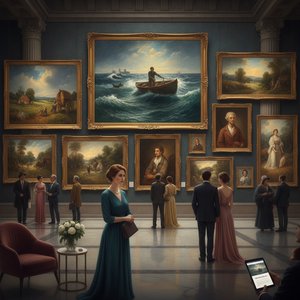
The art and history collection on the second floor preserves the religious and civic history of the region. This includes wood polychrome religious sculptures dating from the 15th and 16th centuries, sourced from local churches and chapels. The museum also maintains models of the castle and the town of Saverne, alongside various paintings and graphic arts. Local and regional costumes are presented on rotation to reflect the area's traditional dress.
- Wedding procession, 1873 - Gustave Brion
- Portrait de Mme Henriette Roll, 1900 - Alfred Philippe Roll
- André Manaut, 1890 - Alfred Philippe Roll
- Petite République, 1907 - Alfred Philippe Roll
- Esquisse pour La fête nationale du 14 juillet 1880, 1881 - Alfred Philippe Roll
- Au trot, 1888 - Alfred Philippe Roll
The Louise Weiss Section
Established in 1983, this section has been presented in its current form since 1996. It is dedicated to the life and work of the journalist, writer, and politician who bequeathed her collections and archives to the city of Saverne between 1981 and 1983. The space provides a permanent look at the various stages of her life and her contributions to European political thought.
The holdings include decorative arts from the 19th and 20th centuries alongside an ethnographic collection and various paintings. The archives are particularly extensive, containing personal and historical documents, furniture, and a significant photographic and microfilm collection. This includes nearly 2,500 items, such as early issues of l’Europe Nouvelle.
The section is organized to reflect the intersection of personal history and the geopolitical context of the 20th century. Visitors can observe the specific materials that shaped her vision of European rapprochement and political engagement.
Major Acquisitions and Donations
The museum's holdings include nearly 50 works by Alfred Philippe Roll, acquired through bequests from his family between 1952 and 1965. These acquisitions form a significant portion of the institution's painted collection. The museum also holds works by several Western European artists, including Raoul Dufy, Maurice de Vlaminck, Kees van Dongen, and Daum.
A substantial addition to the museum occurred in 1983, when Louise Weiss bequeathed her collections and archives to the City of Saverne. This donation established a dedicated section within the museum. The Weiss collection contains ethnographic objects and folk art from various regions, including Cambodia, China, Ethiopia, Morocco, Russia, and Sudan. The bequest also includes decorative arts from the 19th and 20th centuries, as well as personal documents and graphic works.