

The History of Musée d'Art et d'Histoire du Judaïsme
Located in the Marais district of Paris, the Musée d'Art et d'Histoire du Judaïsme exists as the largest French museum dedicated to Jewish art and history. The institution traces the presence of Jewish communities in Europe and North Africa, spanning the period from the Middle Ages through the 20th century. Its foundation emerged from a long-term vision to preserve these specific cultural narratives within the French landscape.
The development of the museum was a sustained effort that began in 1988 under the leadership of Laurence Sigal. Following this period of organization and planning, the museum officially opened its doors to the public in 1998. It operates as an association loi 1901, currently presided over by Dominique Schnapper.
The museum's origins are tied to the integration of significant collections, including the private Jewish museum from the rue des Saules and the Isaac Strauss collection from the Musée de Cluny. These acquisitions helped establish a foundation for the permanent displays that document the historical evolution of Jewish life and its artistic contributions.
The Architecture of the Hôtel de Saint-Aignan
The museum is housed within the Hôtel de Saint-Aignan, a significant example of French classical architecture. Constructed in 1650 for the comte d'Avaux, who served as the superintendent of finances for Mazarin, the building reflects the formal elegance of the seventeenth century. The surrounding garden bears the influence of André le Nôtre, providing a structured natural space that complements the geometric precision of the residence.
The history of the site is marked by shifting civic and private uses. Following the Revolution, the building underwent a transformation to function as a town hall. Later, the premises became a residential space for many Jewish families, who inhabited the structure until 1962. This long period of domestic life within such a formal setting adds a layer of lived history to the stone and mortar of the Marais district.
The architectural presence of the building is defined by its historical layers, from its origins as a high-ranking official's residence to its later roles in the civic and private life of Paris. The structure remains a quiet witness to the evolution of the neighborhood.
Collections and Artistic Heritage
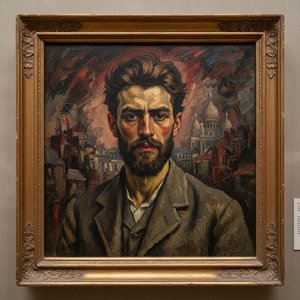
The permanent collection presents a profound dialogue between religious objects and fine art. It draws heavily from the archives and manuscripts that trace the history of Jewish life, alongside a significant selection of works from the School of Paris and contemporary art. These pieces exist alongside a diverse array of textiles, furniture, and ceremonial objects that reflect the evolution of Jewish communities across Europe and North Africa. The presence of these artifacts provides a tangible connection to the past, moving from the Middle Ages through to the 20th century.
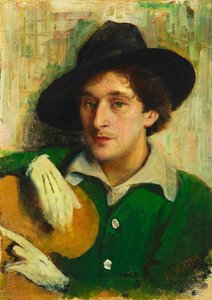
The museum serves as the heir to the collections of the Musée national du Moyen-Age in Paris. This lineage is further strengthened by the inclusion of the Isaac Strauss collection, which originated from the Musée de Cluny. Such acquisitions bring a specific weight to the halls, placing historical religious items in direct conversation with modern artistic movements. The works of Marc Chagall and Amedeo Modigliani are among the notable presences within these spaces, representing the intersection of personal expression and cultural identity.
- The Father, about 1911 - Marc Chagall
- Execution of a Moroccan Jewess, 1860 - Alfred Dehodencq
- Jewish Funerals, 1737 - Alessandro Magnasco
Recent Expansion and Development Projects
The museum is currently undergoing a significant period of transformation through an ambitious extension and redevelopment project. This initiative involves a total investment of 22 million euros to expand the institution's capacity and modernize its facilities. Financial support for these works has been secured through several major contributions. The State has committed 6.5 million euros to the project, while the City of Paris has pledged 9 million euros toward the construction site. Additionally, the Ile-de-France region is providing 3 million euros to assist in these developments.
A key component of this expansion involves the acquisition and repurposing of a former school located on rue des Blancs-Manteaux. This specific site will be integrated into the museum's operations to provide dedicated space for its library and administrative offices. These new premises will allow the institution to better manage its archives and expand its presence within the Marais district. The physical growth of the museum aims to ensure its continued function as a center for Jewish art and history in Paris.