
History and Origins of the Institution
The roots of the Musée d'art moderne (Saint-Étienne) extend back to 1947, when the institution's foundation was initiated by Maurice Allemand, who served as the curator until 1967. Before becoming an autonomous entity, the collection existed as a specific section within the Musée d'Art et d'Industrie. This lineage reflects a long-standing commitment to preserving the artistic and technical developments of the region.
The museum was officially inaugurated on December 10, 1987. This establishment marked a transition toward a dedicated space for modern and contemporary expressions. The institution has since grown to house a significant collection, though its physical presence has undergone periods of change. Following a closure in September 2019, the museum recently reopened to the public after undergoing extensive renovation work.
Architecture and Building Features
Designed by architect Didier Guichard, the building presents a distinct presence within Saint-Priest-en-Jarez. Its exterior is defined by a façade of black ceramic tiles. This choice of material creates a direct connection to the mining history of the region, allowing the structure to echo the industrial past of the city through its dark, textured surface. At night, these tiles catch the light, altering the building's appearance.
The interior is organized around 3,000 m² of exhibition space. These volumes are characterized by a significant scale, specifically a ceiling height of 8 meters. Such proportions allow for the placement of large-scale installations and monumental works that require substantial vertical space. The architecture provides a neutral, expansive environment for the various collections held within its walls.
Major Collections and Art Movements
The institution holds a vast assembly of nearly 20,000 works, spanning various media such as paintings, sculptures, installations, and photography. The breadth of the collection covers a significant trajectory of modern and contemporary art, moving through movements from Surrealism to Minimalism. These works exist within a space designed to accommodate both intimate objects and large-scale installations.
A particular strength of the museum lies in its dedication to design, holding one of the rare reference collections in this field within France. This collection comprises nearly 2,000 pieces, with a focus on industrial design and objects intended for mass production. The presence of these items reflects the historical relationship between the city and the production of functional objects. Alongside these, a substantial collection of photography provides a distinct visual perspective within the museum's holdings.
- Terror, about 1775 - Jean-Baptiste Greuze
- Amphitrite, 1935 - Raoul Dufy
- Wounded Gaul, 1880 - Évariste Vital Luminais
- The Condemnation of the Princesse de Lamballe, 1846 - Louise Adélaïde Desnos
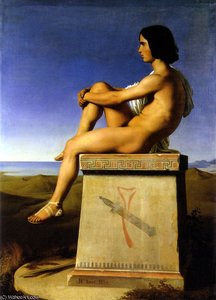
- Son of Priam Observes the Movement of the Greeks - Hippolyte Flandrin
Visiting and Practical Information
The institution is situated on Rue Fernand Léger in Saint-Priest-en-Jarez, France. For those seeking a guided perspective on the collections, tours are available with prices ranging from 5€ to 7€. Access remains free for children under the age of 16 and also on the first Sunday of every month.
The museum maintains a regular schedule, remaining open every day from June 27, 2026, until January 3, 2027. For those arriving in organized groups, the maximum capacity for a single visit is 20 people.