

Origins and History of the Museum
The Musée départemental d'Art ancien et contemporain was established in 1822. Its foundation was initiated by the Conseil Général des Vosges to secure a significant collection of art for the region. Construction of the institution began in 1823 and reached completion in 1828. Today, the museum remains a cultural site of the Conseil Général des Vosges.
The primary impetus for the museum's creation was the preservation of the prestigious collection of paintings and sculptures belonging to the Princes de Salm. This collection had been confiscated during the French Revolution. The institution was designed to safeguard these works and provide a permanent home for them within Épinal, France.
The Building and its Architecture
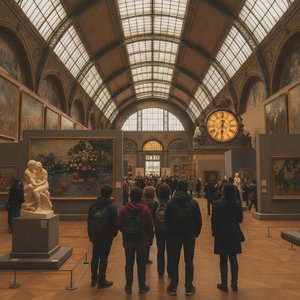
Located at 1, place Lagarde in Épinal, France, the museum occupies a site on the southern tip of an island formed by two branches of the Moselle. The structure covers 4,000m² and integrates the site's historical layers into a modern framework. The building's current form is the result of a 1992 remodeling that introduced an architecture of multiple volumes.
This design creates a physical link between the ancient art and the contemporary art collections. A transversal glass roof, or verrière, allows natural light to enter the interior spaces. This light penetrates the various levels, illuminating the transition between different historical periods. The layout uses these volumes and light to connect the museum's diverse holdings within a single architectural continuity.
Diverse Collections and Art Periods
The museum holds approximately 30,000 works, spanning a chronological range from prehistory to the 21st century. This breadth allows for a direct comparison between ancient artifacts and modern expressions. The collections include significant holdings in archaeology and ethnography, providing a foundation for understanding human development alongside artistic evolution.
A substantial portion of the holdings consists of European paintings from the 17th and 18th centuries. These works represent a wide variety of styles and subjects from those periods. Alongside these classical paintings, the institution maintains a collection of contemporary art, bridging the gap between historical traditions and current creative practices.
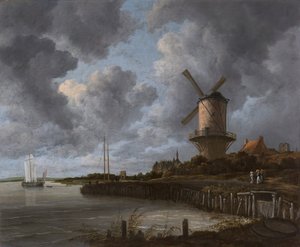
- Wooded Landscape with Figures on a Path, about 1660
- The Virgin of Sorrow, about 1661
- Saint Anthony and Saint Paul Hermits, about 1650
Masterpieces of the Collection
The collection spans from antiquity to the present, featuring works that reflect diverse periods of European history. Among the archaeological holdings is a Tablette zodiacale dating from Antiquity, an ivory carving that provides insight into the era before 476 AD. This piece is part of a broader selection of objects that include both classical paintings and ethnographic works.
The museum holds several significant paintings from the seventeenth and eighteenth centuries. Notable among these are a Mater Dolorosa by Rembrandt and Job raillé par sa femme by Georges de La Tour. The collection also includes L’embarquement de Sainte Paule à Ostie by Claude Gelée, also known as Le Lorrain. These works are situated alongside a variety of other European paintings, including a copy of La Joconde.
- Wooded Landscape with Figures on a Path, about 1660 - Jacob van Ruisdael
- The Virgin of Sorrow, 1661 - Rembrandt Peale
- Saint Anthony and Saint Paul Hermits, 1650 - Claude Vignon
Recent Projects and Renovations
The Musée départemental d'Art ancien et contemporain has been closed to the public since September 2023 to undergo significant technical improvements. These works focus on the long-term preservation of the collections through environmental control. The replacement of the glass roof was scheduled for completion by the end of August. Following this, works to improve temperature management are expected to be finished by the end of the year.
The institution is currently preparing for its next phase of presentation. A study for a new scenography is planned for 2025. This will lead to the scheduled reopening of the museum during the first quarter of 2026.