


History and Origins of the Museum
The Musée des Beaux-Arts d'Agen is located in Agen, in the Lot-et-Garonne department of France. Its origins are tied to the Société académique d'Agen, which founded the museum in 1836. While the institution's formal establishment is recorded in 1876, its presence in the city has been shaped by long-standing academic and cultural activity. The museum holds the status of a Musée de France, a designation that recognizes its importance within the national network of French museums.
The institution has undergone various stages of development since its inception. It currently manages a permanent collection of over 3,000 objects. At this time, the Musée des Beaux-Arts d'Agen is closed to the public to accommodate necessary renovation works. These structural updates are part of a long-term effort to maintain the integrity of the site and its collections.
The Building and its Architecture
The museum is housed within four hôtels particuliers located in the historic center of Agen, France. These structures were built at the end of the Middle Ages and during the Renaissance. The complex comprises the Hôtel d'Estrades, the Hôtel de Vaurs, the Hôtel de Vergès, and the Hôtel de Monluc. This architectural ensemble provides the framework for the institution's permanent exhibition space, which covers 1,600 m² across 26 exhibition rooms.
Current architectural developments aim to restore the original alignment of the facades of these four historic buildings. This process involves the deconstruction of the Aunac wing, a structure added during the 19th century. The project intends to utilize the stones from this wing to assist in the creation of a new reception area. These modifications are part of a broader effort to modernize the museum's facilities and improve public access.
The Permanent Collection and Artworks
The permanent collection comprises over 3,000 objects, spanning the fields of archaeology and fine arts. These holdings reflect a diverse range of historical periods and artistic movements. Among the most significant acquisitions are five paintings by Francisco Goya, which were bequeathed to the institution by Count de Chaudordy between 1826 and 1899. These works provide a substantial presence of Spanish art within the museum's holdings.
The fine arts collection includes works by several notable artists, such as Tintoret, Corot, Boudin, Sisley, and Caillebotte. These pieces are distributed across 26 exhibition rooms, covering 1,600 m² of permanent display space. The museum also maintains a significant collection of archaeological items, which are held alongside the paintings and sculptures.
- The Balloon, about 1812 - Francisco Goya
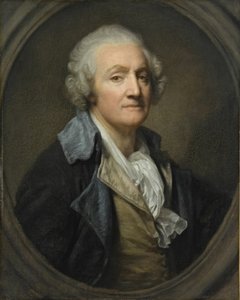
- Self portrait, 1783 - Francisco Goya
- Portrait of Marie-Josephe of Saxony, Dauphine of France, 1800 - Jean-Marc Nattier
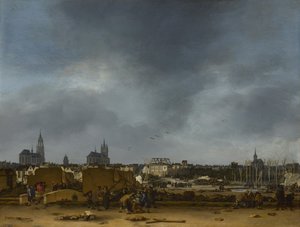
- Burning House, 1650 - Egbert van der Poel
- Still Life with Plums and Apricots, 1650 - Pierre Dupuis
Recent Projects and Future Renovations
The museum is currently preparing for a significant period of transformation. A major renovation project is scheduled to take place from mid-2026 through the end of 2028. This undertaking involves the deconstruction of the 19th-century Aunac wing, a building added to the site during the 1800s. By removing this structure, the project aims to restore the original facade alignment of the four historic hotels that comprise the museum and create a dedicated reception area for the public.
The renovation is managed by the architectural firm Cabinet Architectures Adelfo Scaranello. The projected budget for these works is estimated to be between 15 and 17 million euros. These structural changes are intended to modernize the facility and ensure the space meets contemporary requirements for visitor use and institutional management.
During this period of construction, the museum will maintain its presence in Agen through a temporary relocation. Starting in autumn 2026, works and collections will be moved to the Église des Jacobins. This temporary arrangement ensures that the institution remains active while the primary site undergoes its scheduled redevelopment.


