
Origins and History of the Museum
The Musée d'Unterlinden emerged from a desire to preserve the artistic identity of the Alsace region. Its foundation is tied to the Société Schongauer, an organization established in 1847 by Louis Hugot. This group sought to protect and present local art, a mission that eventually led to the museum opening its doors to the public in 1853. The institution's early purpose was rooted in this ambition to honor the creative output of the surrounding area.
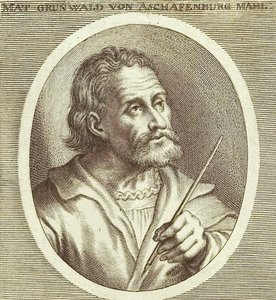
Before becoming a museum, the site's structures were preserved through the efforts of the Société Schongauer. These buildings, which include a 13th-century Dominican convent and a former public baths building, were saved from decay by the society's intervention. The transition from religious and civic use to a space for art was solidified in 1852 when the arrival of Matthias Grünewald’s *Isenheim Altarpiece* changed the scope of the collection forever. This acquisition shifted the focus toward the significant religious and sculptural works that define the site today.
The Building and its Architecture
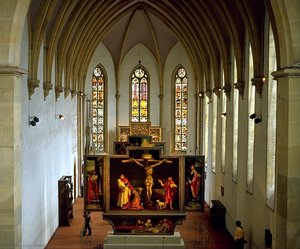
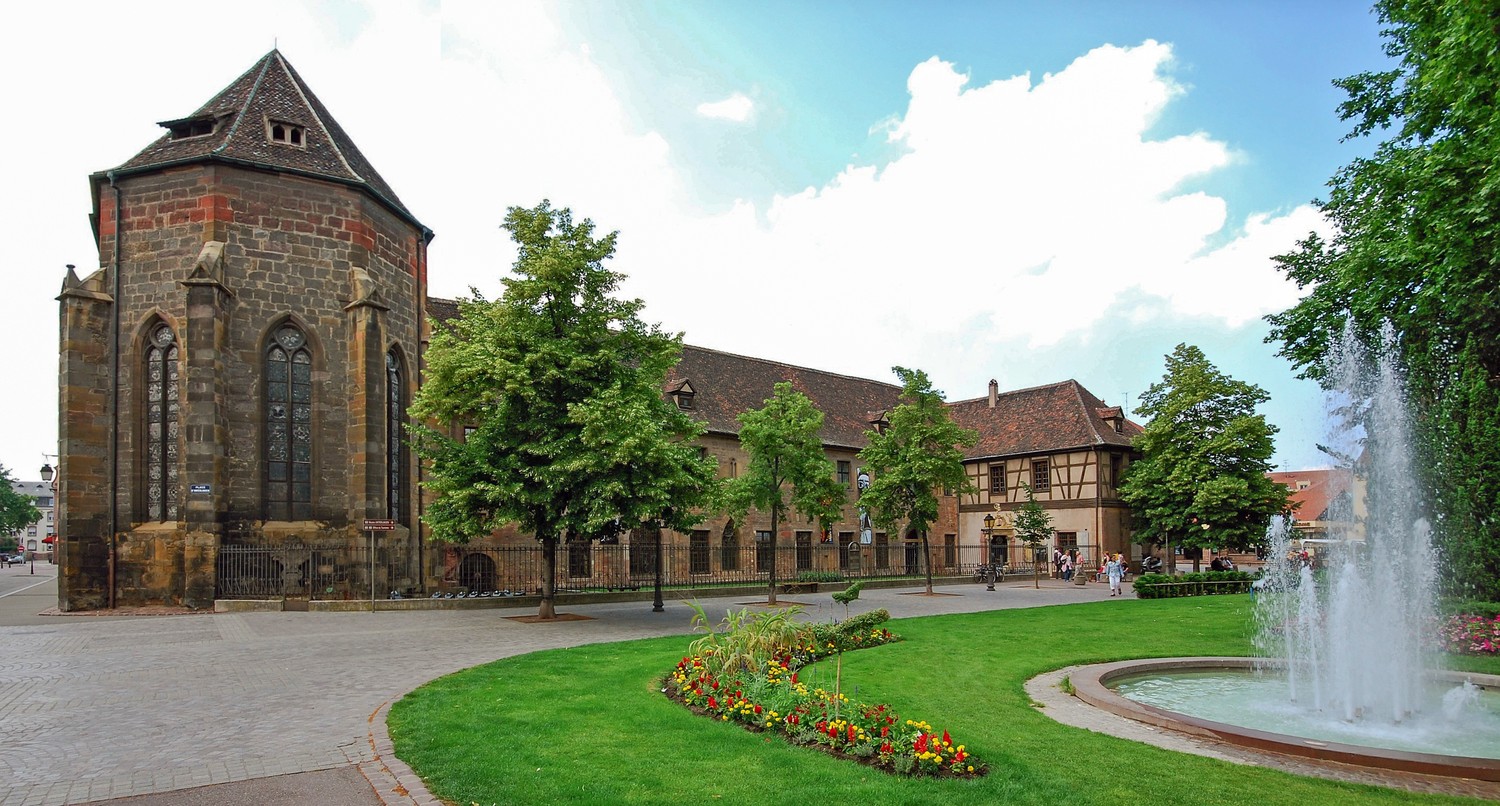
The architecture of the Musée d'Unterlinden is a layered dialogue between different eras of Colmar. The site is composed of two distinct structures: a 13th-century Dominican religious sisters' convent and a former public baths building from 1906. Within the convent, the atmosphere is defined by soaring Gothic arches and the quiet presence of serene cloisters. These ancient stone elements provide a heavy, historical foundation for the collections housed within.
A transformative project was undertaken in 2015 by Swiss architects Herzog & de Meuron to expand the museum's capacity. This addition was designed to appear as if it grows organically from the existing ancient structure. The new wing utilizes corrugated glass as its primary material, creating a sharp, modern contrast to the weathered masonry of the medieval convent. This expansion increased the total area open to the public to 8,000 m2 (86,000 sq ft).
The interplay between the old and the new is most visible where the sleek, translucent lines of the modern extension meet the solid, textured walls of the original convent. This architectural arrangement allows the museum to occupy a space where the history of the building is as much a part of the experience as the objects themselves.
Major Collections and Artistic Heritage
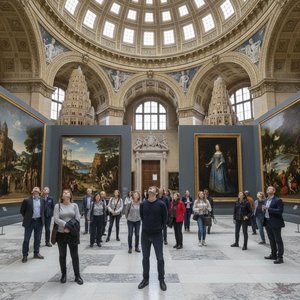
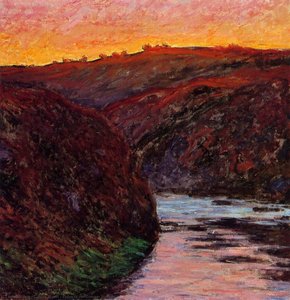
The museum holds a significant collection of Upper Rhenish medieval and early Renaissance art. These works reflect the artistic movements of the Late Gothic and Renaissance periods, alongside Baroque and Early Netherlandish Painting. Impressionism also finds a place within these walls. The breadth of the collection spans from prehistorical manufactured artifacts to contemporary pieces. It provides a continuous line of human production through the ages.
Archaeological treasures offer a connection to the local landscape. A Roman mosaic, discovered in Bergheim, Haut-Rhin, remains a central part of the historical record. The museum also houses various local archeological artifacts that trace the daily lives of past inhabitants. Alongside these original finds, plaster copies of antique sculptures are held on loan from the Louvre, allowing for a study of classical forms within the local context.
Masterpieces of the Collection
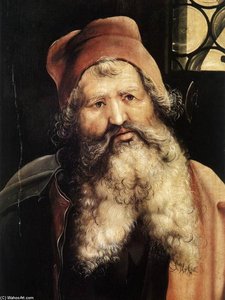
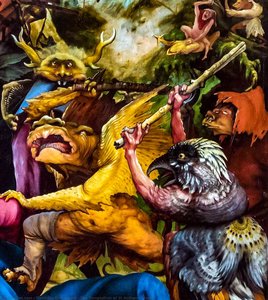
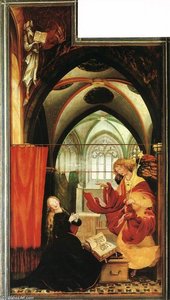
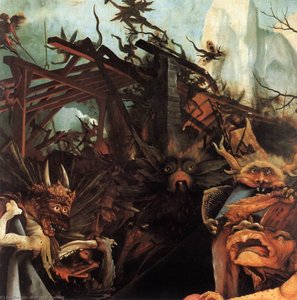
The arrival of Matthias Grünewald’s Isenheim Altarpiece in 1852 changed the trajectory of the institution, securing its presence on the global stage. This monumental work functions as a profound meditation on suffering and redemption. The depiction of Saint Sebastian and the scenes from the Passion carry an intense emotional weight, achieved through a precise use of color and light. Every detail, from the symbolic medicinal plants to the realistic portrayal of disease, reveals a deep understanding of both the spiritual and the physical world.
The presence of the Colmar native Martin Schongauer is felt throughout the galleries, where several of his altarpieces reside. His influence is part of a broader collection that brings together significant works from the Northern Renaissance. The museum holds pieces by Albrecht Dürer, Lucas Cranach the Elder, and Hans Holbein the Elder, allowing for a direct encounter with the leading figures of the era.
- The Isenheim Altarpiece, about 1515 - Matthias Grünewald
- St Sebastian (detail), about 1515 - Matthias Grünewald
- The Crucifixion, about 1515 - Matthias Grünewald