
A Repository of Regional and Distant History
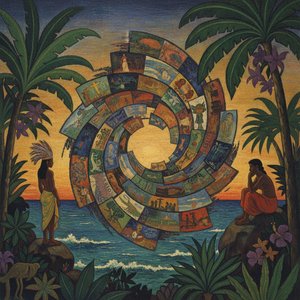
Located in Gap, France, the musée Muséum départemental des Hautes-Alpes occupies a space dedicated to the intersection of natural history and human culture. The institution is organized across several levels, with the basement housing archaeological collections that date from the Bronze Age to the Gallo-Roman era. Among these artifacts is a double bust of Jupiter Amun. The museum's structure allows for a progression from these ancient foundations toward more recent developments in art and ethnology.
The collections are diverse, spanning from ceramics and numismatics to rare books and photography. While the archaeological finds provide a link to the deep past of the Hautes-Alpes, the upper levels focus on the visual and material culture of different eras. This breadth ensures that the museum functions as a site for both local history and the study of distant ethnology.
Selected Works in the Permanent Collection
The painting collection includes works that reflect the stylistic shifts of the nineteenth century and earlier. These pieces are held within the museum's exhibition spaces, which total 1600 m² of dedicated area. The following works are part of the cataloged holdings:
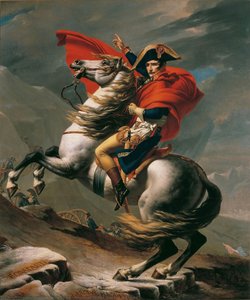
- Napoleon at the Great St. Bernard, 1801 - Jacques-Louis David
- The Transteverine - Jules Lefebvre
- Desolation of the Oceanids at the foot of the rock where Prometheus is chained, 1850 - Henri Lehmann
- Portrait of Mme Roubaud, 1858 - Auguste Hervieu
- A Waterfall in Vallouise - Antony-Ludovic Régnier
- The White Cow - Théodore Levigne
- Henry IV Recommending His Children to the Constable of Lesdiguières, 1843 - Louis-Auguste Ronjon
- Farmyard in Ribiers, 1885 - Joséphine Arnaud
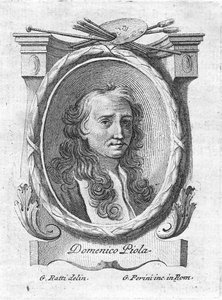
- Allegory of Winter, 1700 - Domenico Piola
Accessibility and Public Engagement
The museum has implemented specific programs to accommodate different ways of experiencing art. Through a partnership with the association Alpes Regards, the institution provides tactile experiences for the visually impaired. This includes the use of thermo-formed reproductions, such as relief versions of large-scale paintings, allowing visitors to perceive the form and movement of the subjects through touch.
For younger visitors, the museum offers sensory tools designed for children between 6 months and 3 years of age. These "petits curieux" bags contain tactile and visual activities intended to encourage exploration. These initiatives aim to make the museum's holdings, from natural history specimens to fine art, accessible to a wider range of the public.