The Royal Residence of Marly
The Musée-promenade de Marly-le-Roi occupies the site of the former Château de Marly, a leisure residence once belonging to Louis XIV. Located in the Yvelines department near Paris, the estate was designed as a private retreat from the formalities of Versailles. The architecture of the original palace was atypical, consisting of twelve pavilions arranged around a central thirteenth pavilion. While the main structure was destroyed following the French Revolution and later replaced by industrial use, the surrounding park and the remnants of the royal estate remain. The site is characterized by its restored waterways, lawns, and the traces of the Machine de Marly, which once channeled water from the Seine to feed the gardens.
The current museum environment seeks to reconstruct the atmosphere of this intimate royal setting. Visitors walk through a landscape that preserves the memory of the Sun King's private life. The park is a collection of vestiges, including basins and architectural fragments that reflect the former grandeur of the domain. The site is managed by the Établissement public du Domaine National du Château de Versailles.
The Permanent Collection
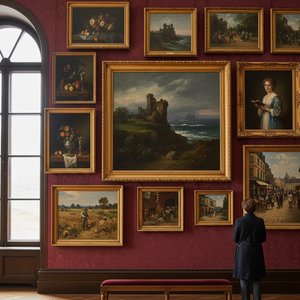
The collection held at Marly-le-Roi focuses on the art and objects that once decorated the royal pavilions and the surrounding pleasure houses. These works reflect the social customs and the aesthetic preferences of the French court during the seventeenth and eighteenth centuries. The selection includes paintings, decorative objects, and engravings that illustrate the life of the nobility and the evolution of French taste.
- Saint Genevieve, 1821 - Élisabeth Louise Vigée Le Brun
- Zephyr and Flora. Allegory of spring, 1699 - Antoine Coypel
- Annunciation, 1659 - Michaelina Wautier
- Winter, 1699 - Jean Jouvenet
- Zette, Bitch of the Pack of Louis XIV, 1714 - Alexandre François Desportes
- Golden Vase with Mosaic-Decorated Neck and Bas-Relief Belly, 1700 - Alexis Daligé de Fontenay
- Gilded Vase Decorated with Gadroons, 1700 - Alexis Daligé de Fontenay
The presence of these works allows for a study of the relationship between art and the domestic spaces of the Ancien Régime. The decorative arts, such as the gilded vases by Alexis Daligé de Fontenay, provide insight into the material culture of the period. These objects were intended to exist within the specific context of the Marly pavilions, contributing to the overall design of the royal residence.
Exhibition and Experience
The museum hosts temporary exhibitions that expand upon the permanent holdings. Recent programming has focused on the history of pleasure houses in the environs of Paris, tracing the evolution of these residences from the era of Louis XIV to the reign of Napoleon III. These exhibitions examine how the elite used such estates for both representation and relaxation. The museum also utilizes modern technology to provide historical context, such as virtual reality experiences that attempt to recreate specific historical moments, including a solar eclipse observed in 1715.