

The Architecture of Palazzo Madama
The Museo Civico d'Arte Antica is housed within the Palazzo Madama in Turin, Italy. The building itself is a physical record of changing eras, containing Roman foundations and medieval towers. A baroque staircase designed by Juvarra provides a sharp contrast to these older structures. The museum occupies four floors, each dedicated to a specific period of art history. The underground level contains medieval works, while the first floor is reserved for Gothic and Renaissance painting. The second floor holds Baroque pieces, and the uppermost floor is used for decorations.
The structure has served various functions throughout its history. It was the site for the first Royal Senate established by Charles Albert of Savoy. In the 19th century, the palace transitioned from a center of court life to a political venue. Since 1934, it has functioned as the Municipal Museum of Ancient Art.
The Permanent Collection
The collection is organized by period and medium, spanning from the medieval era to the Baroque. The works are distributed across thirty-five rooms, including specialized areas like the Torre dei Tesori and the Camera delle Guardie. These spaces hold specific groupings of paintings, sculptures, and decorative objects.
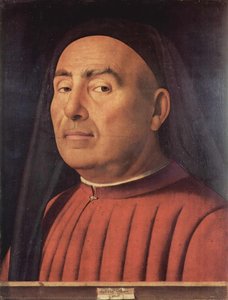
- Antonello Da Messina: Portrait of a Man (Trivulzio portrait), 1476
- Orazio Gentileschi: St. Jerome, 1610
- Orazio Gentileschi: Assumption of the Virgin, 1605
- Master of Crea: Saint Catherine of Alexandria, 1500
Beyond painting, the museum holds illuminated manuscripts, such as the Turin–Milan Hours. The collection also includes ceramics, porcelains, maiolica, ivories, and various gold and silver works. Decorative arts and furniture are also part of the holdings. The museum's inventory includes works by Macrino d'Alba, Giacomo Jaquerio, and Giovanni Martino Spanzotti, among others.
Material History and Decorative Arts
The museum preserves a wide range of material culture, including Piedmontese coats of arms and sculptures of the Dead Christ. The collection of decorative arts features items of oriental origin, specifically in the categories of ivory and porcelain. The Torre dei Tesori contains objects from the cabinet of Charles Emmanuel I. These items reflect the specific tastes and acquisitions of the House of Savoy and private collectors over several centuries.