
The Cloisters of Amarante
The Museu Municipal Amadeo Sousa Cardoso occupies the quiet, stone-hewn cloisters of the Monastery of São Gonçalo in Amarante, Portugal. This space, with its deep history reaching back to the 16th century, provides a heavy, contemplative atmosphere for the modern works held within its walls. The architecture, adapted for its current purpose by Alcino Soutinho, maintains a dialogue between the monastic past and the contemporary present. Light filters through the arches of the Ionic cloister, casting shadows that settle upon the surfaces of the paintings and sketches housed in these atmospheric rooms.
The structure itself is a layering of eras. What was once a convent and a site of religious devotion now functions as a repository for the artistic identity of the region. The transition from a sacred space to a municipal museum is felt in the stillness of the corridors, where the weight of the stone seems to anchor the more experimental movements of the 20th century.
The Presence of Modernism
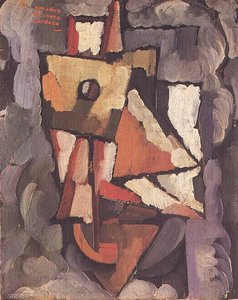
The collection is defined by the work of Amadeo de Souza-Cardoso, an artist whose output remains a central force within these halls. His presence is felt through a variety of forms, from sketches and portraits to more abstract compositions. The works do not merely sit on the walls; they occupy the space with a specific, restless energy that contrasts with the permanence of the monastery. The collection also includes significant contributions from other regional figures, creating a dialogue between local tradition and the avant-garde.
Notable elements within the collection include:
- Blue window, 1915 - Amadeo de Souza-Cardoso
- Crime Blue Abyss Physical Remorse, 1914 - Amadeo de Souza-Cardoso
- Untitled (AQQH9A) - Amadeo de Souza-Cardoso
- O Grande Desvairo by Acácio Lino
A Local Legacy
Beyond the central figures, the museum preserves the visual language of Amarante. This includes sacred art, furniture, and local folk iconography, such as the Diabos de Amarante. These objects exist alongside the more experimental sketches and cartoons of the modernist era. The museum functions as a site where the sacred and the secular, the traditional and the abstract, are held in a delicate, physical proximity. It is a place where the history of the town is etched into both the stone of the building and the pigment on the canvas.