

Origins and History of the Victoria and Albert Museum
The origins of the Victoria and Albert Museum are tied to the spirit of innovation that defined the Victorian era. The institution's foundation traces back to the Great Exhibition of 1851, a significant moment in British history. This event provided the initial momentum for a vision centered on the intersection of practical skill and aesthetic appreciation. Prince Albert founded the museum in 1852 to realize this purpose.
The institution underwent several name changes during its early development. In 1853, it was known as the Museum of Ornamental Art. By 1857, the name was changed to the South Kensington Museum. These shifts reflect the evolving mission of the institution as it moved from its initial concepts toward its established role in London, United Kingdom.
The museum's early history is linked to the Government School of Design, which was established in 1832 at Somerset House. This school was created to apply the arts directly to manufactures, addressing concerns regarding the quality of British industrial design. The museum's development was further supported by a parliamentary grant of £5000, which was used by Henry Cole to acquire various exhibits from the Great Exhibition of 1851.
The Grand Architecture of the South Kensington Site
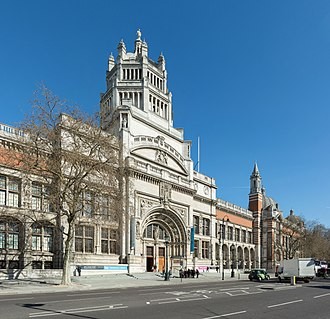
Located in the Royal Borough of Kensington and Chelsea in London, the South Kensington site occupies the grounds once held by Brompton Park House. The building was constructed in stages between 1854 and 1909. Its structure combines Victorian grandeur with the principles of Beaux Arts design. The initial design by Aston Webb was intended as a statement of civic pride.
The interior architecture is defined by scale and light. In the Great Hall, the soaring ceilings are reminiscent of a cathedral. This space provides a sense of verticality that contrasts with the more intimate galleries found in other wings. The building's development reflects the evolving architectural preferences of the nineteenth and early twentieth centuries.
Extensive Collections of Decorative and Applied Arts
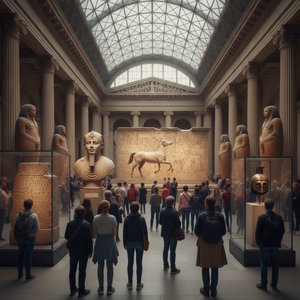
The museum holds a permanent collection of over 2.8 million objects. These items span 5,000 years, from ancient history to the present day. As the largest museum of applied arts, decorative arts, and design, the institution maintains a vast array of material culture. The holdings include ceramics, glass, silver, metalwork, and furniture. The collection also contains jewellery, textiles, costumes, and medieval objects. Beyond these, the archives include sculpture, prints, drawings, and photographs.
The museum contains one of the largest collections of post-classical sculpture in the world. This breadth of material allows for a study of how design and craftsmanship have evolved through different eras. The objects are organized to reflect the development of human creativity across various media and geographies.
- Chellini Madonna, recto - Donatello
- Lamentation over the Dead Christ - Donatello
- Giovanni Chellini, 1456 - Antonio Rossellino
Diverse Asian and Islamic Art Collections
The museum holds an extensive array of ceramics, metalwork, textiles, and decorative arts from China, Japan, Korea, and the Islamic world. The Islamic collection is among the largest in the Western world. These holdings provide a detailed record of material culture and technical skill across various eras and regions.
The East Asian collections are particularly strong in the areas of ceramics and metalwork. These objects reflect specific regional traditions and the evolution of craft techniques. Visitors encounter a wide range of materials, from delicate porcelain to heavy metalwork, illustrating the breadth of human imagination through physical form.
The Vast Textile and Fashion Collections
The Textile Galleries offer a panorama of style, tracing the development of dressmaking from opulent Victorian gowns to groundbreaking avant-garde creations. This progression allows for a direct observation of how silhouettes and construction methods have shifted through the centuries. The collection includes a significant selection of 1960s fashion, documenting the rapid changes in social dress and material use during that decade.
A central part of the holdings is the collection of William Morris textiles. These works reflect the principles of the Arts and Crafts movement through their specific patterns and emphasis on hand-made artistry. The museum also examines the history of specific garments, such as the Burberry Trench, which is featured in the display "The Burberry Trench: Crafting an Icon."
Masterpieces and Notable Works on Display
The collection contains significant examples of Renaissance sculpture, including Donatello's Chellini Madonna. This work is held alongside a substantial assembly of medieval weaponry and arms. These objects provide a direct record of historical combat equipment and defensive craftsmanship.
Textile history is represented by the War of Troy tapestry. The museum also holds the Kala Ghoda statue, a significant piece within the broader holdings. These items are part of a vast assembly of objects spanning five millennia of human production.
- Chellini Madonna
- War of Troy tapestry
- Kala Ghoda statue
Exhibitions and Contemporary Cultural Impact
The museum maintains its relevance by fostering modern design trends through extensive educational programs, workshops, and research facilities. These initiatives connect historical practice with current innovation. Seasonal exhibitions are a central part of this engagement, often selling out within days of their announcement. Such high demand reflects the institution's ability to address contemporary interests through its permanent holdings.
Recent programming has focused on the intersection of fashion and surrealism. A notable exhibition explored the influence of Elsa Schiaparelli on the history of dressmaking. This display featured a 1937 embroidered couture coat created in collaboration with Jean Cocteau. By presenting these specific objects, the museum examines how avant-garde movements have shaped the evolution of style.
Recent Projects and Future Developments
The institution continues to expand its presence through the development of the V&A East sites. The V&A East Storehouse is scheduled to open in June 2025. This facility has already been shortlisted for the Art Fund Museum of the Year 2026. Following this, the V&A East Museum is expected to open its doors in April 2026.
These new locations form part of a broader family of museums. This network includes V&A Dundee and the V&A Wedgwood Collection. Each site contributes to the institutional reach, extending the presence of the collections beyond the original South Kensington location.