
Origins and History of Museum Folkwang
The history of Museum Folkwang begins with the convergence of two distinct legacies. In 1902, Karl Ernst Osthaus established the private Folkwang Museum, a collection driven by a specific vision for modern expression. This was later joined by the Essener Kunstmuseum, which had been founded in 1906. The two entities merged in 1922, forming the institution that exists today in Essen, Germany. This union created a major collection focused on the developments of 19th- and 20th-century art.
The name itself carries a weight of ancient meaning. It draws from the concept of Fólkvangr, the meadow of the dead in Norse mythology, which is presided over by the goddess Freyja. This connection to themes of life and remembrance provides a quiet backdrop to the works held within the institution. The museum has long functioned as a space where the evolution of modern art is observed through its physical presence.
The institution's foundation was built upon the pursuit of private collectors and the changing currents of history. By bringing together the Essener Kunstmuseum and the Folkwang Museum, the site became a central point for the study of artistic shifts. It remains a significant repository for those interested in the progression of modernism through the centuries.
The Building and its Architecture
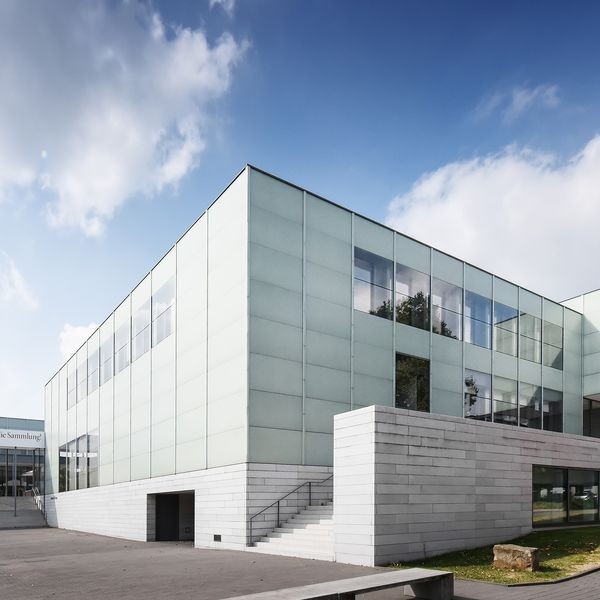
The architectural presence of Museum Folkwang is defined by a dialogue between eras. The original structure, constructed in 1902, provides a historical foundation for the institution. This older building has been thoughtfully expanded through a significant extension designed by David Chipperfield Architects. This addition, which opened in January 2010, added 16,000 square metres to the existing museum footprint.
The extension is characterized by a translucent façade constructed from recycled glass slabs. This material choice allows the building to interact with the shifting natural light of Essen, Germany. The design creates a sense of openness, integrating the modern volume with the historic architecture. The interplay of concrete and glass ensures that the new spaces feel connected to the original site while providing the necessary scale for contemporary exhibition needs.
Major Collections and Departments
The holdings of Museum Folkwang encompass a significant breadth of 19th and 20th-century art. This collection traces the evolution of modern expression through various media, including an extensive selection of prints and drawings. Beyond these European traditions, the institution maintains a collection of ancient and non-European art, providing a wider perspective on human creativity across different eras and geographies.
A substantial portion of the museum's identity resides in its specialized departments. The photographic collection has grown to include more than 50,000 photographs, documenting visual culture through a vast array of lenses and techniques. Alongside this, the Deutsche Plakat Museum houses approximately 340,000 posters. These graphic works offer a visual chronicle of political discourse, economic shifts, and cultural sensibilities from the Weimar Republic through the Cold War.
- Deutsche Plakat Museum: approximately 340,000 posters
- Photographic collection: more than 50,000 photographs
Masterpieces of the Collection
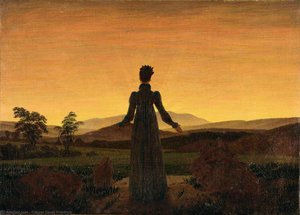
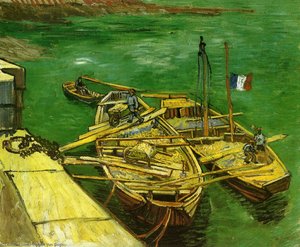
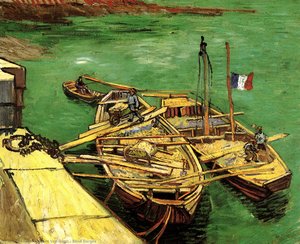
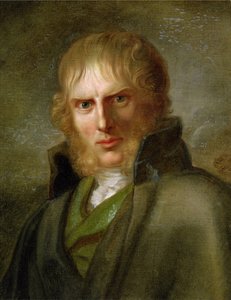
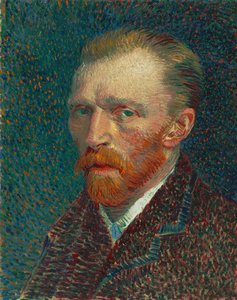
To stand before Frau vor untergehender Sonne is to encounter the quietude of 1818. Caspar David Friedrich’s work possesses a stillness that demands a certain patience. Nearby, the heavy, rhythmic labor of 1888 is captured in Vincent Willem Van Gogh’s Quay with Men Unloading Sand Barges. The brushwork here carries a physical weight, a sense of movement and industry that remains palpable even in its stillness.
The collection moves from these contemplative landscapes into the structured intensity of Paul Cézanne. His La carrière de Bibémus offers a study in form and geological presence. This focus on structure finds a different, more frantic energy in the works of the German Expressionists. Ernst Ludwig Kirchner’s Leaping Dancer captures a specific, nervous vitality that defines the era's shift toward emotional immediacy.
There is also a profound sense of the primal in the works of Eugène Henri Paul Gauguin. His Contes Barbares, dating from about 1902, presents a departure from the naturalism of earlier decades. The presence of these works creates a dialogue between the observation of the external world and the expression of internal states.
The Nazi Era and Art Purges
The history of the institution contains a profound rupture caused by the rise of Nazism. During this period, the regime implemented a systematic purge of works categorized as "degenerate art." This campaign targeted various movements, including abstraction, cubism, expressionism, surrealism, and impressionism. In 1937, an exhibition was organized by Joseph Goebbels to display these works, which the government had deemed unacceptable. The museum's collection was directly impacted by these political shifts, resulting in the removal of over 1,200 artworks from its holdings.
The loss of these pieces represents a significant void in the museum's history. Artists whose works were stripped from the collection included Georges Braque, Paul Cézanne, Giorgio de Chirico, Henri-Edmond Cross, André Derain, Henri Matisse, and Edvard Munch. Beyond the removal of these specific pieces, the scale of destruction was immense. The Nazi government burned approximately 5,000 works of art that were considered unsaleable. This era remains a heavy chapter in the museum's narrative, marking a time when artistic expression was suppressed by state ideology.