
The History of Museum of 18th-century Venice
The Museum of 18th-century Venice, known in Italian as Museo del Settecento Veneziano, is situated in Venice, Italy. The site occupies a location that was previously home to two houses, which are visible in paintings dating to 1500. The city of Venice purchased the palazzo in June 1935. It is one of 11 venues managed by Fondazione Musei Civici di Venezia.
The museum is dedicated to the study and preservation of the Venetian eighteenth century. It functions as a specialized institution focused on the material and artistic life of this specific period. The collection and the building itself provide a record of the social and cultural structures that defined the Serenissima during its final century of independence.
Architecture and Design of the Palazzo
The palazzo is situated in the Dorsoduro district of Venice, Italy, positioned on the right bank of the Grand Canal at the point where it meets the Rio di San Barnaba. Originally designed by the architect Baldassarre Longhena in 1649 for the Bon family, the structure provides a physical record of the transition from Baroque strength to Rococo elegance. This architectural evolution is contained within a single building, allowing for a direct comparison of these two distinct styles.
The interior layout is defined by a large ceremonial staircase designed by Giorgio Massari. This staircase is located on the side of the palazzo opposite to the Grand Canal. The building's design reflects the material opulence of the period, utilizing the structural framework of the palazzo to house both decorative arts and fine furnishings. The transition in stylistic approach is visible in the movement from the heavy, formal elements of the earlier period to the lighter, more decorative sensibilities of the eighteenth century.
The First Floor Collections
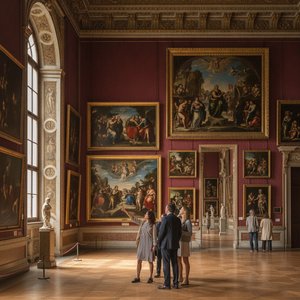
The visit to the museum collection begins at Giorgio Massari’s large ceremonial staircase on the side of the palazzo opposite to the Grand Canal. The first floor contains eleven rooms that exhibit paintings, sculptures, and frescoed ceilings. These spaces are arranged to display collections of 18th-century Venetian furniture alongside decorative arts. The rooms provide a study in the material opulence of the period, featuring heavy textiles and ornate porcelain.
The collection includes significant works that define the era's visual language. Visitors can observe the following items within these galleries:
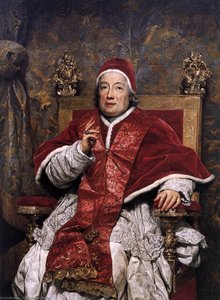
- Portrait of Clement XIII Rezzonico, 1758 - Anton Raphael Mengs
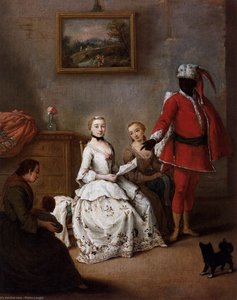
- The Letter of the Moor, 1751 - Pietro Longhi
- Cornelia mother of the Gracchi, 1620 - Alessandro Varotari
- The Rape of Lucretia - Felice Ficherelli
- Ceres with Two Putti - Alessandro Varotari
The museum also features an education room located on the mezzanine floor. This space overlooks the Grand Canal. The first floor remains dedicated to the study of 18th-century Venetian life through its assembly of furniture, paintings, and sculptures.
The Second Floor and Tiepolo Works
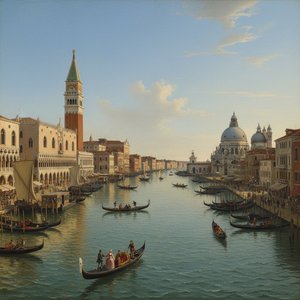
The second floor begins with a long central hall, a space designed according to the traditional layout of a Venetian palazzo. This hall contains two early works by Canaletto, providing an immediate sense of the topographical precision characteristic of his hand. The architecture of the floor facilitates a transition into the specialized galleries that follow.
The rooms on this level are dedicated to the work of Pietro Longhi. These spaces allow for a focused study of his depictions of Venetian life. Alongside these paintings, the floor houses the Giandomenico Tiepolo frescoes. These large-scale works were originally located on the walls of Villa Zianigo and have been integrated into the museum's permanent arrangement.
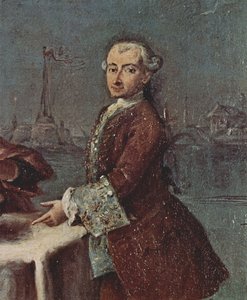
- Portrait of Cecilia Guardi Tiepolo, 1757 - Lorenzo Baldissera Tiepolo
- The Letter of the Moor, 1751 - Pietro Longhi
- Il Rinoceronte, 1751 - Pietro Longhi
- Venditrice di essenze, 1757 - Pietro Longhi
The Third Floor and Specialized Galleries
The third floor contains the reconstructed “Ai Do San Marchi” Venetian pharmacy. This space recreates a pharmacy that was originally located in Campo San Stin. It had been in operation since at least the second half of the seventeenth century. The installation provides a look at the scientific culture and craftsmanship of the eighteenth century through its specialized equipment and layout.
The Egidio Martini Picture Gallery is also situated on this level. This gallery houses the most significant donation made to the City of Venice since the beginning of the twentieth century. The collection within this space offers a focused study of the artistic contributions provided to the city during that period.
Masterpieces of the Museum Collection
The collection includes works by Tiepolo, Guardi, and Canova. Among the most significant paintings is the Tiepolo ceiling titled Nobility and Virtue defeating Ignorance, painted about 1744–45. This work occupies a central position within the museum's holdings of Venetian painting.
Decorative arts are represented by two enormous chandeliers made of wood and gilded metal from the mid-18th century. In the Brustolon Hall, a Murano glass chandelier by Giuseppe Briani is on display. These objects reflect the material standards of the period.