

A Monument of Power and Artistry
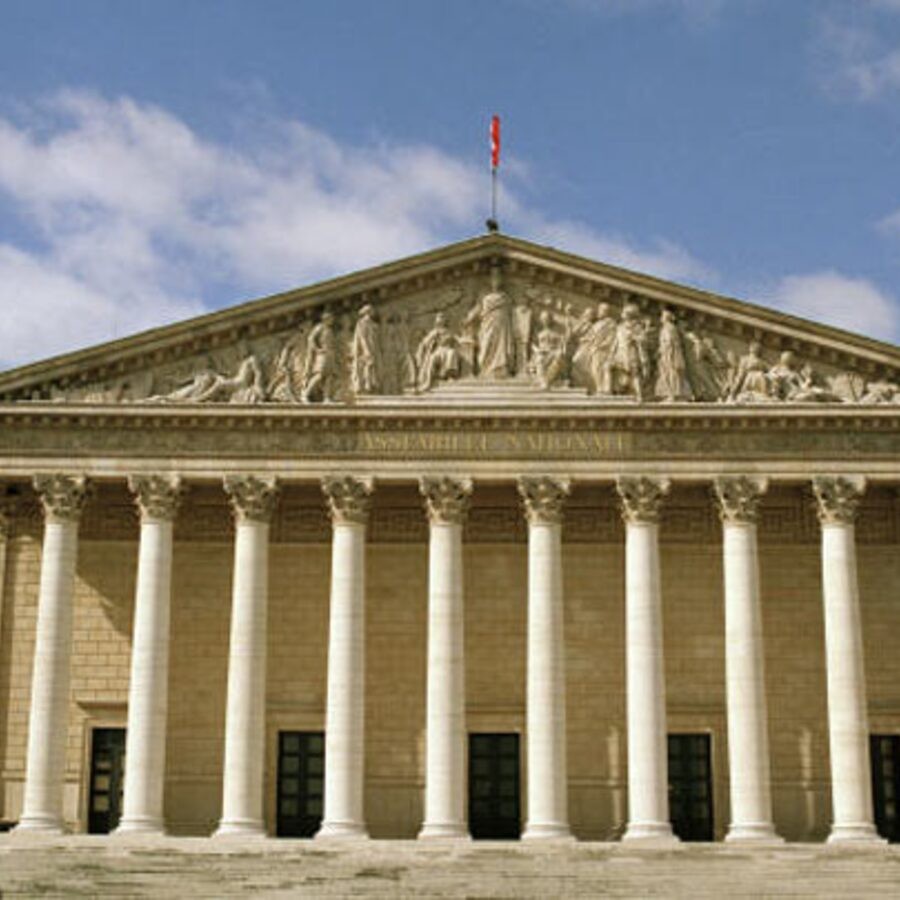
To stand before the Palais Bourbon is to witness the very heartbeat of French political identity, a structure where the grandeur of the Ancien Régime meets the resolute spirit of modern democracy. Located on the Left Bank in the prestigious 7th arrondissement of Paris, this architectural marvel does not merely house the National Assembly; it serves as a living chronicle of France’s turbulent and triumphant history. The palace, which began its life in 1722 as a private sanctuary for Louise Françoise de Bourbon, the daughter of Louis XIV, was originally conceived as an emblem of aristocratic luxury. As one gazes upon its monumental Neoclassical façade, designed by Bernard Poyet to mirror the Église de la Madeleine across the Seine, one feels the weight of imperial ambition and the deliberate use of symmetry and proportion to evoke a sense of eternal order.
The evolution of the Palais Bourbon is a narrative of transformation, shifting from a gilded aristocratic residence to a crucible of revolutionary change. During the French Revolution, the palace was stripped from its noble owners and repurposed as the Council of Five Hundred, marking its transition into a site of legislative significance. For collectors and lovers of history, the building represents a rare intersection where political decision-making and artistic heritage converge. The interior is a labyrinthine masterpiece of Neoclassical elegance , where every corridor and salon tells a story of shifting power. Beyond the heavy doors lies an opulent world of frescoes that depict mythological grandeur and gilded embellishments that reflect the sophisticated tastes of the Bourbon and Napoleonic dynasties, offering a sensory experience that transcends simple governance.
Architectural Grandeur and Design Inspiration
For the discerning interior designer or art enthusiast, the Palais Bourbon offers profound inspiration through its meticulous attention to detail and its seamless blend of architectural styles. The complex is not merely a single building but an ensemble of historical significance, including the Hôtel de Lame , which provides a sense of residential intimacy amidst the monumental scale of the assembly halls. The interplay of light within its vast, high-ceilinged rooms creates an atmosphere of profound dignity.
The architectural journey of this site is marked by several key contributors:
- Lorenzo Giardini, Pierre Cailleteau, Jean Aubert, and Ange-Jacques Gabriel: The successive architects who shaped the original palace.
- Bernard Poyet: The visionary behind the Neoclassical façade that defines the building's presence facing the Place de la Concorde.
- Jean-François Leroy: The architect responsible for designing the historic square, the Place du Palais-Bourbon.
To explore this site is to embark on a journey through time, where the echoes of debates that shaped nations are preserved within walls adorned with some of the finest examples of French decorative arts and architectural engineering. It remains a place where the weight of history is felt in every gilded ornament and every stone of its monumental exterior.