The History of Palazzo Chigi of Ariccia
Located in the center of the town of Ariccia, near Rome, Italy, the Palazzo Chigi of Ariccia has long functioned as a seat of presence for the Chigi family. The site itself holds layers of history, having originally been occupied by a 15th-century palace belonging to the Savelli family. This earlier structure provided the foundation for the subsequent transformations that would define the location's character.
The transition of the site into its current form occurred through significant reconstruction. The palace was rebuilt between 1664 and 1672, a period of development that shaped the building into the ducal palace of the Chigi family. This era of construction brought a new sense of purpose to the residence, establishing it as a central point of authority and residence for the princely line.
The ownership of the palace remained within the family for centuries until a significant change in its governance. In 1988, Prince Agostino Chigi Albani della Rovere ceded the palace to the Commune. This transition ensured that the building would remain a part of the public landscape, allowing the structure to continue its role within the community of Ariccia.
Architecture and Baroque Design
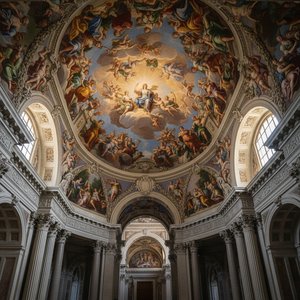
Situated within the Alban Hills of the Lazio region, the Palazzo Chigi of Ariccia possesses a presence that belies its external appearance. The structure was rebuilt between 1664 and 1672 by the Chigi Family, transforming a 15th-century palace originally belonging to the Savelli family into a significant Baroque residence. This reconstruction emerged from a collaboration between Gian Lorenzo Bernini and Carlo Fontana. While the exterior maintains a certain sobriety, the interior spaces offer a different experience through their highly decorated surfaces.
The architectural rhythm of the palace reflects the transition from the earlier Renaissance foundations to the more complex sensibilities of the Baroque era. The design choices made during the mid-17th century created a residence that prioritized the private, ornamental life of the nobility within its walls. This contrast between the restrained facade and the ornate internal environments defines the character of the building.
- Baroque style reconstruction, 1664 to 1672
The Museo del Barocco Romano Collection
The Museo del Barocco Romano occupies the space within the palace, held within the enduring presence of the remaining Chigi family collections. The museum's character is defined by the quiet weight of these gathered works, which inhabit the rooms of the former ducal residence. Among the many pieces held here, the brushwork of Loreti, Guttembrun, Mascucci, and Kobler provides a specific layer to the interior's atmosphere. These works exist alongside the more prominent contributions of Francesco Trevisani and Giovanni Battista Gaulli.
To stand before the paintings is to encounter the specific visual language of the Baroque period as it was lived and collected by the Chigi lineage. The presence of Giovanni Battista Gaulli is particularly notable, as his work brings a certain gravity to the halls. The collection does not merely display art; it preserves the specific aesthetic environment that once surrounded the family. The works of Trevisani further contribute to this sense of historical continuity, anchoring the museum within the specific context of the Palazzo Chigi of Ariccia.
- Portrait of Clement IX blessing, about 1667
- Portrait of Innocent XII Pignatelli, about 1690
- Portrait of Augusto Chigi, about 1700
Masterpieces of the Chigi Collection
The presence of the Chigi family is felt through a series of portraits that capture the lineage and the spiritual weight of their history. Pietro Paolo Veglia offers two distinct gazes: the portrait of Augusto Chigi from about 1700 and the portrait of Innocent XII Pignatelli from about 1690. These works exist alongside the portrait of Maria Virginia Borghese by Giovanni Maria Morandi and the portrait of Mario Chigi, also by Morandi. The collection also holds the portrait of venerable Aurelio Chigi by Francesco Vanni, alongside several works by JF Voet, including portraits of Sister Maria Lutugarda, Sister Flavia Virginia, Agostino Chigi, and Maria Virginia Borghese. These figures occupy the space with a quiet, enduring gravity.
Religious devotion and papal authority find expression in the works of Giovanni Battista Gaulli, known as Il Baciccio. His portrait of Clement IX blessing, dating from about 1667, sits near his depiction of Blessed Giovanni Chigi in penitence. The connection between the family and the papacy is further solidified in the portrait of Pope Clement IX and Cardinal Sigismondo Chigi. These paintings do not merely depict individuals; they hold the weight of the roles they occupied. Nearby, the Allegory of the Senses by Pier Francesco Mola provides a different, more conceptual layer to the room's atmosphere.
Other works contribute to the specific character of the palace, such as the portrait of Cardinal Fabio Chigi by Carlo Cesi and the portrait of Suor Berenice by Francesco Trevisani. The collection also includes the portrait of Cardinal Flavio Chigi by Jacob Ferdinand Voet. Each piece remains a specific point of focus within the halls of the Palazzo Chigi of Ariccia.