
Origins and History of the Museum
The Pola Museum of Art is situated in Hakone, within the Kanagawa Prefecture of Japan. It opened its doors in September 2002, nestled inside the Fuji-Hakone-Izu National Park. The establishment emerged from a long-term vision, as the collection was assembled over some 40 years by the late Tsuneshi Suzuki. As the second-generation head of the Pola corporation, Suzuki dedicated decades to acquiring the works that now reside here.
Construction of the facility took place over a period of two years. Upon its completion in 2002, the museum became a permanent fixture in the Sengokuhara region. The foundation of the collection reflects the personal interests of Suzuki, who sought to bring diverse works to this specific landscape. The museum remains a quiet presence within the forest, holding the results of a lifetime of careful acquisition.
The Building and its Architecture
The architecture of the Pola Museum of Art, designed by the Japanese firm Nikken Sekkei, seeks a quiet symbiosis with the surrounding forest of Hakone. The structure is a prominent composition of glass and concrete that appears to emerge from the landscape rather than dominate it. To maintain this harmony, the building height was limited to eight meters, ensuring it does not exceed the height of the surrounding trees. This restraint allows the facility to remain integrated within the natural ecology of the national park.
Much of the museum is buried almost entirely below ground. This subterranean design choice minimizes the impact on the local topography and creates a sense of being nestled within the earth. While the total site area spans 56,000 sqm, the museum's actual floor area covers 9,000 sqm across five levels. Two floors exist above the ground, while three levels are situated below. A central atrium allows natural light to descend from a skylight, illuminating the interior spaces with the shifting patterns of the sun and the shadows of the canopy.
A Diverse Art Collection
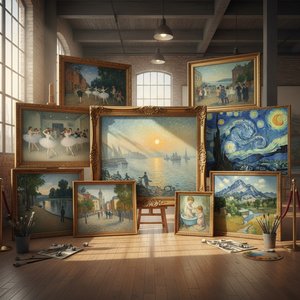
The collection encompasses over 9,500 works, spanning a broad chronological and stylistic range from Impressionism to contemporary art. There is a significant presence of French Impressionism and the École de Paris, allowing for a direct encounter with the evolution of modern painting. These works sit alongside French contemporary paintings, creating a dialogue between historical movements and more recent developments. The selection also features modern yoga, which consists of Western-style paintings created by Japanese artists.
Beyond the canvas, the museum holds various cosmetic utensils and crafts. This inclusion of functional objects alongside fine art reflects a specific interest in the intersection of beauty and material culture. The presence of these items provides a different perspective on the concept of form and utility. The breadth of the holdings ensures that the space remains a site for continuous discovery, regardless of how many times one returns to its halls.
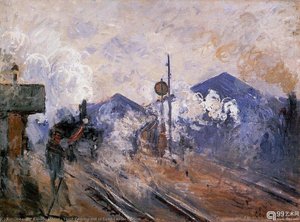
- Track Coming out of Saint-Lazare Station, about 1877 - Claude Monet
- Four Bathers, 1878 - Paul Cézanne
- Girl in a Lace Hat, 1891 - Pierre-Auguste Renoir
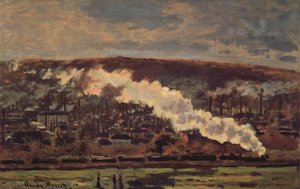
- The Isle La Grande Jatte, 1878 - Claude Monet
- Portrait of Lunia Czechowska in white blouse, 1917 - Amedeo Modigliani
- Self-Portrait with Dogs, 1925 - Edvard Munch
Nature and the Art Nature Trail
The museum is designed to exist in a state of symbiosis with the surrounding landscape of Fuji-Hakone-Izu National Park. The architecture seeks to harmonize with the forest rather than dominate it. To enter the grounds, guests cross a bridge that provides a sense of transition into this quiet space. The structure is largely buried below ground, ensuring the building height does not exceed the surrounding trees.
A 670 meter long hiking trail, known as the Art Nature Trail, winds along the museum grounds. This path allows for a direct connection to the natural environment of Hakone. The trail integrates the forest scenery with the presence of art, creating a space where the greenery and the works exist side by side. It is a quiet way to experience the intersection of the natural world and human creation.