


The Quiet Presence of the Raclin Murphy Museum of Art
Located in St. Joseph County, the Raclin Murphy Museum of Art holds a collection that began in 1875. The origins of these holdings trace back to the Bishops’ Memorial Hall within the Main Building, an assembly of portraits and sculptures that reflected American Catholic history. Though a major fire destroyed much of the original collection and the building itself, the institution endured. It grew through the contributions of artists like Luigi Gregori, eventually moving from the Snite Museum of Art to its current location in 2023.
The atmosphere within the galleries is one of steady accumulation and careful preservation. The collection focuses on European and American art produced before 1900, often illuminating the Catholic tradition. Beyond these historical works, the museum holds Indigenous art of the Americas and contemporary international works, creating a dialogue between different eras and geographies.
Selected Works and Collections
The museum houses a variety of mediums, from delicate works on paper to heavy sculptures. The following pieces represent the breadth of the current catalog:
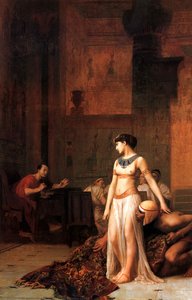
- Cleopatra before Caesar by Jean-Léon Gérôme
- Fishing Shed at Mathois near Gournay-en-Bray by Jean-Baptiste-Camille Corot
- La petite fille aux yeux bleus, 1868 by William-Adolphe Bouguereau
- Marguerite Baudard de St. James, Marquise de Puysegur, 1796 by Élisabeth Louise Vigée Le Brun
- The Fly Catcher, 1808 by Isabelle Pinson
- Figures on Rocks at the Edge of the Sea, 1867 by Jehan Georges Vibert
- Master Henri Gabiou Playing the Violin, 1796 by Marie Victoire Lemoine
- Constant Coquelin, actor, 1882 by Jules Bastien-Lepage
A Legacy of Acquisition
The museum continues to expand its holdings through strategic acquisitions and significant gifts. A recent exhibition, “Bridging Time and Place,” featured 107 works acquired to mark the sesquicentennial of the collection. These additions include textiles, prints, and photographs, ensuring the museum remains a site of ongoing discovery. The Snite Research Center lobby also offers a space for viewing limited objects during the academic year.