

Origins and History of the Scuola Grande di San Rocco
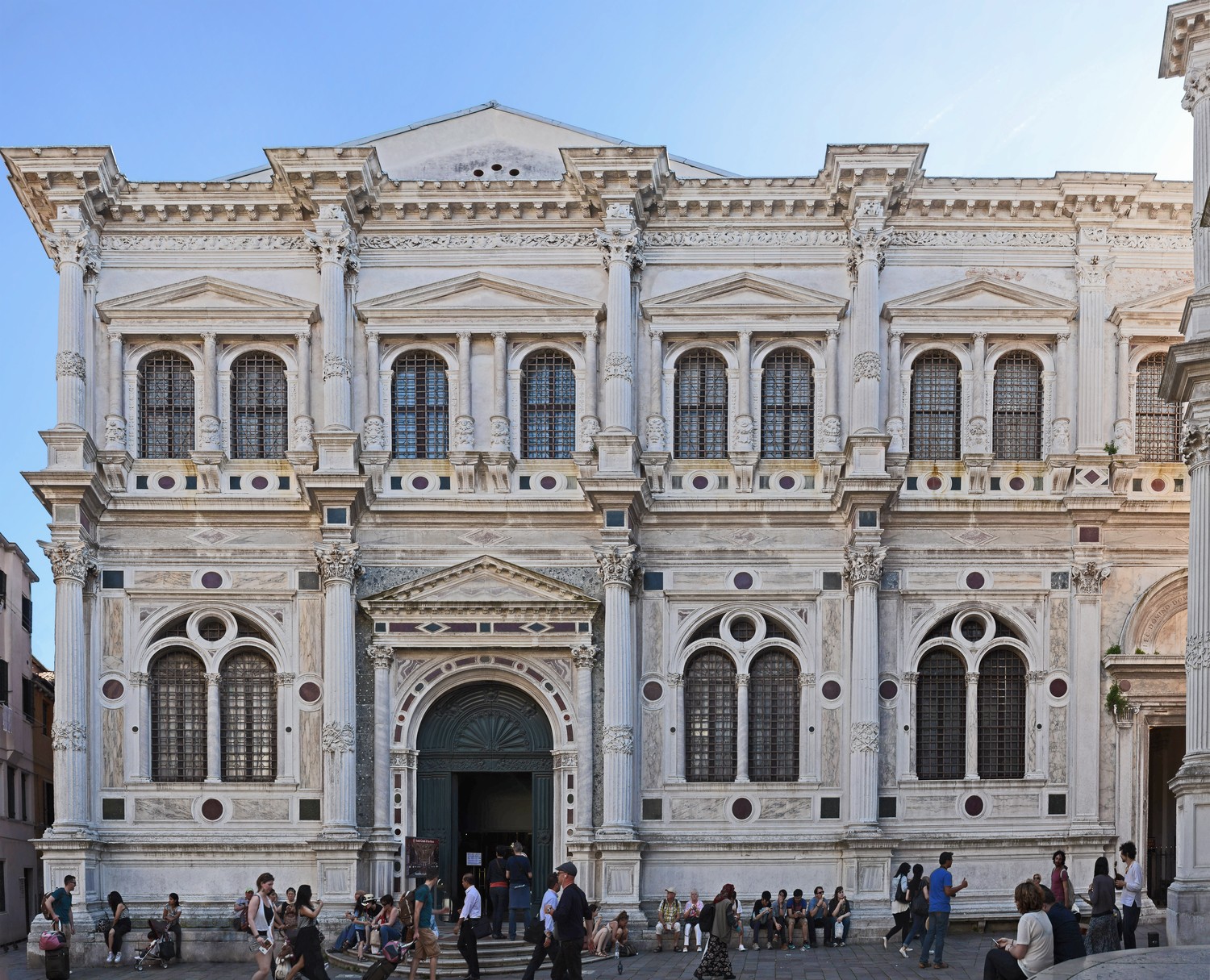
The Scuola Grande di San Rocco emerged in 1478, established by a group of wealthy Venetian citizens. Originally founded as a Battuti school, the institution functioned as a lay confraternity. By 1480, the Council of Ten officially proclaimed it a Great School. This designation reflected its growing importance within the social and religious fabric of the city. The site is situated in the San Polo district of Venice, Italy, positioned near the church of San Rocco.
The history of the institution is marked by its endurance through significant political shifts. It remains the only one of the historic Scuole Grandi to have survived the fall of the Venetian Republic. While other confraternities faced dissolution or significant changes during the French Decade, this institution maintained its continuity. The presence of the saint's remains, which the brotherhood has held since 1485, contributed to its rapid expansion and the accumulation of significant resources. This stability allowed for the preservation of its extensive artistic holdings in their original settings.
The Architecture of the Venetian Building
The structure presents a harmonious blend of Gothic and Renaissance styles, reflecting the layered history of Venice. Construction of the building began in 1517, following the entrustment of the project to Pietro Bon in 1515. This architectural program was developed alongside the nearby church of San Rocco, which was built between 1489 and 1508 by Bartolomeo Bon the Younger.
The interior is organized into several distinct spaces that facilitate the movement of light and people. The layout includes the Sala Terra and the Sala Superiore, which are connected by a grand staircase. Other significant rooms within the complex are the Sala dell'Albergo, the Sala Capitolare, and the Sala del Tesoro. These spaces provide the physical framework for the extensive cycle of paintings that inhabit the halls.
The Tintoretto Collection in the Sala Terra
The Sala Terrena functions as a hall of passage, a transitional space that holds over 60 paintings by Tintoretto. These works are dedicated to the Virgin Mary, focusing on specific episodes from her life. The presence of these canvases creates a continuous narrative that guides movement through the lower level of the building. Eight of these splendid canvases depict the childhood of Jesus alongside the life of the Virgin, establishing a theological foundation before one ascends to the upper halls.
The light in this space interacts with the heavy textures of the oil on canvas. One encounters the Annunciation, a work from about 1583, where the divine presence is felt through the weight of the shadows. Nearby, the St Mary Magdalen from about 1582 offers a study in character and light. The arrangement of these paintings ensures that the viewer is constantly surrounded by the sacred history of the Madonna.
- Annunciation, about 1583
- St Mary Magdalen, about 1582
- The Flight into Egypt, about 1582
- The Massacre of the Innocents, about 1582
The Tintoretto Cycle in the Sala Superiore
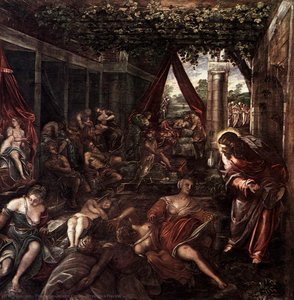
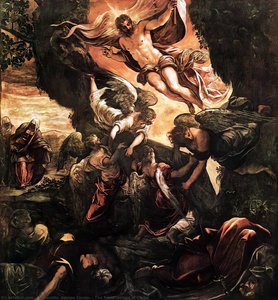
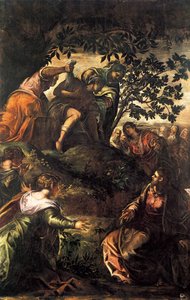
The Sala Superiore functions as a visual progression of sacred history, tracing the biblical narrative from the Fall to Redemption. The ceiling is dedicated to the Old Testament, where the light from the dome illuminates a series of expansive canvases. These works include Adam and Eve, Jacob's Ladder, and God Appears to Moses. The sequence continues with The Passover, The Pillar of Fire, and The Fall of Manna in the Desert. Other celestial encounters depicted above include Moses Strikes Water from the Rock, the Miracle of the Bronze Serpent, Elijah is Fed by the Angels, Elisha Distributes Bread, and The Vision of the Prophet Ezekiel.
The walls of this upper hall shift the focus toward the New Testament. Here, the paintings provide the necessary resolution to the theological arc established by the ceiling. The arrangement ensures that the viewer remains within a continuous cycle of divine intervention and human response. The scale of these compositions matches the height of the room, creating a sense of immersion in the unfolding scripture.
Masterpieces of the Tintoretto Collection
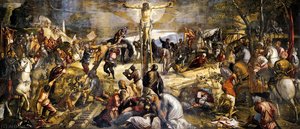
The presence of Tintoretto’s hand is felt most acutely in the side room, where The Crucifixion resides. This work offers a raw, unadorned look at suffering, eschewing traditional iconography for a more visceral emotional power. It remains a heavy, central presence within the building's interior. Nearby, the Annunciation provides a significant moment of quietude, a substantial work that anchors the spiritual narrative of the space.
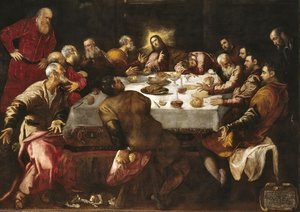
In the Sala Superiore, the scale of the narrative expands. The Last Supper occupies this upper hall, capturing the tension and psychological depth of the apostles through a sense of realism. The composition draws the eye toward the central drama of the event. In the same hall, The Adoration of the Shepherds, completed in 1578, brings a sense of divine encounter to the room. The painting uses light to ground the sacred scene within a tangible, earthy world, where the inclusion of cattle adds a layer of physical reality to the celestial moment.
- The Crucifixion
- The Annunciation
- The Last Supper
- The Adoration of the Shepherds (1578)
Other Notable Artworks and Artists
Beyond the pervasive presence of Tintoretto, the walls and spaces of the Scuola Grande di San Rocco hold significant contributions from other Venetian masters. The collection includes paintings by Titian and Palma il Giovane, providing a broader perspective on the artistic currents of the era. In the church, a monument dedicated to Pellegrino Baselli Grillo dates from 1517, marking a specific moment in the site's long history of patronage.
The transition between levels offers its own visual interest. In 1743, Giambattista Tiepolo provided two works for the passage of the staircase, adding a later layer of Venetian artistry to the building's interior. These works exist alongside a series of wooden panels featuring allegorical figures, carved by Francesco Pianta between 1657 and 1658.
- Abraham and the Angels
- Agar and Ishmael