
Origins and History of the Museum
The Santa Barbara Museum of Art occupies a central position in downtown Santa Barbara, California, United States. Its presence in the community traces back to a proposal made by a local artist, Colin Campbell Cooper, who recognized the potential of the city's former Federal Post Office Building. In a 1937 letter, the idea for transforming this Italianate structure into a dedicated space for art was first articulated. This vision gained momentum through the support of local collectors, businesses, and politicians, leading to the official establishment of the institution four years later.
The museum opened its doors to the public on June 5, 1941. Since that time, the institution has grown from its initial foundations into a repository for diverse collections. The early development of the museum was shaped by the contributions of its founders, including Wright S. Ludington, whose involvement spanned over five decades. Through these early efforts, the museum began to assemble a permanent collection that spans 4,000 years, encompassing Asian, American, and European art from ancient to modern periods.
The Building and its Architecture
The museum occupies a structure that functioned as the Santa Barbara Federal Post Office Building between 1914 and 1932. The transition from a civic utility to a space for art involved a significant simplification of the building's façade. This architectural refinement was overseen by David Adler, who designed the initial interior layout. His work established the museum's first galleries, including the Ludington Court and the Thayer Gallery.
The interior space has expanded through several distinct additions and dedications. The von Romberg Gallery, the Campbell Gallery, and the Gould Gallery provide the primary framework for the permanent collections. In 1942, the Stanley B. McCormick Gallery was added following a donation from Katharine McCormick. Later expansions brought the Alice Keck Park Wing to the public in 1985, followed by the Jean and Austin H. Peck, Jr. Wing in 1998.
Major Collections and Artworks
The permanent collection spans 4,000 years, bringing together Asian, American, and European art. This breadth allows for a direct encounter with the evolution of form and expression across millennia. Ancient Greek and Roman antiquities reside alongside Ancient Chinese sculptures, providing a physical connection to the distant past. These objects possess a weight and presence that transcend their historical categorization.
The museum holds nearly 400 objects donated by Wright S. Ludington. This significant gift includes works by modern artists such as Henri Matisse, Edgar Degas, Joseph Stella, Georges Braque, Pablo Picasso, and Joan Miró. These pieces represent a specific era of formal experimentation and the development of modernism. The presence of such artists allows for a quiet study of the shifts in twentieth-century aesthetics.
The collection also features diverse works that reflect changing perspectives on identity and landscape. Notable examples include:
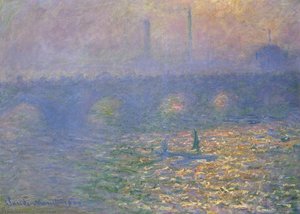
- Waterloo Bridge, London, 1900 - Claude Monet
- Winter: Juno and Aeolus, 1856 - Eugène Delacroix
- Moonrise, 1889 - Frederic Edwin Church
- Mirror Lake, Yosemite Valley, 1864 - Albert Bierstadt
- The Cathedral of Notre-Dame de Paris, Seen from the Pont de l’Archevêché, 1849 - Johan Jongkind
Exhibitions and Research
The museum maintains a commitment to the evolving nature of contemporary practice. The exhibition In the Making: Contemporary Art at SBMA presents a selection of works dating from 1965 to 2023. These pieces reveal shared preoccupations with optical effects and otherworldly landscapes. The collection moves through seven decades, placing works from fifty years ago alongside those from the 2020s to examine the shifting definition of the contemporary.
Historical perspectives are also central to the institution's programming. In 2004, the centerpiece exhibition Art of the Americas: Latin America and the United States, 1800 to Now! brought together nearly 200 paintings, drawings, sculptures, prints, photographs, and installation art. This presentation allowed for a comparison of diverse regional traditions, such as the juxtaposition of portraits from the early nineteenth century with modern representations of women. Such exhibitions examine how different eras and geographies interpret form, identity, and the human experience.