
A Monument to Imperial Ambition: Exploring St. Isaac’s Cathedral & Square
Nestled at the very heart of Saint Petersburg, Russia, St. Isaac’s Cathedral and its surrounding square stand as a breathtaking testament to imperial ambition, artistic mastery, and centuries of Russian history. More than just a magnificent edifice, this complex is an immersive experience—a journey through architectural evolution, religious devotion, and the shifting tides of power that shaped a nation. From its humble beginnings as a fortified outpost to its current status as a revered museum, St. Isaac’s Square offers a profound glimpse into Russia's soul.
The story begins with Peter the Great, who envisioned Saint Petersburg as a window to Europe and a symbol of his enlightened reforms. The initial construction of the cathedral in the early 18th century was a modest affair—a wooden structure intended to honor the apostles Peter and Paul. However, this first iteration quickly proved inadequate, leading to a series of ambitious rebuilds over the following decades. Each subsequent phase reflected the prevailing architectural styles and the evolving tastes of the Russian court, culminating in the monumental masterpiece that dominates the square today, largely under the direction of the French architect Auguste Montferrand. The sheer scale of the project—a colossal undertaking involving millions of bricks, tons of marble, and countless hours of labor—is a remarkable feat of engineering and a tangible expression of Russia’s burgeoning power on the world stage.
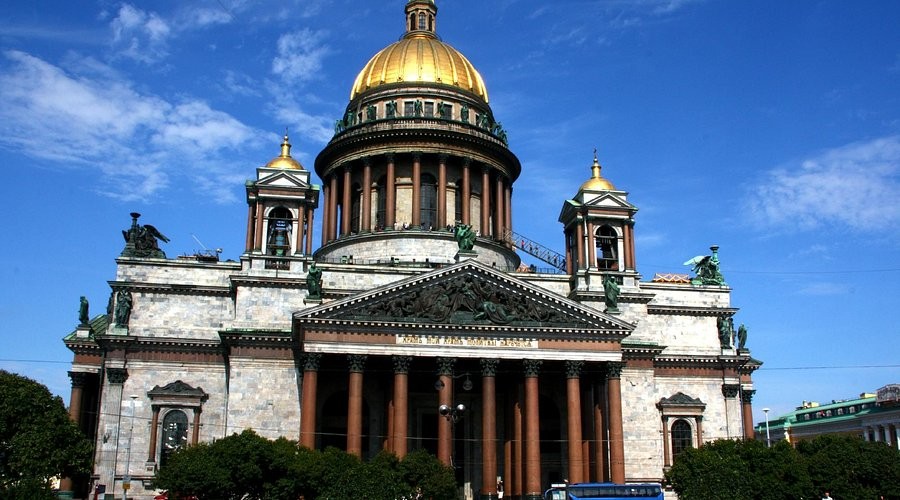
- The Golden Dome: Montferrand's crowning achievement is undoubtedly the cathedral’s iconic golden dome. This marvel of construction involved an innovative technique, raising all supporting structures before applying the final covering—a testament to the architect’s ingenuity and a symbol of the project’s audacious scale.
- Neoclassical Grandeur: The exterior façade showcases a harmonious blend of neoclassical principles with Byzantine influences, creating a unique architectural synthesis that is distinctly Russian. Massive granite columns, each painstakingly hewn from a single block, rise majestically to support the soaring structure.
- A Treasury Within: Step inside and be enveloped by an atmosphere of lavish decoration—walls and ceilings adorned with millions of shimmering tesserae in mosaics depicting biblical scenes and iconic figures. Sculptures by renowned artists punctuate the space, while paintings offer glimpses into 19th-century Russian artistic sensibilities.
A Tapestry of Art & History
Beyond its architectural splendor, St. Isaac’s Cathedral houses a remarkable collection that illuminates Russia's rich cultural past. The mosaics are arguably the most striking feature—vast expanses of color and intricate detail narrating biblical stories and celebrating Russian history. These aren’t merely decorative elements; they represent a profound commitment to religious art and storytelling. Alongside these dazzling displays, the museum showcases a remarkable array of 19th-century Russian paintings and icons, offering insights into the evolving artistic styles and spiritual beliefs of the era.
The centerpiece of this collection is undoubtedly the Feodorovskaya Icon , revered for its historical importance and deeply rooted in Russian Orthodox tradition. It’s a powerful symbol of faith and artistry, reflecting the devotion of generations of worshippers. The museum also preserves detailed architectural drawings and models that reveal the complex construction process—a fascinating glimpse behind the scenes of this monumental undertaking. These exhibits collectively paint a vivid picture of Russia’s artistic heritage and its enduring connection to faith and imperial power.
From Cathedral to Museum: A Symbol Transformed
The history of St. Isaac's is not solely one of religious devotion; it reflects the tumultuous shifts that have shaped modern Russia. Following the Russian Revolution, the cathedral was secularized and transformed into a state museum in 1931—a symbolic act reflecting the new ideological landscape. While its original function as a place of worship was curtailed, the building’s cultural significance remained undiminished. Today, it continues to serve as a museum, preserving its artistic treasures for future generations, with occasional church services held within a side chapel.
This duality—a space simultaneously dedicated to art, history, and faith—adds another layer of complexity to its identity. Climbing to the colonnade offers breathtaking panoramic views of Saint Petersburg, allowing visitors to appreciate not only the Cathedral’s grandeur but also the city's sprawling beauty. It is a vantage point that encapsulates the spirit of St. Isaac’s: a place where history, art, and faith converge in a truly unforgettable experience. The square itself, once a stage for imperial processions and public celebrations, now serves as a vibrant hub for both locals and tourists, a testament to its enduring appeal and historical resonance.
Beyond the Cathedral Walls
The surrounding St. Isaac’s Square is more than just a backdrop; it's an integral part of the experience. The square has undergone several name changes throughout history—from Vorovsky Square during the Soviet era—reflecting the shifting political landscape. Today, it remains a bustling public space, hosting events and gatherings that celebrate Russian culture and heritage.
- The Mariinsky Palace: Adjacent to the cathedral stands the Mariinsky Palace, designed by architect Andrey Stackenshneider, which houses the Saint Petersburg Legislative Assembly.
- Historical Landmarks: The square is also home to notable buildings such as the Hotel Astoria and the Hotel Angleterre, each with its own rich history and architectural significance.
- The Blue Bridge: Spanning the Moyka River, the Blue Bridge is a landmark of Saint Petersburg, offering stunning views of the cathedral and surrounding area.
A visit to St. Isaac’s Cathedral & Square is not merely a sightseeing excursion; it's an immersion into Russian history, art, and faith—a chance to witness the grandeur of imperial ambition and appreciate the enduring legacy of one of the world’s most magnificent architectural masterpieces.