


The History of the Vatican Museums
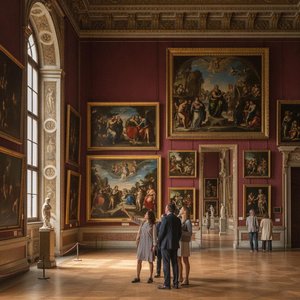
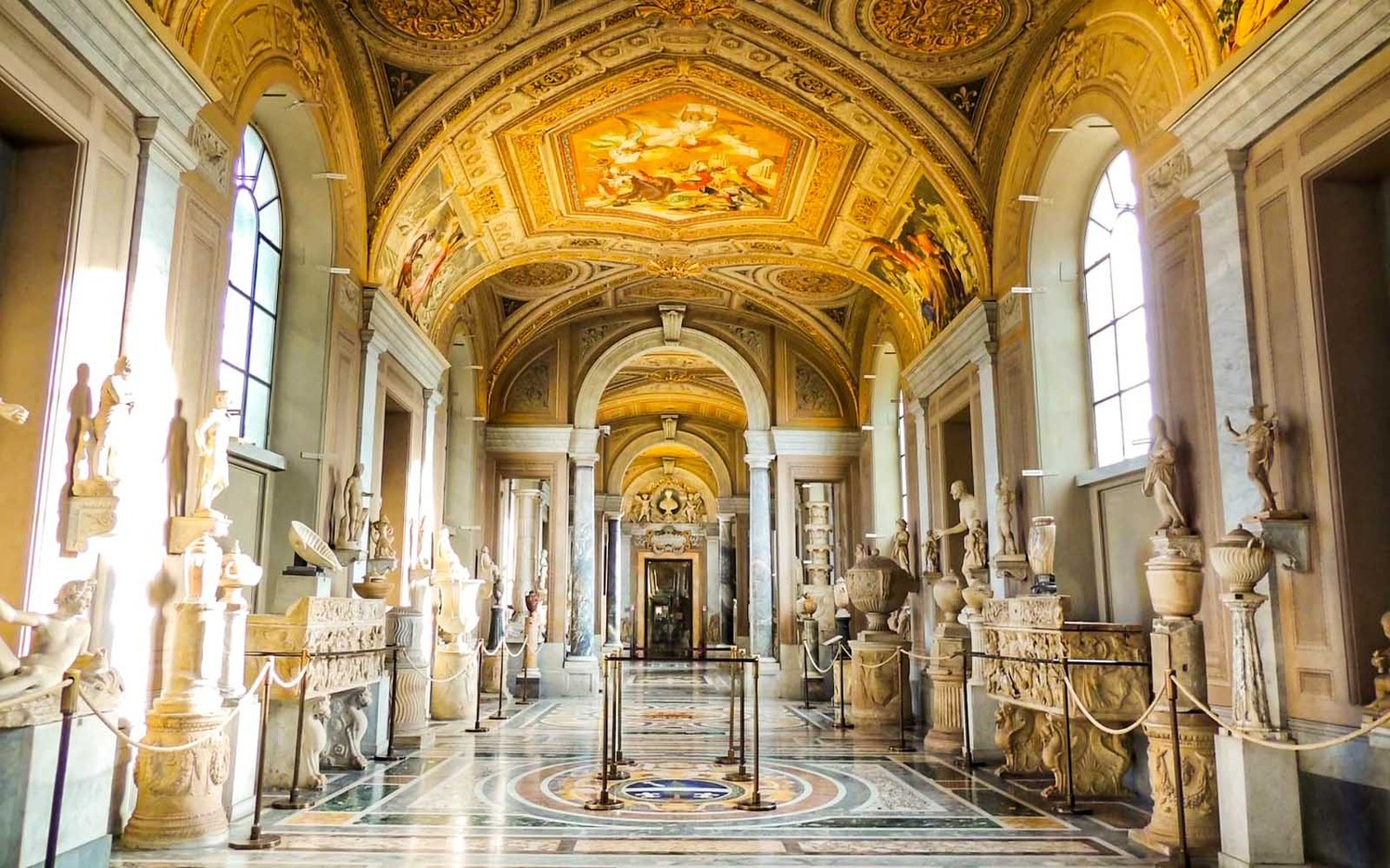
The Vatican Museums represent the public face of the collections held within Vatican City. The origins of these halls trace back to the early 16th century, when Pope Julius II began the process of gathering significant works. Over the centuries, the papacy and the Catholic Church amassed a vast assembly of objects, building a repository that has grown through continuous acquisition and preservation. This accumulation of history reached a significant milestone in October 2006, when the institution celebrated its 500th anniversary.
The scale of the collection is immense, containing roughly 70,000 works. These pieces reflect the changing interests and the immense power of the Church through various eras. Among the most significant acquisitions are several of the best-known Roman sculptures, which arrived in the collection during the Renaissance. These stone figures provide a direct connection to the classical antiquity that informed much of the subsequent artistic development within the city-state.
- Laocoön and His Sons
Architecture and the Apostolic Palace
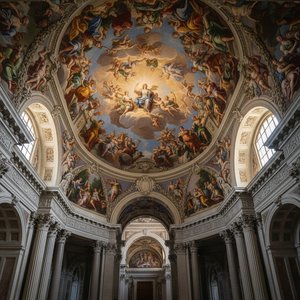
The Apostolic Palace is a sprawling complex that reflects the evolution of the Catholic Church. Constructed over centuries by successive Popes, the structure embodies principles of harmony, proportion, and classical inspiration. Its architecture presents a blend of Renaissance grandeur and Roman practicality, creating a space where the weight of history is felt through the very stone and mortar of the buildings.
The layout of the complex has been shaped by the shifting needs of the papacy, resulting in a series of interconnected spaces that have grown alongside the institution itself. Within this architectural ensemble, the Pinacoteca Vaticana occupies a significant place. Designed by Luca Beltrami, the building was inaugurated on 27 October 1932. This structure provides a dedicated setting for the preservation of the collection, offering a sense of permanence to the works housed within its walls.
The Raphael Rooms and Sistine Chapel
Located within the Apostolic Palaces, the Raphael Rooms contain the Stanze di Raffaello. These spaces bear the mark of Raphael, whose hand decorated the rooms during the High Renaissance. The frescoes within these chambers present a dialogue between classical philosophy and Christian thought, rendered with a precision that remains palpable in the quiet light of the galleries. The composition of the figures and the architectural perspective create a sense of order that defines the era.
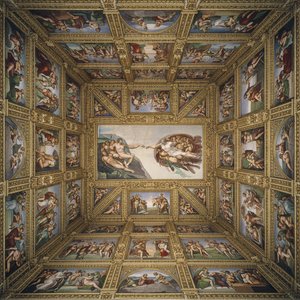
The final destination in the museum circuit is the Sistine Chapel, situated in the heart of Vatican City. This sacred space holds the ceiling and altar wall decorated by Michelangelo. The scale of the work is immense. The figures possess a muscularity and anatomical weight that command the viewer's attention. The colors, preserved through centuries of careful stewardship, retain a depth that speaks to the intensity of the original application. To stand beneath the vaults is to witness the intersection of human form and divine narrative.
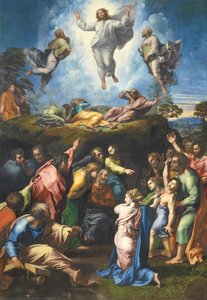
- The Transfiguration, about 1520 - Raphael
The Pinacoteca and Art Collections
The Pinacoteca houses an extensive collection of Renaissance and Baroque paintings, offering a quiet space to observe the evolution of Italian art. The presence of works by Giotto, Raphael, Caravaggio, and Bernini allows for a direct encounter with the technical shifts that defined these eras. In these halls, the weight of history is felt through the specific application of pigment and the careful handling of light and shadow.
The collection includes the Stefaneschi Triptych by Giotto, a work that reflects the early development of sacred imagery. Nearby, the Marsuppini Coronation by Filippo Lippi provides a different perspective on devotional art. These pieces exist alongside the Pietà by Giovanni Bellini, which maintains a steady, contemplative presence. The transition from these earlier styles toward the High Renaissance is marked by the presence of Raphael’s The Transfiguration, a work that demands a slow, focused observation of its composition and color.
- The Transfiguration, about 1520 - Raphael
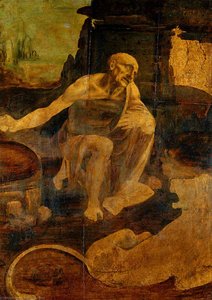
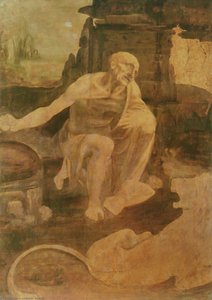
- St. Jerome in the Wilderness, 1480 - Leonardo da Vinci
- St. Jerome, 1480 - Leonardo da Vinci
Ancient and Egyptian Collections
The Gregorian Egyptian Museum and Etruscan Museum offer a direct encounter with the civilizations that preceded Christianity in Italy. Within these spaces, the presence of mummies, sarcophagi, and various sculptures provides a tangible connection to the ancient world. The weight of these artifacts is felt in the quiet halls where stone and ritual meet. The Cortile della Pigna introduces this historical depth through the presence of an imposing Egyptian obelisk, a vertical marker that anchors the courtyard.
Movement through the complex follows a deliberate architectural progression. The Octagonal Courtyard acts as a transition, bridging the gap between the Roman world and the Renaissance. This spatial shift allows for a gradual immersion into the layers of history held within the walls. The Museo Pio-Clementino continues this focus on antiquity, housing a significant collection of Greek and Roman sculpture. These works exist as physical remnants of classical thought and form.
Masterpieces of the Vatican Collection
The presence of these works within the Vatican Museums offers a direct encounter with the evolution of religious narrative. Raphael’s The Transfiguration, painted about 1520, carries a weight of light and shadow that commands the space around it. Nearby, the studies of the human form and spiritual isolation are felt in Leonardo da Vinci’s depictions of St. Jerome in the Wilderness and St. Jerome, both dating to about 1480. These paintings focus on the intensity of the subject's devotion through precise anatomical detail and a controlled palette.
The collection also holds significant examples of earlier and more narrative-driven compositions. Sano di Pietro’s The Marriage of the Virgin, from 1448, presents a scene of solemnity through its specific Sienese style. In the details of the sacred, Cosimo Rosselli’s 1481 rendition of The Last Supper captures a moment of profound human drama. Pieter Van Edingen Van Aelst’s The Miraculous Draught of Fishes, executed in 1519, provides another layer to this historical sequence of faith and observation.
- The Transfiguration, about 1520 - Raphael
- St. Jerome in the Wilderness, about 1480 - Leonardo da Vinci
- St. Jerome, about 1480 - Leonardo da Vinci
- The Miraculous Draught of Fishes, 1519 - Pieter Van Edingen Van Aelst
- The Marriage of the Virgin, 1448 - Sano di Pietro
- The Last Supper (detail), 1481 - Cosimo Rosselli
Exhibitions and Research Initiatives
The evolution of the Vatican Museums is driven by a continuous cycle of new exhibitions and scholarly research projects. This ongoing activity is supported by a dedicated workforce of 640 people, distributed across 40 administrative, scholarly, and restoration departments. These specialists work to ensure that the collections remain accessible to a global audience through modern initiatives designed to enhance visitor accessibility. Such efforts allow for a deeper engagement with the vast array of objects held within the complex.
A significant component of this institutional activity is the Vatican Historical Museum, which was founded in 1973. This section provides a specific focus for historical inquiry, complementing the broader research conducted throughout the various galleries. Recent institutional focus has also prioritized the refinement of conservation techniques. These technical advancements are essential for the long-term stability of the works, ensuring that the physical presence of the art remains intact for future study and observation.
Recent Conservation and Preservation
The preservation of such a vast collection requires a continuous and meticulous commitment to stability. Ongoing efforts focus on the conservation of the many works held within the halls, ensuring that the stories embedded within each piece of art continue to resonate for centuries. This work is a quiet, constant necessity, maintaining the physical integrity of the pigments and stone that define the collection.
A significant milestone in these efforts was the restoration of the Sistine Chapel, which reached completion in 2019. This project was the result of decades of painstaking work, aimed at stabilizing the delicate surfaces of the frescoes. Such long-term dedication ensures that the visual narratives of the chapel remain legible and intact for future generations to observe.