
Origins and History of the Museum
The Yamagata Museum of Art opened its doors in August 1964. Its establishment followed years of aspiration by the Yamagata Art Club, which sought a dedicated space for the region after the Second World War. The concept for the institution expanded from a municipal idea into a museum intended for the residents of the entire prefecture. It began under the management of a privately run foundation, operating through the cooperation of both the city and the prefecture.
The institution has undergone significant structural and administrative changes since its inception. An annex was added in 1968, and a new three-story main building was opened in August 1985. In April 2011, the organization transitioned from a private foundation to a public foundation. This shift reflects the museum's enduring presence in the community. Today, the Yamagata Museum of Art remains active in promoting the arts and supporting lifelong learning for the people of the prefecture.
The Building and its Architecture
The museum's physical presence evolved through distinct stages of development. Following the initial opening, an annex was added in 1968 to expand the facility. This was followed by the construction of a new three-story main building, which opened on August 10, 1985. The annex underwent renovation in October 1986, resulting in the current configuration of the site.
The architecture of the main building reflects a dialogue between modern design and local tradition. Its form echoes the steep-roofed, multi-level houses characteristic of the snowy, mountainous regions surrounding Yamagata. This structural choice allows the contemporary edifice to maintain a connection to the regional landscape. The total floor space encompasses 6400㎡, providing a substantial environment for the collections held within.
Inside, the layout is organized around eight exhibition rooms. These spaces account for 2100㎡ of the total area, offering dedicated environments for the study of the various collections. The arrangement of these rooms allows for a quiet encounter with the works on display.
The Three Pillars of the Collection
The museum's identity is structured around three distinct pillars: Japanese and Oriental Art, Regional Art, and French Art. Each collection offers a different perspective on the history of form and expression. The Japanese and Oriental Art collection provides a foundation for understanding the aesthetic traditions of the region, while the Regional Art collection focuses on the specific creative output of the local area. These collections ensure that the museum remains deeply connected to both its immediate surroundings and the broader traditions of the East.
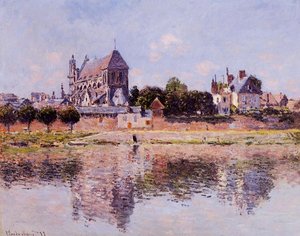
The French Art collection brings a different energy to the halls, particularly through the presence of the Yoshino Gypsum Collection. This specific assembly includes works representing the Impressionist, Cubist, Abstractionist, Barbizon school, and Ecole de Paris movements. These movements reflect the shifting currents of European modernism, offering a study in how light, structure, and emotion were redefined during the nineteenth and twentieth centuries. The presence of these styles allows for a direct encounter with the evolution of Western painting techniques.
Within these collections, certain works hold a particular presence:
- The Narrow Road to the Deep North by Yosa Buson (1716-1783)
- Safflower: Cultivation and Processing by Yokoyama Kazan (1781/4-1837)
- Spirit of Eternal Reprise (Génie du repos éternel) by Auguste Rodin (1899)
Major Acquisitions and Donations
The presence of significant works within the museum is deeply tied to the generosity of local families and industrial entities. In 1968, Kichiro Hasegawa donated 163 works, providing a substantial foundation for the growing collection. This legacy of giving continued through subsequent decades, notably in 1994 when Kenji Hasegawa donated 81 pieces on behalf of Kichinai Hasegawa. Later, in 1995, Kichishige Hasegawa contributed an additional 48 pieces to the institution.
The French Art Collection owes much of its character to the Yoshino Gypsum Co., Ltd (Tokyo), which deposited a series of Impressionist works. These acquisitions allow for a sustained encounter with the movements that shaped modern European painting. The museum's holdings include several significant pieces from these various donations, such as:
- The Narrow Road to the Deep North by Yosa Buson (1716-1783)
- Spirit of Eternal Reprise (Génie du repos éternel) by Auguste Rodin (1899)
- Safflower: Cultivation and Processing by Yokoyama Kazan (1823/1825)
Masterpieces of the Collection
The presence of Yosa Buson’s The Narrow Road to the Deep North offers a specific point of focus, holding the status of a designated important cultural property. Nearby, the bronze–plaster cast Bathing by Taketaro Shinkai, also a designated important cultural property, occupies the space with a heavy, physical permanence. These works anchor the collection in a sense of historical weight.
Auguste Rodin’s Spirit of Eternal Reprise (Génie du repos éternel), created in 1899, provides a different kind of gravity. It exists alongside Yokoyama Kazan’s Safflower: Cultivation and Processing, which dates to 1823/1825. Each piece demands a quiet attention to its specific form and the era from which it emerged.