Una síntesis de la visión europea y el espíritu Yoruba
Adunni Olorisha, nacida como Susanne Wenger, permanece como una de las figuras más singulares y transformadoras del arte del siglo veinte. Artista austro-nigeriana cuya vida fue un profundo puente entre continentes, poseía la rara habilidad de entrelazar las sensibilidades estéticas occidentales con las profundas y rítmicas tradiciones de la espiritualidad Yoruba. Nacida en Graz, Austria, el 4 de julio de 1915, sus primeros años estuvieron marcados por una conexión innata con el mundo natural y una fascinación académica por el folclore y la mitología. Esta base intelectual, nutrida a través de sus estudios de religión comparada en la Universidad de Graz, serviría más tarde como la brújula espiritual para su viaje creativo a través del Atlántico.
Su traslado a Nigeria en 1952 marcó algo más que un simple cambio geográfico; fue un profundo despertar artístico. Al llegar a Osogbo junto a su esposo, el erudito Ulli Beier, Wenger se encontró inmersa en un paisaje donde las fronteras entre lo físico y lo divino eran perpetuamente fluidas. Esta inmersión desencadenó una explosión creativa que trascendió los límites de los medios tradicionales. A medida que abrazaba la identidad de sacerdotisa Yoruba, su arte evolucionó desde la formación formal recibida en el College for Arts and Crafts en Graz y la Academia de Bellas Artes de Viena hacia un lenguaje simbólico y poderoso que hablaba directamente al alma misma de los Orishas.
El Movimiento del Arte Sagrado y la Arboleda de Osun
El legado más perdurable de Wenger reside en su papel como la fuerza impulsora detrás del Movimiento del Arte Sagrado. En lugar de trabajar de forma aislada, buscó fomentar un espíritu colectivo, estableciendo una cooperativa de artistas dentro de Osogbo que empoderó a los maestros locales de la arcilla, el cemento y la talla en madera. Junto con artistas como Kasali Akangbe y Adebisi Akanji, se embarcó en la monumental tarea de revitalizar la Arboleda Sagrada de Osun-Osogbo. Este no fue meramente un esfuerzo escultórico, sino un acto de preservación cultural y restauración espiritual.
Bajo su liderazgo, la arboleda se transformó en una galería viva de estructuras monumentales y esculturas que honraban a las deidades de la cosmología Yoruba. Su trabajo en este periodo se caracterizó por:
- Armonía Arquitectónica: La creación de instalaciones que se sentían como extensiones orgánicas del propio bosque.
- Profundidad Simbólica: El uso de la abstracción geométrica y patrones intrincados para evocar la naturaleza multifacética de los Orishas.
- Maestría Colaborativa: La fusión de sus conocimientos sobre técnicas antiguas de fresco con las tradiciones escultóricas indígenas de Nigeria.
Su incansable labor fue fundamental para asegurar el reconocimiento gubernamental para la preservación de la arboleda en 1965, una misión que eventualmente condujo a su designación como Patrimonio de la Humanidad por la UNESCO en 1979. Este logro consolidó su estatus como defensora global del patrimonio cultural, garantizando que este paisaje sagrado permaneciera como un santuario tanto para la naturaleza como para el espíritu.
Un legado de convergencia cultural
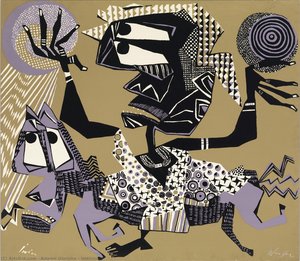
La maestría artística de Adunni Olorisha se define por su negativa a adherirse a una sola tradición. Ya sea a través de sus pinturas, como la evocadora Palmas del Destino, o sus instalaciones ambientales a gran escala, su obra sigue siendo un testimonio del poder de la síntesis cultural. Su estilo —una cautivadora mezcla de abstracción geométrica europea y la vitalidad terrosa y texturizada de los motivos africanos— sirve como un diálogo visual entre dos mundos. Ella no se limitó a observar la cultura Yoruba; se convirtió en parte integrante de su historia viva, contribuyendo tanto a su paisaje visual como a su literatura.
En reconocimiento a sus inmensas contribuciones a la sociedad y las artes nigerianas, el gobierno de Nigeria la honró en 2008 como Miembro de la Orden de la República Federal (MFR). Hoy en día, las obras de Adunni Olorisha continúan resonando en aquellos que buscan un arte que trascienda las paredes de las galerías. Su vida permanece como una narrativa inspiradora de cómo un artista puede ir más allá de las fronteras de su nacimiento para encontrar un verdadero hogar en el latido espiritual y creativo de otra cultura, dejando tras de sí un legado tan perdurable como las arboledas sagradas que luchó con tanta ferocidad por proteger.
Preguntas y respuestas
¿A qué periodo histórico pertenecía Adunni Olorisha?
Adunni Olorisha trabajó durante el periodo Edad Moderna. Este periodo sitúa la actividad del artista en su contexto histórico.
¿De dónde es Adunni Olorisha?
Adunni Olorisha nació en Austria.
¿Con qué otros nombres se conoce a Adunni Olorisha?
Adunni Olorisha también es conocido como Susanne Wenger, Adunni Olorisha (Susanne Wenger).