Una voz visionaria que moldea el arte contemporáneo sudafricano
Athi-Patra Ruga se erige como una figura singular y transformadora dentro del panorama del arte contemporáneo de Sudáfrica, tejiendo un complejo tapiz que tiende puentes entre lo tangible y lo imaginado. Nacido el 9 de marzo de 1984 en Umtata, Cabo Oriental, la vida temprana de Ruga estuvo profundamente marcada por las fronteras cambiantes de la identidad y la geografía. La separación de sus padres, impulsada por la participación de su padre en el Transkei —un Bantustán Xhosa que buscaba autonomía de Sudáfrica—, le inculcó una fascinación de por vida con el concepto de los límites, tanto políticos como personales. Esta temprana exposición a los matices de la soberanía y la fragmentación familiar se convertiría más tarde en la piedra angular de su indagación artística, al comenzar a explorar cómo la memoria y la materialidad se entrelazan en el contexto de una sociedad post-apartheid.
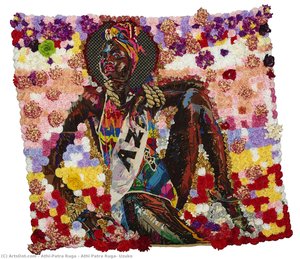
Su viaje creativo se refinó aún más mediante una formación formal en historia de la moda y diseño en la Gordon Flack Davison Design Academy en Johannesburgo. Esta base en textiles y moda le proporcionó un conjunto de herramientas único, permitiéndole abordar las bellas artes con el ojo de un diseñador para la textura, la silueta y el poder simbólico del adorno. Ruga no se limita a un solo medio; en su lugar, orquesta un diálogo multidisciplinario entre el arte de performance, la fotografía, las instalaciones de video, el arte textil y el grabado. Su obra se caracteriza por la creación de híbridos culturales: entidades que existen en el espacio liminal entre diferentes razas, géneros e historias, desafiando los binarios rígidos heredados de las estructuras del apartheid.
La arquitectura de la utopía y la distopía
En el corazón de la obra de Ruga reside una profunda exploración de la tensión entre los ideales utópicos y las realidades distópicas. Utiliza el cuerpo como un sitio de resistencia, empleando a menudo su propia forma para habitar personajes fantásticos que reimaginan mitos clásicos a través de una lente africana. Su serie de performance más celebrada, The Future White Women of Azania (2est 2010–presente), sirve como pilar fundamental de su práctica. En este ambicioso proyecto, Ruga reimagina las mitologías griega y romana, infundiéndolas con una sensibilidad distintivamente sudafricana para crear personajes que encarnan la transformación y la reclamación de la identidad. A través de estas interpretaciones, navega por las complejidades de la sexualidad, la cultura Xhosa y el lugar de lo queer dentro del estado moderno.
El uso de la identidad queer en la obra de Ruga no es meramente un acto de expresión personal, sino una herramienta política deliberada utilizada para desmantelar las estrictas estructuras de poder del pasado. Al introducir ambigüedad en los binarios de género y raza, crea un espacio donde se invita a la audiencia a experimentar y compartir una realidad nueva y más fluida. Su trabajo a menudo toca temas sensibles como el VIH/SIDA y la naturaleza visceral de la sensualidad; sin embargo, mantiene una cualidad etérea y onírica que evita que la temática se vuelva puramente didáctica. En cambio, su arte funciona como un espejo, reflejando tanto las cicatrices de la historia como las brillantes posibilidades de un futuro reimaginado.
Legado y reconocimiento global
El impacto de la obra de Ruga se extiende mucho más allá de las fronteras de Sudáfrica, ganándose un lugar en el diálogo global del arte contemporáneo. Su inclusión en el prestigioso directorio Younger Than Jesus (2019) —una colección de los artistas más significativos del mundo menores de 33 años— subrayó su creciente importancia en la escena internacional. Ruga también ha sido una voz prominente en importantes entornos colaborativos, como la Conferencia Design Indaba de 2014, junto a luminarias como Zanele Muholi y Nandipiente Mntambo, consolidando aún más su papel como líder en el movimiento de la nueva cultura visual africana.
La importancia perdurable de su práctica se evidencia en la adquisición de sus obras por parte de estimadas colecciones permanentes en todo el mundo. Entre las instituciones notables que albergan sus creaciones se encuentran:
- Zeitz Museum of Contemporary Art Africa (Zeitz MOCAA)
- Iziko South African National Gallery
- Museion – Museum of Modern and Contemporary Art, Bolzano, Italia
- The CAAC – Pigozzi Collection
A través de su búsqueda incansable de lo "intermedio", Athi-Patra Ruga continúa desafiando nuestra percepción del cuerpo, la nación y el tejido mismo de nuestra historia compartida. Su arte permanece como un testimonio vital y palpitante del poder de la imaginación para remodelar el mundo.
Preguntas y respuestas
¿Dónde y cuándo nació Athi-Patra Ruga?
Athi-Patra Ruga nació en Umtata en 1984.
¿A qué periodo histórico pertenecía Athi-Patra Ruga?
Athi-Patra Ruga trabajó durante el periodo Contemporáneo. Este periodo sitúa la actividad del artista en su contexto histórico.