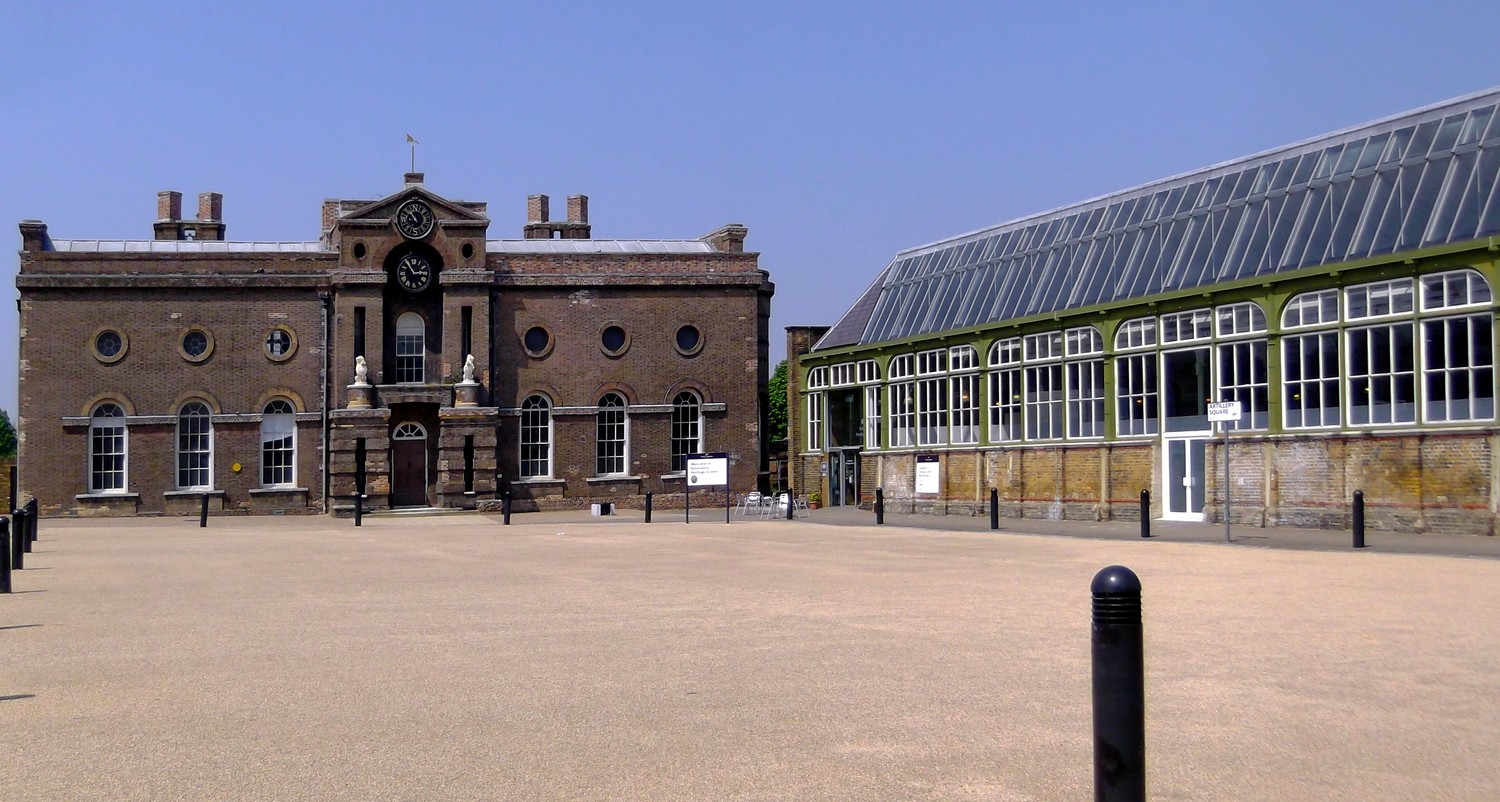
Greenwich Heritage Centre: A Legacy of Naval History and Artistic Reflection
The Greenwich Heritage Centre stands as a testament to London’s maritime past and the enduring spirit of local history preservation. Though currently closed since 2018, its former location within the Woolwich Arsenal complex—a site steeped in industrial innovation and military significance—continues to inspire fascination and offers a unique glimpse into Britain's evolution. Its architectural grandeur speaks volumes about the ambitions of an era defined by scientific discovery and artistic patronage.
Architectural Context & Historical Significance
Located in New Laboratory Square, the centre’s building is itself a remarkable achievement of Georgian architecture. Designed by James Wyatt in 1783-85 as a sea storehouse for the Board of Ordnance—housing weaponry destined for naval deployments—it embodies the grandeur and ambition of the Enlightenment era. Its symmetrical design reflects the prevailing aesthetic ideals, while the incorporation of materials like brick and limestone speaks to the practical needs of its original purpose. Wyatt’s masterful use of classical proportions and ornamentation underscores Greenwich's position as a hub of intellectual curiosity during this transformative period. The building itself is a tangible reminder of Britain’s commitment to technological advancement and artistic excellence.
Collection Highlights: Stories Told Through Objects
The museum’s collection focused on illuminating Greenwich’s multifaceted narrative. Artifacts relating to the Royal Arsenal’s production—from intricate tooling tools to detailed blueprints—provided tangible evidence of Britain’s industrial prowess during the Victorian period. Alongside these technical treasures were historical documents and photographs capturing daily life in Greenwich throughout the centuries, offering intimate portraits of ordinary people and communities. Notably, panels showcased the evolution of Greenwich from a humble riverside settlement into a vital component of London – illustrating the transformative impact of urbanization and maritime trade on its social fabric. Furthermore, reproductions of naval ordnance—including cannon barrels and fuses—demonstrated the Arsenal’s role in shaping Britain's military capabilities.
Maritime Heritage: Echoes of Trafalgar
A significant portion of the collection celebrated Greenwich’s connection to the sea, particularly its role in naval history. Exhibits explored connections to maritime trade routes and commemorated pivotal moments like the Battle of Trafalgar—a decisive victory for Britain against Napoleon that solidified its dominance on the high seas. The museum contextualized the importance of Greenwich Mean Time (GMT)—established here in 1884—as a cornerstone of global navigation, highlighting its contribution to scientific precision and international cooperation. Visitors could examine models of warships from various eras, gaining insight into naval engineering and shipbuilding techniques.
Beyond the Arsenal Walls: Community Engagement & Ongoing Research
What distinguished Greenwich Heritage Centre was its commitment to fostering dialogue between history and community. Collaborations with local historians and educational programs ensured that the stories of Greenwich resonated across generations. The centre’s dedication to preserving Greenwich's heritage continues through ongoing research initiatives spearheaded by the Royal Borough of Greenwich, ensuring that this vital chapter in London’s story remains accessible for future exploration. Considering similar artistic endeavors, explore Barbican Arts Centre – a contemporary space showcasing diverse artistic expressions. Or delve into Trinity Laban Conservatoire of Music And Dance’s UNESCO World Heritage Site status, blending historic architecture with cutting-edge arts education—a testament to Greenwich's enduring legacy as a centre for innovation and cultural enrichment.