Introduction
The decade of the 1910s in Vienna and the broader Austrian landscape marked a profound psychological and aesthetic shift, as the elegance of the fin de siècle gave way to the raw, fractured intensity of modernism. This era was defined by a radical departure from traditional academicism, driven by a collective desire to explore the subconscious, the tension between ornamentation and expression, and the complexities of the human form. It was a period where the boundaries of representation were pushed to their limits, fueled by the intellectual ferment of a changing empire and the burgeoning theories of psychoanalysis.
At the heart of this movement were artists who sought to capture not just the surface of reality, but its internal essence. The works of this period oscillate between the shimmering, gold-leafed decadence of the Secessionist movement and the jagged, emotive distortions of early Expressionism. This era saw the birth of a visual language that prioritized emotional truth over anatomical perfection, utilizing bold lines, unconventional perspectives, and a heightened sense of symbolism to navigate the anxieties of a world on the brink of transformation.
Today, these masterpieces remain vital because they capture the very moment when art turned inward to confront the modern soul. The tension between beauty and discomfort, between the decorative and the visceral, continues to resonate in contemporary visual culture. By examining these works, we witness the foundational steps of the avant-garde, where the canvas became a site for exploring the deepest recesses of human identity and desire.
The following selection highlights ten significant works that embody this transformative decade, featuring the transformative visions of Gustav Klimt, the intense psychological portraits of Egon Schiele, and the expressive power of Oskar Kokoschka, offering a window into the soul of Austrian modernism.
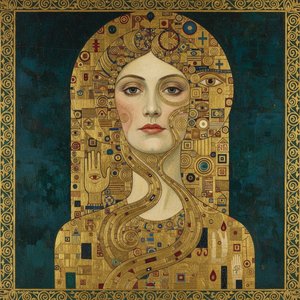
Portrait of Baroness Elisabeth Bachofen-Echt - Gustav Klimt
 Portrait of Baroness Elisabeth Bachofen-Echt - Gustav Klimt
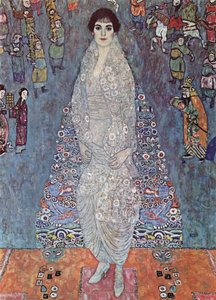
Gustav Klimt's 1916 Portrait of Baroness Elisabeth Bachofen-Echt serves as a profound testament to the aesthetic evolution of Austrian art during the 1910s. This work exemplifies the transition from the organic sinuosity of Art Nouveau toward a more introspective, Symbolist sensibility. Rather than focusing on the social status of the Viennese Baroness, Klimt captures a sense of refined serenity and contemplative grace, presenting her as an individual of quiet dignity.
Technically, the portrait showcases Klimt's mastery of the "Golden Phase," utilizing oil paint layered with delicate gold leaf accents to create a luminous, ethereal surface. The composition is characterized by:
- Flattened Perspective: A deliberate rejection of traditional spatial depth in favor of decorative, two-dimensional elegance.
- Luminous Textures: The use of impasto and glazing to make the subject's attire appear like liquid light.
- Symbolic Atmosphere: A focus on the essence of the sitter through a palette of rosy browns and shimmering golds.
By prioritizing decorative pattern and psychological depth over mere realism, Klimt’s portrait remains a quintessential example of the era's preoccupation with the intersection of beauty and the subconscious.
Lady with Fan - Gustav Klimt
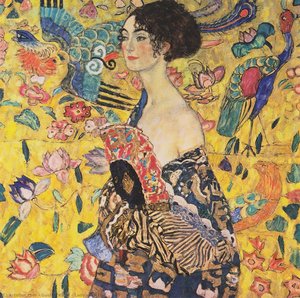 Lady with Fan - Gustav Klimt
Completed between 1917 and 1918, Lady with Fan serves as a poignant culmination of Gustav Klimt’s artistic journey, representing one of the final masterpieces created before his death. As a quintessential work from the 1910s, it captures the transition of Austrian art from the decorative opulence of the turn of the century toward a more expressive, modern sensibility. The portrait is a vibrant, densely populated composition where a serene woman is framed by an explosion of stylized flora and exotic avian motifs, including peacocks.
Klimt’s mastery is evident in his synthesis of Art Nouveau decadence and the delicate aesthetic of Japanese ukiyo-e woodblock prints. This fusion is reflected in the flattened perspective and the rhythmic, gestural brushstrokes that prioritize emotional intensity over realistic spatial recession. Rather than the heavy gold leaf of his earlier years, this work utilizes a rich palette of yellows and blues applied with thick impasto, creating a tactile, energetic surface. Through this complex layering of organic and geometric forms, Klimt explores themes of beauty and sensuality, leaving a lasting imprint on the landscape of early 20th-century European art.
The Virgin - Gustav Klimt
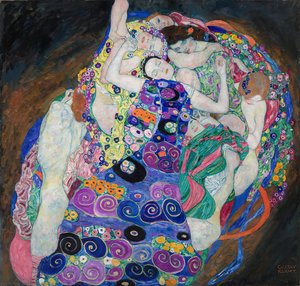 The Virgin - Gustav Klimt
Created in 1913, The Virgin stands as a profound testament to the aesthetic evolution of Austrian art during the 1910s. Gustav Klimt, a leading figure of the Austrian Symbolist movement, utilizes this oil on canvas to weave together the decorative elegance of Art Nouveau with a deep, spiritual symbolism. The composition is defined by a rhythmic, circular arrangement of figures, where women are held in a protective, nurturing embrace. This spiral formation creates a sense of organic unity, evoking themes of motherhood, fertility, and the sacred connection between life and nature.
Klimt’s technique in this period is characterized by a masterful command of texture and color. The work features a rich, saturated palette where flowing, organic lines meet intricate, mosaic-like patterns. Through a sophisticated use of layered oils, the artist achieves a shimmering, almost luminous quality that envelops the central figures. The interplay of fluid curves and sharp, decorative elements provides a dynamic energy, transforming the subject matter into a visionary exploration of female power and cosmic harmony. It remains a quintessential example of the stylistic complexity defining the Austrian avant-garde of this decade.
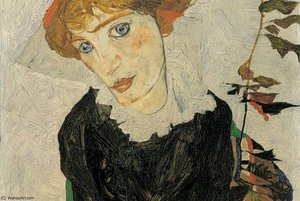
Portrait of Wally - Egon Schiele
Painted in 1912, this arresting portrait stands as a pivotal work by Egon Schiele, encapsulating the raw emotional intensity and stylistic innovation that defined early 20th-century Austrian Expressionism. As a quintessential example of the 1910s, the piece moves away from the decorative elegance of the Secessionist era toward a more psychological and unsettling mode of representation.
The subject is Walburga “Wally” Neuzil, Schiele’s lover and frequent muse. Their tumultuous relationship profoundly influenced his artistic output, with Wally appearing in numerous works that explore themes of desire and vulnerability. Rather than presenting an idealized beauty, Schiele confronts the viewer with a direct, introspective gaze that challenges conventional portraiture.
The technique is characterized by a highly textural, mosaic-like effect created through short, broken brushstrokes and thick impasto layers. Schiele employs an unconventional palette of muted yellows, browns, and blacks, punctuated by splashes of red and green, to evoke a sense of melancholy. Through distorted forms and a flattened perspective, the work transcends simple likeness to capture a profound emotional state, marking a definitive shift in the trajectory of Austrian modernism.
Death and the Maiden - Egon Schiele
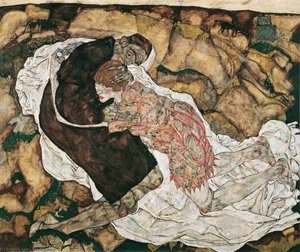 Death and the Maiden - Egon Schiele
Created in 1915, Egon Schiele's Death and the Maiden stands as a profound testament to the psychological intensity defining Austrian Expressionism during the 1910s. This work captures a desperate, intimate embrace between two figures, set against a chaotic and unsettling landscape that evokes a sense of profound melancholy and existential turmoil.
The composition is characterized by jagged, angular lines and a flattened perspective, creating a claustrophobic atmosphere that mirrors the internal agitation of the subjects. Schiele utilizes a dramatic, unsettling color palette where the muted, putty-like earthy tones of the background clash sharply with the vibrant, emotive hues of the figures. This tension is further heightened by a heavy impasto technique; the thick, visible layers of oil paint create a highly tactile, textured surface that emphasizes the raw, distorted reality of the scene.
By abandoning traditional anatomical perfection in favor of contorted forms and nervous line work, Schiele’s masterpiece exemplifies the decade's shift toward exploring the darker, more vulnerable depths of the human condition through a deliberately skewed and fragmented visual language.
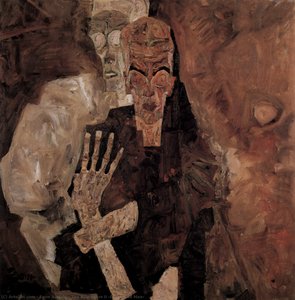
The Self-Seers II (Death and Man) - Egon Schiele
Painted in 1911, The Self-Seers II (Death and Man) stands as a profound cornerstone of Austrian Expressionism. Created during a decade of intense societal upheaval in Vienna, this work exemplifies the era's shift away from traditional representation toward a raw, psychological exploration of the human condition. Schiele, a defining figure of the 1910s, utilizes a claustrophobic composition to confront the viewer with the inescapable reality of mortality.
The painting is characterized by its unsettling, visceral energy and a restricted palette of earthy browns, ochres, and whites. Schiele employs a heavy impasto technique, where thick, gestural brushstrokes create a tactile, almost chaotic surface. This physical roughness mirrors the internal turmoil of the subject: a gaunt, mask-like figure confronted by a skeletal hand emerging from the darkness. By abandoning traditional perspective in favor of amorphous shapes and layered tonal variations, Schiele captures a sense of existential dread and psychological distress that remains emblematic of the avant-garde movements emerging from Austria during this transformative decade.
Dolomite Landscape - Oskar Kokoschka
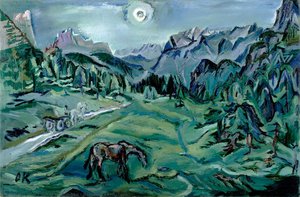 Dolomite Landscape - Oskar Kokoschka
Painted in 1913, Dolomite Landscape stands as a profound testament to the expressive power of the Austrian avant-garde during the 1910s. As a central figure of Expressionism, Oskar Kokoschka moves beyond mere topographical recording to capture the psychological resonance of the natural world. This work is a quintessential example of the decade's shift toward prioritizing emotional truth over literal representation.
The composition is dominated by a dramatic, moonlit valley where the sky is anchored by a large, luminous moon that casts an intense, almost surreal glow across the terrain. In the meadow, a group of horses serves as a focal point, their forms simplified and abstracted to heighten the dreamlike atmosphere. Kokoschka employs a vibrant, unnatural color palette—notably deep phthalo greens—and vigorous, nervous brushwork to convey a sense of melancholy and awe. Through the heavy application of impasto, the artist creates a tactile surface that mirrors the raw energy of the landscape. The flattened perspective and distorted contours transform the mountains into a visionary stage, where the sublime power of nature meets the intense, internal landscape of the human soul.
Farm Garden with Crucifix - Gustav Klimt
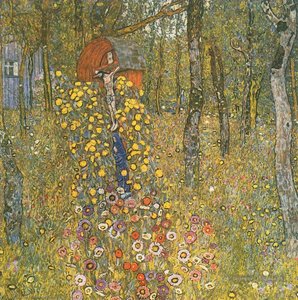 Farm Garden with Crucifix - Gustav Klimt
Upon first glance, the viewer is met with a dense, impressionistic tapestry of vibrant yellows and greens that seems to pulsate with life. The composition is dominated by a lush floral meadow, where short, choppy brushstrokes create a shimmering, textured surface. Amidst this explosion of color, a woman in a blue dress moves through the wildflowers, partially sheltered by a large, red-colored umbrella. This interplay of light and organic shapes creates a dreamlike, hazy atmosphere, where the boundaries between the figure and the natural world feel beautifully blurred.
Painted in 1911, this work is a quintessential example of Austrian art from the 1910s, reflecting the era's profound shift toward Symbolism and the decorative revolution of the Vienna Secession. Klimt moves beyond mere representation, using a layered, expressive technique to capture a fleeting, mystical moment. The piece balances the earthly beauty of the blooming garden with a sense of quiet introspection, embodying the decade's fascination with the intersection of the physical landscape and the internal, spiritual experience.
Bride of the Wind - Oskar Kokoschka
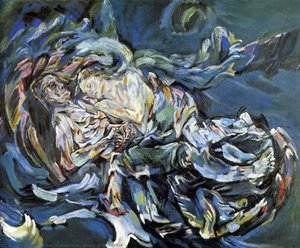 Bride of the Wind - Oskar Kokoschka
Oskar Kokoschka’s 1914 masterpiece, Bride of the Wind, stands as a profound testament to the emotional volatility defining Austrian art during the 1910s. This large-scale oil painting captures a central female figure enveloped in a chaotic, swirling landscape of drapery and light. Rather than seeking anatomical precision, Kokoschka utilizes the aggressive, gestural language of Expressionism to prioritize psychological depth over realistic representation. The composition is intensely dynamic, characterized by asymmetrical forms and a sense of instability that mirrors the inner turmoil of the era.
The technical execution is marked by a vigorous, impasto-like application of paint, where thick, broken brushstrokes create a tactile, restless surface. Kokoschka’s palette is a dramatic interplay of cool blues, whites, and ochre tones, punctuated by intense illumination and deep shadows. These elements work in unison to evoke themes of passion, vulnerability, and the struggle of the human spirit against elemental forces. By distorting perspective and emphasizing organic, amorphous shapes, the work transcends mere portraiture to become a visceral manifestation of melancholy and movement, perfectly encapsulating the radical shifts in Austrian modernism during this turbulent decade.
Pierrot lunaire, op. 21 - Night - Arnold Schoenberg
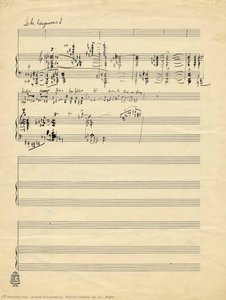 Pierrot lunaire, op. 21 - Night - Arnold Schoenberg
Composed in 1912, Arnold Schoenberg’s Pierrot lunaire, op. 21 – Night serves as a profound musical manifestation of the Austrian avant-garde's shift toward expressionism. As a central figure of the Second Viennese School, Schoenberg utilized this period to dismantle traditional tonal structures, mirroring the era's broader rejection of established norms. This specific movement, "Night," captures the psychological turbulence and ethereal melancholy characteristic of the 1910s.
The work is defined by its innovative use of the passacaglia form, where a repetitive bass ostinato creates a hypnotic, unsettling tension. This structural repetition acts as a vessel for the enigmatic Pierrot, a character transformed into a symbol of vulnerability and waxen despair. The composition’s tonal palette is not one of color, but of intense emotional shifts, moving through a dreamscape of nighttime phantasms. By abandoning conventional harmony in favor of atonality, Schoenberg’s work reflects the fractured, subjective experience that defined Austrian modernism during this transformative decade, prioritizing raw, internal reality over external beauty.
Conclusion
The decade of the 1910s in Austria marked a profound shift in the visual language of Europe, as the golden decadence of the Secession gave way to the raw, psychological intensity of Expressionism. From the intricate, mosaic-like textures of Gustav Klimt to the visceral, distorted lines of Egon Schiele, these works collectively captured the tension between ornamental beauty and the turbulent human psyche. Whether through the sweeping emotionalism of Oskar Kokoschka or the structural innovations of the era, these masterpieces redefined how we perceive form, color, and emotion. To explore more from this transformative era, you can browse our full collection.
At Mus3ums.com, we invite you to bring this era of profound artistic revolution into your own space. Our master artists specialize in creating museum-quality, hand-painted oil reproductions that preserve the unique brushstrokes and emotional depth of these Austrian icons, allowing you to live with the spirit of the 1910s every day.