


The Origins of a Collection
The Musée Denon in Chalon-sur-Saône finds its roots in a free drawing school established in 1821. What began as an educational endeavor evolved into a space of significant historical weight, eventually being named in honor of Dominique-Vivant Denon. The building itself holds layers of history, reflecting an era when institutions sought to organize knowledge through an encyclopedic lens, spanning both the natural sciences and the fine arts. Today, the museum functions as a repository for a vast timeline, containing objects that trace human presence through 100,000 years of history.
The atmosphere within the walls is one of quiet accumulation. It is a place where the material remains of the past—from the Bronze Age to the Gallo-Roman period—exist alongside later artistic expressions. The current layout emphasizes a specific focus on graphic arts, creating a space where the act of making an image is central to the experience.
Artistic Presences and Archaeological Finds
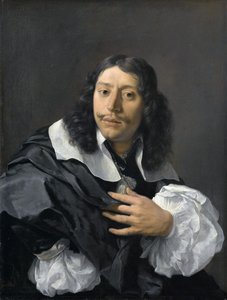
The collection is defined by a specific selection of paintings and objects that demand a slow, steady gaze. One finds oneself standing before works that represent the 17th-century traditions of Naples, Flanders, and the Dutch school. These paintings are not merely decorations but are physical presences that anchor the room. The museum also holds a rare ensemble of wood engravings, which offer a different texture to the visual experience.
The breadth of the collection is marked by several distinct categories of objects:
- Archaeological finds of international renown from the local territory.
- A significant assembly of sculptures and ethnographic objects.
- A collection of graphic works and wood engravings.
- Paintings from the 17th-century Neapolitan and Flemish traditions.
Among the specific works held in the catalog are portraits and landscapes that capture specific moments of the 19th century and earlier. There is a portrait of Vivant Denon from 1809 by Robert Lefèvre, and a landscape featuring a cavalry officer and a beggar from 1650 by Karel Dujardin. These works, alongside pieces like Saint Francis Returns His Clothes to His Father by Francesco Solimena, provide a tangible link to the eras that shaped the collection.
The Continuity of the Image
The museum maintains a dialogue between the ancient and the contemporary. This is seen in temporary exhibitions, such as those focusing on the Early Middle Ages or the work of ceramic students. The presence of local archaeological finds, ranging from the Iron Age to the Gallo-Roman era, ensures that the history of the Saône valley remains a central theme. It is a place where the function of the image is constantly reconsidered through the lens of both ancient craft and modern interpretation.


