Jeunesse, famille et formation
Henry Fuseli est né le 7 février 1741 à Zurich, en Suisse. Il a grandi au sein d'une famille nombreuse, étant le deuxième d'une fratrie de 18 enfants. Son père, Johann Caspar Füssli, était un homme de talent, maîtrisant tout autant le pinceau que la plume ; il exerçait en tant que peintre de portraits et de paysages tout en rédigeant l'ouvrage Lives of the Helvetic Painters. Cet environnement familial, bien qu'animé et foisonnant, a offert un cadre stable et stimulant à ses premières années.
Son éducation a suivi un parcours rigoureux au Collegium Carolinum de Zurich, où il s'est plongé dans l'étude des classiques. Cette formation formelle en langues et en histoire allait, plus tard, imprégner la manière dont il aborderait ses sujets artistiques. Pourtant, sa vie ne s'est pas tournée immédiatement vers la toile. En 1761, il a pris les ordres et a consacré une période de sa vie au ministère pastoral.
La voie du clergé n'était toutefois pas sa destination finale. Ses premières années furent marquées par une tension constante entre la vie religieuse pour laquelle il était préparé et l'univers visuel de son père. Cette période d'étude et de service spirituel a néanmoins forgé le socle intellectuel qui allait, par la suite, soutenir ses intérêts artistiques de plus en plus dramatiques.
Développement artistique en Angleterre et en Italie
En 1765, il débarque en Angleterre, cherchant des moyens de subvenir à ses besoins par divers travaux d'écriture. C'est au cours de cette période qu'il fait la rencontre de Sir Joshua Reynolds. Après avoir découvert ses dessins, Reynolds lui suggéra d'abandonner ses autres aspirations pour se consacrer entièrement à la peinture. Ce conseil marqua un tournant décisif dans la trajectoire de son destin artistique.
En 1770, il part pour un véritable pèlerinage artistique en Italie, où il séjournera jusqu'en 1778. Durant ses années romaines, il consacra une grande partie de son temps à contempler les œuvres de Michel-Ange et les statues de marbre du Monte Cavallo. C'est au cours de ce séjour italien qu'il choisit de transformer son nom, délaissant Füssli pour le plus mélodieux Fuseli.
Carrière en Grande-Bretagne et à la Royal Academy
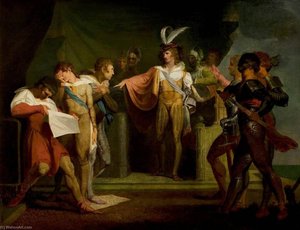
À son retour en Grande-Bretagne au début de l'année 1779, Henry Fuseli trouva sa place au cœur de la scène artistique londonienne grâce à une commande de l'échevin John Boydell. Ce projet ambitieux consistait à contribuer à la Shakespeare Gallery, une entreprise qui lui permit de transposer la puissance de la littérature dramatique en formes visuelles saisissantes. Sa présence dans la métropole s'affirma de manière constante à mesure qu'il gravissait les échelons institutionnels de la Royal Academy ; nommé associé en 1788, il accéda au rang d'académicien titulaire dès 1790.
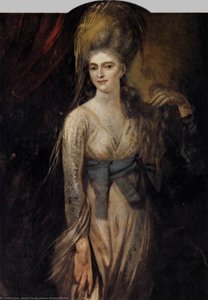
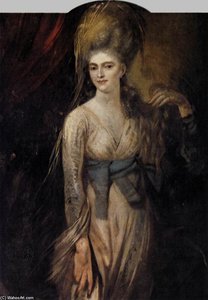
L'influence de l'artiste au sein de l'Académie dépassait largement le cadre de ses propres toiles. Investi de responsabilités administratives et pédagogiques majeures, il servit en tant que conservateur, puis comme professeur de peinture, plaçant ainsi son expertise au centre même de l'enseignement artistique britannique. Sa vie londonienne fut rythmée par ces fonctions officielles et par son mariage avec Sophia Rawlins, qui avait été l'une de ses modèles. Il demeura, pendant de nombreuses années, une figure incontournable et structurante de l'Académie.
Œuvres Clés et Thématiques
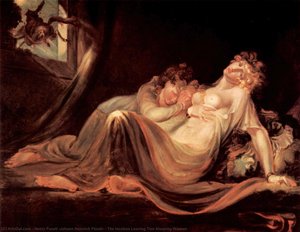
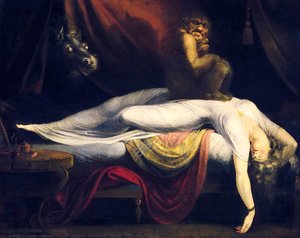
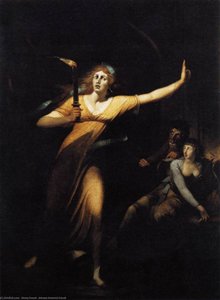
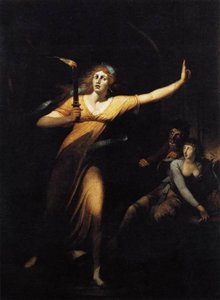
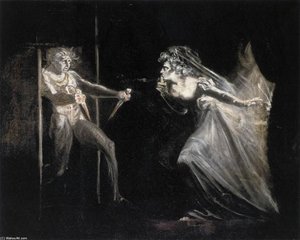
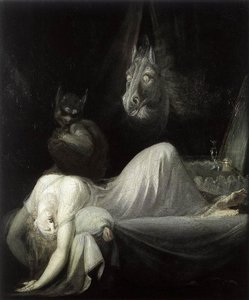
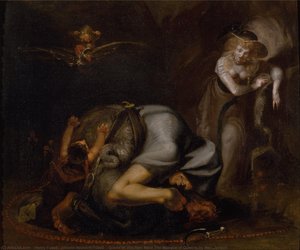
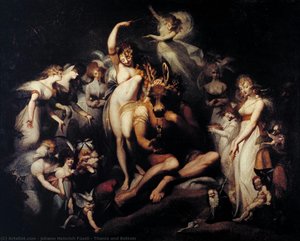
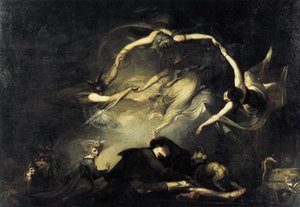
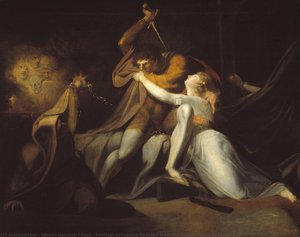
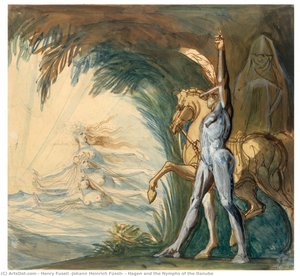
Une grande partie de son œuvre plonge dans les ombres de l'esprit humain. Dans son tableau peint vers 1781, Le Cauchemar, Henry Fuseli explore le poids lourd et troublant des rêves et de l'inconscient. Il tournait souvent son attention vers la tension dramatique propre à la littérature. Il a ainsi produit plusieurs pièces pour la galerie de Shakespeare de John Boydell, se concentrant intensément sur les pièces de William Shakespeare. Son intérêt pour les récits du Barde l'a conduit à dépeindre des scènes telles que celles de Macbeth, où il a su capturer la tension psychologique des personnages.
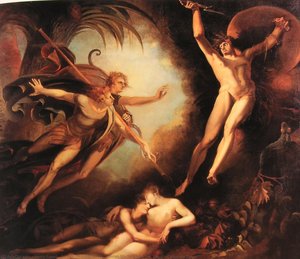
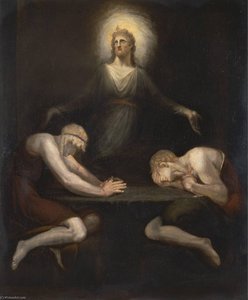
Au-delà de la scène théâtrale, il puisait son inspiration dans l'antique et le sacré. Ses toiles interprètent fréquemment des récits mythologiques et bibliques, utilisant souvent une échelle idéale pour exacerber le sentiment du fantastique. Il a également consacré du temps à l'élaboration d'une série de peintures basées sur les œuvres de John Milton, cherchant à traduire les visions épiques du poète en une forme visuelle. Ces sujets lui permettaient de naviguer entre les royaumes du divin et du grotesque.
- Le Cauchemar (vers 1781)
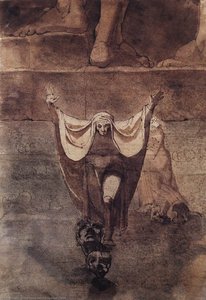
- Dante et Virgile sur la glace de Cocythe (1774)
- Lady Macbeth et les poignards (1812)
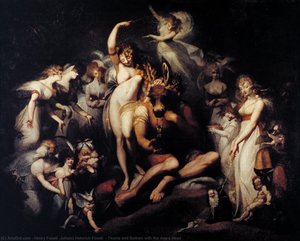
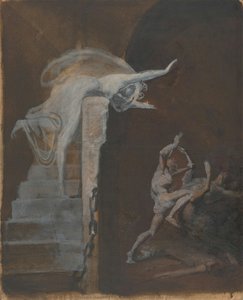
- Ariane regardant la lutte de Thésée contre le Minotaure (1820)
Héritage et Influence
Henry Fuseli ne s'est pas contenté de participer au mouvement romantique ; il a contribué à l'embraser. Son œuvre s'est affranchie de la logique rigoureuse des Lumières pour se tourner vers le viscéral et l'émotionnel. Ce basculement a ouvert la voie à un nouveau langage visuel en Grande-Bretagne. Sa préoccupation pour l'inconscient et l'irrationnel a laissé une empreinte indélébile sur le paysage artistique britannique, influençant la trajectoire que de nombreux jeunes artistes allaient emprunter au cours des décennies suivantes.
On peut déceler son ombre dans l'œuvre de William Blake, qui partageait un intérêt similaire pour le visionnaire et l'intense. La capacité de Henry Fuseli à puiser des thèmes dans les profondeurs des rêves et du surnaturel a offert un modèle pour explorer la psyché humaine à travers la peinture. Aujourd'hui encore, son attention portée à l'inquiétant et au fantastique continue de fasciner. Son intérêt pour la sensation d'un cauchemar, plutôt que pour sa simple apparence, demeure un élément central de sa présence dans l'histoire de l'art.
- The Nightmare
- Dante and Virgil on the Ice of Kocythos
- Lady Macbeth with the Daggers
Questions et réponses
Sous quels autres noms Johann Heinrich Füssli est-il/elle connu(e) ?
Johann Heinrich Füssli est également connu sous le nom de Fuseli, Heinrich Füssli, Henry Fuseli, Hans Heinrich Füssli, Heinrich (III) Füssli.
Où et en quelle année Johann Heinrich Füssli est-il né ?
Johann Heinrich Füssli est né à Zurich en 1741.
À quelle époque historique Johann Heinrich Füssli a-t-il vécu ?
Johann Heinrich Füssli a œuvré durant la période L'époque moderne. Cette époque permet de situer l'activité de l'artiste dans l'histoire.