Early Life and Training
Ilario Giacinto Mercanti, detto lo Spolverini (Parma, 1657 – Parma or Piacenza, 1734), was an Italian painter born in Parma in 1657. He died in Piacenza in 1734. His artistic journey began under the tutelage of Francesco Monti, known as Brescianino, a prominent figure in Venetian painting and a master who instilled in Mercanti a profound appreciation for color theory and dramatic composition—techniques that would define his distinctive style. Following this formative period, Mercanti undertook a voyage to Venice itself, where he immersed himself in the vibrant artistic milieu of the time and absorbed the innovative approaches championed by Venetian painters. This experience decisively shaped his palette and compositional sensibilities, establishing him as an artist wholly original within the broader context of Baroque art.
Artistic Style and Notable Works
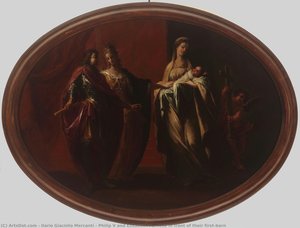
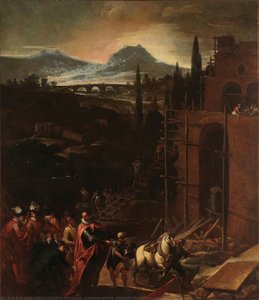
Mercanti’s artistic style is characterized by its bold use of color—particularly luminous reds, yellows, and blues—and masterful execution of dynamic compositions that convey a palpable sense of movement and emotion. He excelled in depicting battle scenes with meticulous detail, capturing the chaos and grandeur of military engagements through an impressive array of figures rendered against backgrounds replete with architectural elements and atmospheric effects. His canvases pulsate with energy, reflecting Monti’s influence and mirroring the Venetian tradition's emphasis on illusionistic painting. Among his most celebrated achievements are:
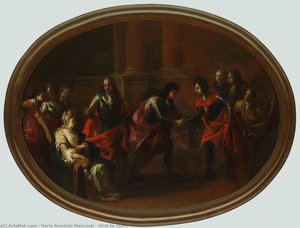
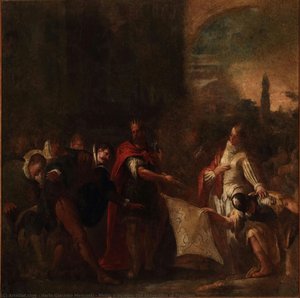
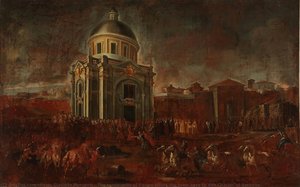
- Visit to Court (Musei Civici di Palazzo Farnese, Piacenza, Italy): This monumental artwork exemplifies Mercanti’s skill in portraying human interaction with remarkable sensitivity and nuance—a testament to his ability to capture the psychological complexities of aristocratic life.
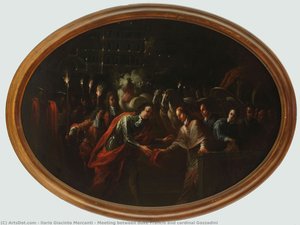
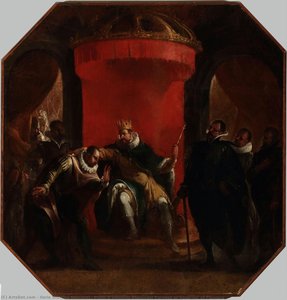
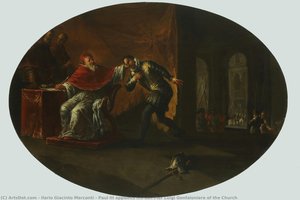
- Meeting between duke Francis and cardinal Gozzadini (Musei Civici di Palazzo Farnese, Piacenza, Italy): Mercanti skillfully conveyed the solemn grandeur of this historical event, utilizing color and perspective to create a visually compelling depiction of papal authority and noble dignity.
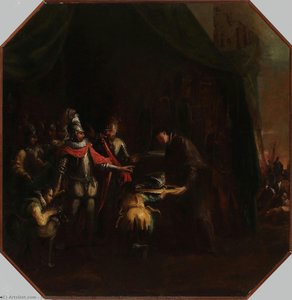
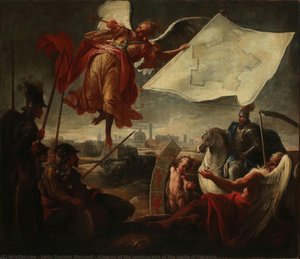
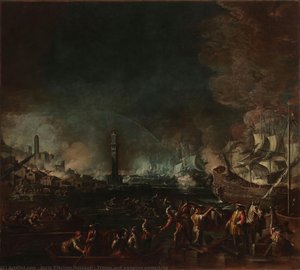
- Victory (Musei Civici di Palazzo Farnese, Piacenza, Italy): This powerful painting serves as an exemplary demonstration of Mercanti’s artistic prowess—his masterful manipulation of color and composition evokes profound emotions, transporting the viewer into the heart of a decisive military triumph.
Influence and Legacy
Mercanti served as court painter for several influential noble families in Parma and Piacenza, primarily focusing on commissions related to military campaigns. His canvases documented pivotal moments in regional history, solidifying his reputation as a chronicler of aristocratic life and warfare. Furthermore, Mercanti’s religious artwork graced the Certosa and Cathedral of Parma—institutions that benefited from his artistic patronage—demonstrating his commitment to disseminating faith through visual art. He nurtured the talents of numerous pupils who continued to practice painting in subsequent generations, ensuring the transmission of Venetian color techniques and dramatic compositional principles.
Notable Pupils
Among Mercanti’s students were Francesco Simonini (1686, Venice 1733), Antonio Fratacci, Clemente Ruta, and Giuseppe Peroni—artists who carried forward Mercanti's stylistic legacy and contributed to the flourishing artistic landscape of their time. His dedication to teaching solidified his position as a pivotal figure in shaping the trajectory of Italian Baroque painting.