
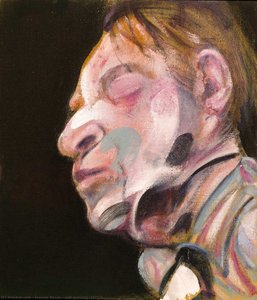
Introduction
To step into the world of Francis Bacon is to step away from the comfort of the familiar and into a space where the raw, unvarnished truth of the human condition resides. His work does not merely sit upon a wall; it vibrates with an intensity that can feel like a direct encounter with the soul’s most vulnerable moments. As we prepare to journey through twenty-five of his most profound masterpieces, we aren' quite just looking at paintings—we are witnessing a visceral dialogue between flesh, shadow, and the architecture of existence.
Born in Dublin and shaped by the turbulent energy of mid-twentieth-century London and Paris, Bacon emerged from a background in interior design to become one of the most influential, albeit unsettling, voices in modern art. He bypassed the traditional academic path, instead drawing inspiration from the structural precision of furniture design and the haunting distortions of Picasso. This unique blend allowed him to create canvases where geometric, cage-like structures trap figures in states of profound isolation, turning the canvas into a stage for psychological drama.
In an era often defined by the search for order, Bacon’s work remains strikingly relevant today. He captured the anxiety, the physical vulnerability, and the beautiful brutality of being alive—themes that resonate deeply in our own modern, often fragmented world. His use of fluid oils to depict dissolving forms and screaming faces serves as a powerful reminder of the resilience and fragility of life.
As you navigate this curated selection, allow yourself to feel the movement of his brushstrokes and the weight of his shadows. From his early explorations of form to his most iconic, haunting portraits, each piece in this list offers a window into a master who refused to look away from the darker corners of our shared humanity. Let us begin this exploration of intensity, emotion, and the enduring power of the human image.
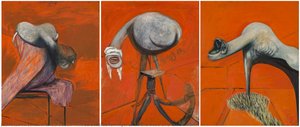
Three Studies for Figures at the Base of a Crucifixion - Francis Bacon
 Three Studies for Figures at the Base of a Crucifixion - Francis Bacon
To encounter Three Studies for Figures at the Base of a Crucifixion by Francis Bacon is to step into a visceral landscape of raw human emotion and existential tension. This haunting triptych earns its place in our top 25 artworks through its sheer, uncompromising originality; it is a work that does not merely depict suffering but embodies it through distorted, amorphous forms and a searing, claustrophobic orange palette.
As a cornerstone of post-war expressionism, Bacon subverts the traditional religious altarpiece to explore themes of isolation and vulnerability. The thick, gestural brushstrokes and fleshy, unsettling textures create a sensory experience that is as much about feeling as it is about seeing. While the subject matter is intense, its profound aesthetic power offers a unique way to anchor a room with deep, intellectual character. At Mus3ums, we believe such transformative masterpieces should be accessible to all; through our high-fidelity, hand-painted oil reproductions, you can bring this powerful, evocative presence into your own home or personal gallery, turning a blank wall into a profound conversation piece.
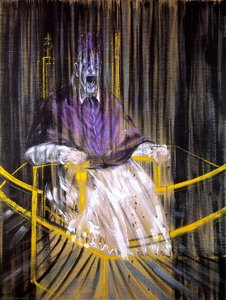
study after velazquez's portrait of pope innocent x, 1953 - Francis Bacon
To encounter Study after Velázquez's Portrait of Pope Innocent X is to witness a soul caught in the midst of a silent, visceral scream. In this seminal work from 1953, Bacon takes the regal dignity of the original Velázquez masterpiece and dissolves it into a haunting exploration of existential dread. The central figure, rendered in ghostly whites and bruised purples, appears trapped within a skeletal, cage-like structure of vibrant yellow lines, creating a tension that is both breathtaking and deeply unsettling.
As one of the top 25 artworks of Francis Bacon , this painting serves as a universal mirror for our own moments of isolation and vulnerability. The dramatic contrast between the dark, vertical-striped background and the luminous, distorted face invites a profound psychological journey. Integrating such a powerful piece into your home can transform a personal sanctuary into a space for deep reflection; it challenges the viewer to find beauty within the chaos. It is not merely a painting, but an emotional experience that anchors any modern collection with its raw, unforgettable intensity.
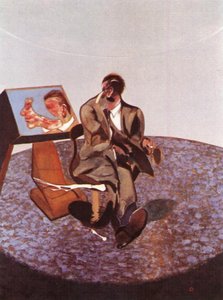
Portrait of George Dyer in a Mirror, 1968 - Francis Bacon
 Portrait of George Dyer in a Mirror, 1968 - Francis Bacon
To look at Portrait of George Dyer in a Mirror, 1968 is to witness a moment where the boundaries between reality and reflection begin to dissolve. In this haunting masterpiece, the lines aren’t merely painted; they are choreographed in a visceral dance of shadow and light. Bacon captures his companion, George Dyer, not as a static figure, but as a soul caught in a state of psychological flux, seated before an easel that mirrors a fractured identity.
The composition is a masterclass in tension, where muted greens and somber browns collide with swirling, dreamlike textures. The way the light catches the distorted forms creates a sense of a dance frozen in time , pulling the viewer into a deep, introspective space. It is a profound exploration of duality—the self versus the image. For those looking to bring a sense of quiet prestige and intellectual depth to a modern home, this work offers an unparalleled emotional resonance. Imagine a gallery-style corner where your walls can breathe rhythm , anchored by the raw, textured intensity of one of the top 25 artworks of Francis Bacon.
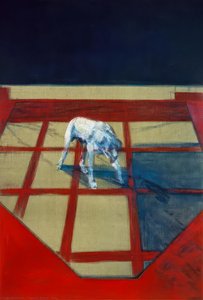
Dog - Francis Bacon
 Dog - Francis Bacon
In Dog by Francis Bacon, the stark, bone-white form of the subject emerges from a sea of deep, bruising blues and unsettling blacks, setting a mood of profound, quiet isolation. This mastery of a restrained yet high-contrast palette is precisely why this piece earns its place among the top 25 artworks of Francis Bacon . The way the vibrant, textured red lines intersect with the cool, dark background creates a visual tension that is both haunting and hypnotic.
For those looking to curate a sophisticated, modern living space, this painting offers an incredible opportunity to introduce emotional depth. Imagine placing a high-quality reproduction of this work in a room with minimalist furniture; the painting’s architectural grid and moody tones can anchor a dining room or study, providing a focal point that invites contemplation. The interplay of light and shadow within the impasto textures allows you to play with ambient lighting, using soft, directional lamps to highlight the visceral brushstrokes and transform your home into a gallery of profound, modern expression.
painting, 1946 - Francis Bacon
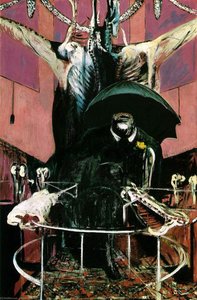 painting, 1946 - Francis Bacon
Owning a piece like painting, 1946 by Francis Bacon is more than an acquisition; it is an investment in a profound artistic legacy and a testament to a collector's discerning taste. As one of the most significant works within the top 25 artworks of Francis Bacon, this masterpiece stands as a cornerstone of mid-century modernism. Its market value and historical influence are anchored in its ability to translate post-war existential dread into a visceral, visual language.
The canvas presents an unsettling, surreal landscape where a dark-suited figure sits beneath an umbrella, surrounded by a claustrophobic assembly of giraffes, snakes, and distorted forms. Through thick, impasto brushwork and a dramatic palette of deep reds, purples, and blacks, Bacon creates a sense of beautiful decay. The heavy shadows and fragmented perspectives invite a deep, sensory exploration of alienation and societal critique. For the modern connoisseur, a high-quality reproduction of this work brings an unmatched aesthetic authority to luxury interiors, offering a bold, intellectual focal point that commands attention and elevates any sophisticated living space.
Untitled 1 - Francis Bacon
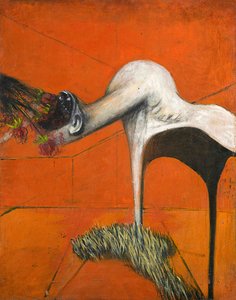 Untitled 1 - Francis Bacon
To encounter Untitled 1 is to step into a visceral landscape where light does not illuminate, but rather exposes the raw nerves of existence. In this haunting masterpiece, Francis Bacon uses color as a psychological language; the startling contrast between the stark, white equine form and the aggressive, blood-red background creates a tension that feels almost electric. It is as if the artist has captured a single, breathless moment of existential crisis, frozen in time.
The composition vibrates with a restless energy, where the distorted, horse-like figure—a haunting reflection of the self—seems to emerge from a void of deep crimson. There is no soft glow here, only the sharp, jarring brilliance of an emotional truth that refuses to be ignored. As one of the most powerful entries in our collection of the top 25 artworks of Francis Bacon , this piece does more than decorate a room; it transforms a wall into a window onto the human soul, inviting you to contemplate the beautiful, terrifying complexity of being alive.
triptych, may - june, 1973 b - Francis Bacon
 triptych, may - june, 1973 b - Francis Bacon
To encounter Triptych, May-June 1973 b is to step into a profound landscape of human sorrow. This monumental work stands as one of the most emotionally resonant pieces in the top 25 artworks of Francis Bacon, capturing a raw, visceral response to grief following the loss of his companion, Jessie Lightfoot. The three canvases act as a window into isolation, where figures are contorted in agony against pulsating crimson walls that seem to vibrate with pain and vulnerability.
Bacon’s mastery of thick impasto creates a sculptural texture, making the heavy, visceral brushstrokes feel almost alive. It is this very intensity—the way the deep reds symbolize both blood and confinement—that secures its place in art history. At Mus3ums.com, we believe such powerful emotions deserve to be felt in your own space. Our handmade oil reproductions meticulously preserve Bacon’s signature texture and dramatic palette, allowing you to bring the haunting beauty and profound depth of this masterpiece into your home through a faithful, hand-painted tribute.
STUDIES FROM THE HUMAN BODY (triptych, left) - Francis Bacon
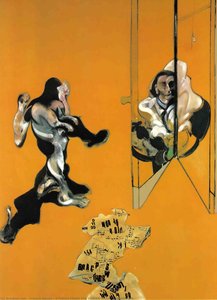 STUDIES FROM THE HUMAN BODY (triptych, left) - Francis Bacon
In STUDIES FROM THE HUMAN BODY (triptych, left) , Francis Bacon masterfully balances visceral chaos with a striking, structured geometry. The composition is anchored by a vibrant, sun-drenched yellow background that acts as a luminous stage for the distorted figures. While the subject matter explores profound existential dread, the arrangement of the panels creates a rhythmic, architectural stability. This interplay between the fluid, almost dissolving forms of the human figure and the rigid verticality of the triptych format provides a sense of structural harmony that is central to why this piece remains one of the top 25 artworks of Francis Bacon .
There is a fascinating parallel here to modern minimalist design; despite the raw, emotional intensity, the work’s clean use of space and bold color blocking allows it to ground a contemporary aesthetic. The way the dark, heavy garments contrast against the glowing backdrop creates a visual tension that feels both timeless and incredibly fresh. For those looking to introduce a sense of quiet prestige and deep psychological depth into a modern home, this piece offers an unforgettable encounter with the power of expressive movement and structural elegance.
Figure in a Landscaspe - Francis Bacon
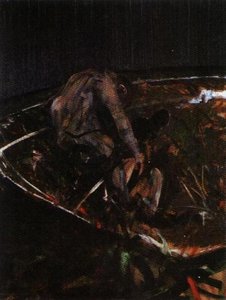 Figure in a Landscaspe - Francis Bacon
In Figure in a Landscape , Francis Bacon invites us into a space of profound, unsettling intimacy. The painting does not meet our gaze with comfort; instead, it presents a slumped, fragmented form, turned away from the viewer in a state of raw vulnerability. This sense of isolation is palpable, as if we are witnessing a private moment of existential distress. Through thick, sculptural brushstrokes and a somber palette of ochre, grey, and deep brown, Bacon captures the weight of post-war anxiety, turning the canvas into a visceral mirror of the human psyche.
As one of the top 25 artworks of Francis Bacon , this piece transcends mere mid-century trauma to touch upon universal themes of solitude and resilience. While the imagery is intense, bringing such a powerful work into your home can transform a personal sanctuary into a space for deep, meaningful reflection. It challenges the viewer to confront the complexities of emotion, making it a sophisticated choice for those looking to curate a collection filled with intellectual depth and soul-stirring narrative.
Study for a Pope VI - Francis Bacon
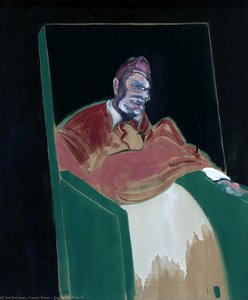 Study for a Pope VI - Francis Bacon
What story does the haunting, geometric cage within Study for a Pope VI by Francis Bacon tell us about the fragility of power? This 1961 masterpiece emerged from a period of profound post-war disillusionment, where the traditional symbols of authority were being stripped away to reveal raw, human vulnerability. As part of our exploration into the top 25 artworks of Francis Bacon , this piece stands out for its radical departure from papal dignity, replacing it with a visceral, silent scream that resonates through thick, textured impasto strokes.
The painting’s atmosphere—a swirling void of vibrant reds and unsettling ochres—offers a different kind of 'escape' for the modern collector. Rather than a literal landscape, it provides an emotional sanctuary for those who appreciate art that explores the depths of the human psyche. Integrating such a provocative work into a curated home collection adds a layer of intellectual prestige and dramatic tension, turning a room into a space for deep reflection and conversation. It is a breathtaking encounter with the disturbing realism that defines Bacon’s legendary legacy.
self-portrait, 1972 iii - Francis Bacon
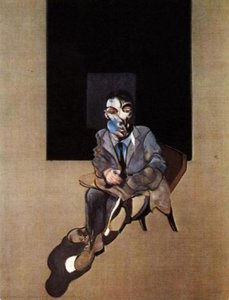 self-portrait, 1972 iii - Francis Bacon
To encounter Self-Portrait, 1972 III is to witness a profound psychological excavation. In this haunting masterpiece, Francis Bacon does not merely paint a likeness; he captures the very vibration of existential dread. The figure sits with a skeletal rigidity, his face appearing as a fractured, monochrome mask that seems to dissolve into the surrounding void. It is a visceral confrontation with the soul, where the heavy, textured layers of oil paint mirror the internal instability of the human condition.
This work earns its place among the top 25 artworks of Francis Bacon because it transcends mere imagery to strike the viewer's nervous system directly. Its raw emotional intensity and masterful use of expressionism have made it a cornerstone of modern art history. At Mus3ums.com, we believe such transformative power belongs in your personal sanctuary. Our hand-painted oil reproductions are meticulously crafted to preserve every heavy brushstroke and haunting shadow, allowing you to bring the profound, textured depth of Bacon’s vision into your own home with authentic, museum-quality artistry.
figure study ii, 1945-46 - Francis Bacon
 figure study ii, 1945-46 - Francis Bacon
In Figure Study II , created between 1945 and 1946, Francis Bacon invites us into a profound encounter with psychological vulnerability. The painting does not merely depict a human form; it captures an embodied sense of unease. As you gaze upon the fragmented torso, you feel the weight of a soul navigating the shadows of a post-war world. The composition is anchored by the striking presence of an open umbrella, which acts as both a shield and a cage, creating a claustrophobic atmosphere that mirrors the internal turbulence of the subject.
Bacon’s mastery lies in his ability to use thick, textured oil layers and unsettling drips to translate raw anxiety into visual poetry. The muted palette of deep blacks and somber browns strips away all comfort, leaving only the visceral reality of existence. As one of the top 25 artworks of Francis Bacon , this piece serves as a universal mirror for our own moments of isolation. Integrating such a powerful, emotive work into your home can transform a personal sanctuary into a space for deep reflection, turning a quiet corner of your room into a gallery of profound human connection.
two figures, 1953 - Francis Bacon
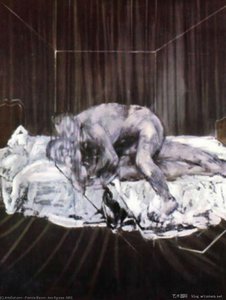 two figures, 1953 - Francis Bacon
To encounter Two Figures (1953) is to witness a profound moment of psychological tension, where intimacy and anxiety collide on a stark, monochrome stage. In this haunting masterpiece, Francis Bacon captures the raw vulnerability of the human condition through two intertwined bodies, their forms rendered with a visceral, almost bruising realism. The painting belongs among the top 25 artworks of Francis Bacon because it masterfully utilizes a limited palette to explore the depths of existential unease, using scattered avian motifs to symbolize a sense of impending doom and precariousness.
The power of this work lies in its texture; the heavy application of paint creates palpable ridges that mirror the physical struggle within the composition. At Mus3ums.com, we believe such intense emotional resonance deserves a place in your personal sanctuary. Our hand-painted oil reproductions are meticulously crafted to preserve these thick, expressive brushstrokes and the somber, dramatic atmosphere of Bacon’s original vision. By bringing a faithful reproduction into your home, you invite a conversation about depth, history, and the beautiful complexity of the human spirit.
Pope and Chimpanzee,1962 - Francis Bacon
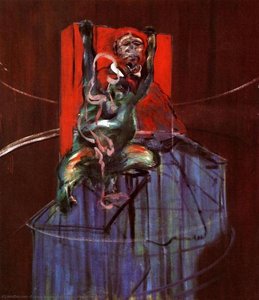 Pope and Chimpanzee,1962 - Francis Bacon
To encounter Pope and Chimpanzee, 1962 is to step directly into a visceral storm of existential tension. In this haunting masterpiece, Francis Bacon strips away the comforts of tradition, presenting a seated figure whose bound hands and rigid posture evoke a profound sense of psychological entrapment. This work earns its place among the top 25 artworks of Francis Bacon through its fearless exploration of vulnerability; by juxtaposing the human form with the primal presence of a chimpanzee, Bacon disrupts the viewer's expectations, creating a dialogue between civilization and raw instinct.
The painting’s influence on visual culture is undeniable, utilizing fragmented forms and a textured, almost bleeding application of paint to mirror the fractured psyche of the post-war era. It is a work that does not merely sit on a wall but commands the atmosphere of a room, offering a deep, contemplative weight. At Mus3ums, we believe such transformative power should be accessible to all. Through our high-fidelity, hand-painted oil reproductions, you can bring this profound, evocative presence into your own home or private gallery, turning a modern space into a sanctuary of meaningful discovery.
female nude standing in a doorway 1972 - Francis Bacon
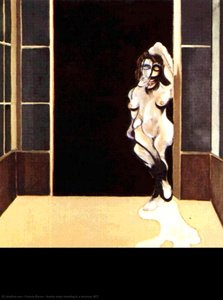 female nude standing in a doorway 1972 - Francis Bacon
Stepping into the presence of Francis Bacon’s Female Nude Standing in a Doorway (1972) feels like stumbling upon a private, whispered moment of profound vulnerability. The canvas pulls you into a shadowy, cinematic interior where the boundaries between safety and exposure dissolve. Here, the artist uses his signature visceral technique—thick, expressive applications of oil that feel almost sculptural—to depict a figure caught in a state of instinctive protection, her hands pressed against her face as if shielding herself from an unseen truth.
The atmosphere is heavy with existential tension, yet there is a haunting beauty in the way the dark, eerie background contrasts with the raw, fleshy tones of the subject. While Bacon’s work explores the depths of psychological isolation, its intense emotional gravity offers a powerful focal point for a modern collector. Incorporating such a provocative masterpiece into a curated space does more than decorate a wall; it invites deep reflection and adds a layer of sophisticated, intellectual soul to a room, turning a simple corner into a site of profound artistic discovery.
Selfportrait Centre Georges Pompidou, PARIS - Francis Bacon
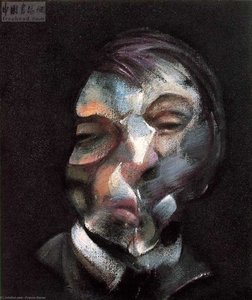 Selfportrait Centre Georges Pompidou, PARIS - Francis Bacon
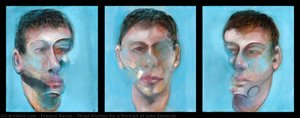
Before he was a titan of the avant-garde, Francis Bacon worked as an interior decorator, a background that gifted him a unique understanding of how space and structure influence emotion. In his 1971 masterpiece, Selfportrait Centre Georges Pompidou , this structural awareness meets raw, psychological disintegration. To view this work is to witness a mirror that refuses to reflect a coherent reality; the artist’s face appears as a fragmented, mask-like visage, caught in a state of existential flux.
The technical brilliance of this piece lies in Bacon's use of loose, gestural oil strokes that create an unsettling sense of motion. Through a somber palette of grey, black, and white—pierced by ghostly traces of blue and pink—he captures the very essence of alienation . The composition is intentionally claustrophobic, trapping the subject within a blurred, modern void. For the contemporary collector, such an intense exploration of identity serves as more than just art; it provides a profound intellectual anchor. Hanging a high-quality reproduction in a modern home office or study can foster an atmosphere of deep focus and sophisticated introspection, mirroring the artist's own relentless pursuit of truth.
composition, 1933 - Francis Bacon
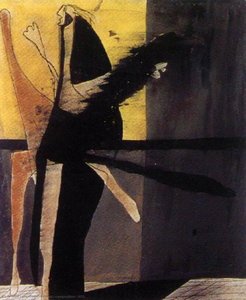 composition, 1933 - Francis Bacon
In the hauntingly beautiful Composition (1933) by Francis Bacon, we encounter a dreamscape where the boundaries between reality and nightmare softly dissolve. This early masterpiece earns its place among the top 25 artworks of Francis Bacon by capturing a profound psychological depth that transcends the era of its creation. The painting presents an arresting, surrealist vision: a woman cradling a giraffe with a tenderness that feels both intimate and deeply unsettling.
The canvas breathes with a visceral texture, where expressive distortions and heavy applications of oil paint create a landscape of emotional weight. The muted, somber tones are punctuated by the watchful presence of birds, adding a layer of silent tension to the scene. For the modern collector, this piece offers more than just a window into the interwar psyche; it provides a sophisticated focal point for contemporary interiors. Its ability to evoke both mystery and introspection makes it a captivating conversation starter, bringing an edge of intellectual elegance and raw, emotive power to any curated space.
crucifixion, 1965 left - Francis Bacon
 crucifixion, 1965 left - Francis Bacon
In crucifixion, 1965 left , Francis Bacon delivers a profound masterclass in psychological tension, capturing a moment where human vulnerability meets raw, visceral energy. As one of the most significant entries in our collection of the top 25 artworks of Francis Bacon, this piece stands out for its ability to transform deep-seated anxiety into a striking visual language. The painting utilizes a hauntingly intense palette—dominated by blood-red walls that press against the figures—to create an atmosphere of claustrophobia and profound isolation.
The composition, featuring figures in states of physical and emotional distress, showcases Bacon’s signature ability to use distorted forms to evoke a sense of movement and existential weight. For the modern collector, this work offers more than just a historical connection; its bold, dramatic color blocking and structural intensity provide a sophisticated focal point for contemporary interiors seeking a sense of prestige and conversation-starting depth. It is a piece that does not merely hang on a wall but commands the very air within a room, inviting a quiet, contemplative dialogue with the shadows of the human experience.
after the life mask of william blake iii, 1955 - Francis Bacon
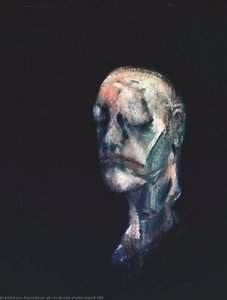 after the life mask of william blake iii, 1955 - Francis Bacon
In After the Life Mask of William Blake III , Francis Bacon invites us into a raw, psychological excavation that feels as much like a visceral experience as it does a painting. This 1955 masterpiece stands as a cornerstone in our collection of the top 25 artworks of Francis Bacon because it perfectly captures his ability to transform a historical reference into an unsettling study of human vulnerability. The palette is haunting—a somber dance of muted grays, deep blacks, and bruised purples that evoke a sense of profound melancholy.
The composition is intentionally claustrophobic; the distorted, fragmented head seems trapped within a flattened space, mirroring the internal tension of the modern soul. For those looking to bring a bold, dramatic edge to a contemporary interior, this piece offers an incredible focal point. Its textured, gestural brushstrokes and moody, monochromatic tones pair beautifully with minimalist or industrial decor, adding a layer of intellectual depth and "edge" to any room. It is not just a portrait; it is a powerful, atmospheric encounter with the very essence of identity and mortality.
figures in movement, 1976 - Francis Bacon
 figures in movement, 1976 - Francis Bacon
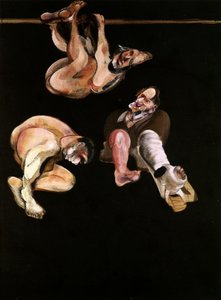
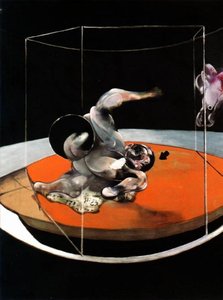
In Figures in Movement, 1976 , Francis Bacon achieves a staggering, albeit unsettling, geometric equilibrium. The composition is anchored by the sharp, linear cage that bisects the canvas, creating a structural tension between the rigid architectural lines and the fluid, contorted anatomy of the central figure. This interplay of hard edges and organic distortion provides a rhythmic balance that makes this piece a standout among the top 25 artworks of Francis Bacon . While the subject matter explores existential dread, the underlying arrangement of shapes offers a profound sense of stability.
There is a striking parallel here to modern minimalist design ; the way Bacon uses dark voids and focused light to ground the chaotic motion mirrors the clean, intentional aesthetics found in contemporary interiors. The muted palette of bruised reds and deep ochres creates a moody, sophisticated atmosphere that feels both timeless and strikingly modern. For the collector, this painting offers more than just a glimpse into a turbulent psyche; it provides a masterclass in using structural harmony to command a room's presence.
Hombre con Perro - Francis Bacon
 Hombre con Perro - Francis Bacon
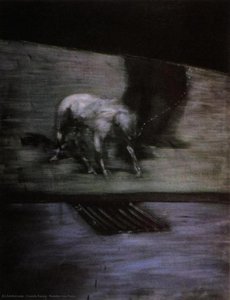
Before he was a titan of the art world, Francis Bacon worked as an interior decorator, a background that gifted him a unique understanding of how space and structure can trap or liberate the human spirit. In Hombre con Perro , we see this structural mastery used to create a visceral plunge into existential dread. This monochrome masterpiece from the late 1940s eschews comfort, presenting two dogs—one looming and predatory, the other small and vulnerable—within a stark, claustrophobic atmosphere.
The technical genius of this piece lies in Bacon’s use of distorted, gestural brushstrokes that make the very air feel heavy with anxiety. By utilizing a limited palette of blacks, whites, and greys, he strips away all distractions, forcing us to confront the raw, fragmented forms of the subjects. The way light hits the textured, almost bruised surfaces of the paint creates a sense of movement and psychological tension that is hauntingly beautiful. For those looking to curate a sophisticated, contemplative space, such a powerful work serves as an incredible focal point for a modern home office or study , inspiring a deep, focused atmosphere of intellectual intensity and profound reflection.
second version of triptych 1 - Francis Bacon
 second version of triptych 1 - Francis Bacon
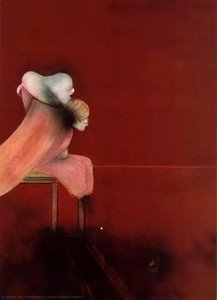
To encounter the Second Version of Triptych 1 by Francis Bacon is to step into a profound dialogue with history. While the original concept emerged from the shadows of 1944, this later iteration serves as a hauntingly beautiful meditation on the persistence of trauma. In this masterpiece, Bacon invites us into a space of visceral anxiety, where a solitary figure sits bowed in a chair, their identity obscured by a mask-like distortion that feels both deeply personal and universally human.
The visual impact is immediate: a striking, blood-red wall provides a jarring, cinematic backdrop that intensifies the sense of isolation. Through his signature technique—layering oils to create a textured, almost dissolving form—Bacon captures the very essence of existential dread. This isn't merely an image to be viewed; it is an experience to be felt. For the collector seeking more than decoration, this work offers a transformation of space, turning a quiet corner of your home into a powerful gallery of the soul, where the raw, distorted beauty of the human condition takes center stage.
head vi, 1949 - Francis Bacon
 head vi, 1949 - Francis Bacon
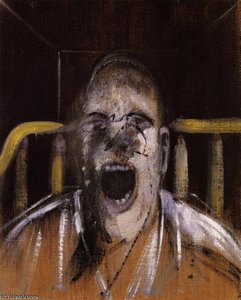
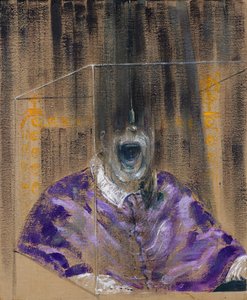
To encounter Head VI by Francis Bacon is to step into a visceral landscape of raw emotion and existential reflection. As one of the most profound entries in our collection of the top 25 artworks of Francis Bacon, this 1949 masterpiece captures the very essence of post-war anxiety through a distorted, screaming visage that refuses to let the viewer look away. It earns its place among the greats not merely for its unsettling subject matter, but for its revolutionary technique; Bacon’s use of thick, textured paint creates a pulsating energy that makes the canvas feel almost alive with torment.
The painting’s jaundiced yellows and suffocating, cage-like structures offer a striking, moody aesthetic that challenges the boundaries of traditional portraiture. While the imagery is intense, its ability to evoke deep psychological depth provides a powerful focal point for those seeking art with true character. At Mus3ums.com, we believe such transformative power should be accessible to everyone. Through our high-fidelity, hand-painted oil reproductions, you can bring the haunting, unforgettable presence of Bacon’s genius into your own home or private gallery, turning a modern space into a sanctuary of profound storytelling.
Man in Blue I - Francis Bacon
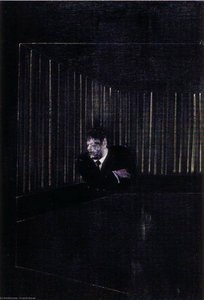 Man in Blue I - Francis Bacon
To encounter Man in Blue I is to step directly into a visceral exploration of human vulnerability. In this seminal work from the early 1950s, the lines aren’t merely drawn; they are choreographed to trap the viewer within a psychological abyss. This is not just a portrait; it is a dance frozen in time , where the subject sits amidst a cage of fractured vertical lines that resemble both architectural partitions and prison bars.
Bacon utilizes a hauntingly restrained palette of deep blacks, somber greys, and muted blues to evoke an atmosphere of profound isolation. A faint, yellowish-orange glow emanates from behind the figure, providing a singular, unsettling point of contrast that heightens the tension rather than offering warmth. The textures are rugged and gestural, mirroring the disintegration of rational thought. As one of the most powerful pieces in the top 25 artworks of Francis Bacon , it challenges us to find meaning within chaos. What if your own walls could hold this same intense, rhythmic balance? This masterpiece invites you to confront the quiet, beautiful terror of the human condition.
henrietta moraes - Francis Bacon
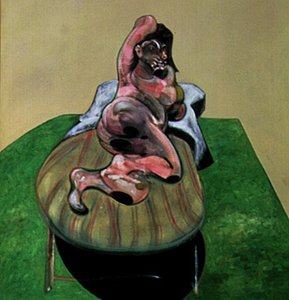 henrietta moraes - Francis Bacon
To stand before Henrietta Moraes is to feel the air grow heavy with a raw, pulsing intensity. Before your eyes even settle on the figure, you are met with a visceral, crimson atmosphere—a color so deep and blood-like it seems to vibrate against the senses. This work captures a profound moment in the 1960s, where the boundaries of identity and flesh began to blur under the weight of existential anxiety.
As one of the most significant pieces in our collection of the top 25 artworks of Francis Bacon , this painting transcends mere portraiture. It is an excavation of vulnerability. Through distorted forms and sweeping, expressionistic brushstrokes, Bacon transforms his muse into a landscape of emotion, where the body appears to dissolve into a sea of red. This masterpiece belongs in such a prestigious ranking because it refuses to look away from the beautiful terror of being alive. Bringing such a powerful, emotive presence into a modern home allows for a space of deep reflection, inviting a conversation between the chaos of history and the quiet sanctuary of your personal sanctuary.
Conclusion
To wander through the visceral world of Francis Bacon is to leave behind the comfort of the superficial and enter a space where the rawest truths of the human condition reside. His works are far more than mere historical artifacts or relics of a turbulent era; they are living, breathing presences that continue to pulse with an unsettling, beautiful energy. Even in their most distorted forms, these paintings remind us of our shared vulnerability, our capacity for both terror and profound resilience. They do not simply hang on a wall; they command the atmosphere of a room, inviting deep reflection and sparking a dialogue between the viewer and the very essence of existence.
At Mus3ums.com , we believe that such powerful emotions deserve to be felt within the intimacy of your own home. We strive to bridge the gap between the museum archive and your personal sanctuary, ensuring that the soul of these masterpieces is never lost in translation. Every hand-painted reproduction in our collection is a labor of devotion, meticulously crafted by skilled artists who honor Bacon’s original brushstrokes, his heavy textures, and his haunting use of light. Through our process, the movement of the oil and the weight of the pigment are preserved, allowing you to bring a piece of this profound artistic legacy into your daily life.
Whether you are drawn to the architectural tension of his figures or the evocative power of his color palettes, we invite you to discover how these transformative works can reshape your space and inspire your spirit. We invite you to explore our full collection and find the piece that speaks to your own story, reborn on canvas with the same passion that first brought it to life.


