


Introduction
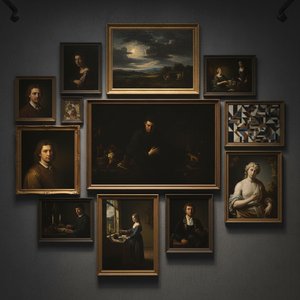
To step into a gallery of shadows is to encounter the profoundest depths of the human experience. While we often gravitate toward the sun-drenched landscapes of Impressionism or the vibrant hues of the Renaissance, there exists a quiet, commanding power in the mastery of darkness. The use of black—not merely as an absence of light, but as a rich, textured presence—has long served as one of the most evocative tools in the painter's repertoire. It is a color that holds weight, mystery, and an almost tactile gravity, pulling the viewer into a space where form emerges from the void.
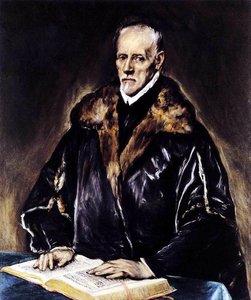
Throughout art history, the manipulation of dark tones has defined entire movements. From the dramatic chiaroscuro of the Baroque era, where light battles shadow to create theatrical tension, to the somber, introspective depths of Tenebrism, these artists used black to sculpt emotion. In these works, darkness is never empty; it is a vessel for drama, grief, melancholy , and even a sacred sense of divinity. Culturally, these paintings reflect our historical fascination with the unknown, the nocturnal, and the psychological complexities that lie beneath the surface of the visible world.
Today, these masterpieces remain deeply resonant. In an age of digital saturation and relentless brightness, there is a restorative stillness to be found in a canvas dominated by deep ebony, charcoal, and midnight hues. They remind us that beauty is often found in the periphery, in the subtle gradations of a shadow, and in the strength required to face the dark. These paintings do not just show us what is visible; they invite us to contemplate what remains hidden.
As we journey through this curated selection, we will explore ten canonical masterpieces that command the room through their use of dark tones. Each work offers a unique lesson in how pigment and shadow can create a lasting legacy. Whether you are a student of art history or a collector seeking a centerpiece with profound emotional depth, prepare to encounter works where the darkness is just as luminous as the light.
Night Watch - Rembrandt van Rijn
 Night Watch - Rembrandt van Rijn
While many assume the deep shadows of The Night Watch represent a nocturnal setting, the truth is far more complex; Rembrandt was actually manipulating light to create a theatrical, midday atmosphere emerging from profound darkness. As a cornerstone of our list of famous paintings dominated by black tones, this 1642 masterpiece utilizes chiaroscuro not merely for contrast, but to sculpt figures out of an abyss of umber and obsidian. Rembrandt’s technical genius lies in his ability to use heavy, dark pigments to direct the viewer's eye toward the luminous Captain Cocq, making the surrounding shadows feel thick with movement and history.
The painting’s mastery of weight and depth—achieved through layers of rich, dark oils—offers a sense of monumental stability. This commanding presence makes a hand-painted reproduction an extraordinary choice for a modern study or home office. Surrounding oneself with such dramatic, low-key tones fosters an atmosphere of intense focus and intellectual gravity, perfect for those seeking to cultivate a space of sophisticated reflection and creative power.
Melancholy - Edvard Munch
 Melancholy - Edvard Munch
In Edvard Munch’s 1894 masterpiece, Melancholy , the darkness is not merely a color, but a psychological weight. As we stand before this cornerstone of Expressionism, we encounter a world where deep blacks and somber purples bleed into a landscape of profound isolation. The central figure, draped in heavy, dark tones, sits anchored to the shoreline, his silhouette a stark testament to human solitude against a turbulent, bruised sky.
Munch utilizes a palette dominated by midnight blues and murky shadows to evoke the crushing sensation of fin-de-siècle anxiety. The visible, energetic brushstrokes create a tactile sense of unrest, making the very air feel thick with sorrow. This is not a mere depiction of a beach; it is a window into the fractured psyche. For those seeking to transform their homes into a gallery of the soul , owning a hand-painted oil reproduction of this work allows you to surround yourself with the raw, transformative genius of Munch, bringing the profound emotional depth of the masters into your private sanctuary.
The Musicians - Caravaggio
 The Musicians - Caravaggio
What story do the deep, swallowing shadows within The Musicians by Caravaggio tell of a lost Roman afternoon? Painted in 1595, this masterpiece emerges from the shadows of the late Renaissance, marking a revolutionary departure from Mannerist art toward a raw, visceral naturalism. As one of the most profound examples of paintings dominated by black tones, it utilizes tenebrism to sculpt four young figures out of an impenetrable darkness. The heavy, obsidian backgrounds do not merely represent absence; they create a stage where light strikes the polished wood of a lute and the soft skin of youth with startling intensity.
For the modern collector, this painting offers more than historical intrigue; it provides a curated escape into a world of quiet, nocturnal harmony. The dramatic interplay of light and deep pigment creates an atmospheric depth that brings a sense of museum-grade prestige to any interior. Whether you are drawn to the symbolic richness of the Bacchic grapes or the emotional weight of the chiaroscuro, owning a hand-painted oil reproduction allows you to invite this timeless, somber elegance into your own home.
Lady with an Ermine - Leonardo da Vinci
 Lady with an Ermine - Leonardo da Vinci
In Leonardo da Vinci’s Lady with an Ermine , the profound use of dark, enveloping tones serves as much more than a backdrop; it is a psychological stage. As one of the most striking entries in our exploration of paintings dominated by black and deep shadows, this masterpiece utilizes the void to thrust Cecilia Gallerani into the light. The stark contrast between the obsidian background and the luminous skin of the subject exemplifies Leonardo’s legendary sfumato technique, where edges dissolve into mystery, inviting the viewer to peer into the very soul of the sitter.
This painting stands as a pinnacle of Renaissance portraiture because it captures a fleeting moment of intellectual alertness. The way the darkness presses against the subject creates an intimate, almost breathless atmosphere that remains deeply moving in a modern context. For the discerning collector, bringing a high-quality oil reproduction of this work into a home offers a timeless conversation between historical gravity and contemporary elegance. It is a profound reminder that beauty often emerges most brilliantly when emerging from the shadows.
The Anatomy Lecture of Dr. Nicolaes Tulp [1632] - Rembrandt van Rijn
![The Anatomy Lecture of Dr. Nicolaes Tulp [1632]](/media/artworks/images/thumbnails/12/01/1201b3f0503f4444b89f31dad3941765.jpg) The Anatomy Lecture of Dr. Nicolaes Tulp [1632] - Rembrandt van Rijn
The Anatomy Lecture of Dr. Nicolaes Tulp [1632] - Rembrandt van RijnIn The Anatomy Lecture of Dr. Nicolaes Tulp , Rembrandt van Rijn utilizes a profound, enveloping black to anchor the dramatic tension of the Dutch Golden Age. This deep, obsidian void does not merely represent shadow; it acts as a psychological weight, pressing against the illuminated figures and heightening the somber, clinical intensity of the dissection. The mastery of this piece lies in its extreme chiaroscuro , where the dark, earthy tones of blacks and deep browns serve as a canvas for sudden, brilliant highlights that guide the eye toward the anatomical revelation.
For the modern collector, integrating such a palette into a dining room or study can transform a space into an area of intellectual gravity. The heavy, dark tones provide a sophisticated backdrop that allows sculptural furniture or metallic accents to emerge with theatrical flair. Whether you are admiring a museum original or a hand-made oil reproduction from our collection, this painting offers a way to curate an atmosphere of quiet contemplation and historical prestige, bringing the dramatic light of the Baroque era into a contemporary setting.
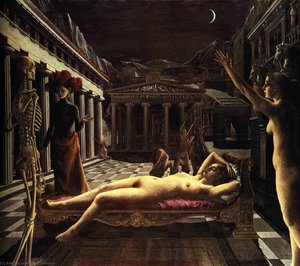
The Sleeping Venus - Paul Delvaux
 The Sleeping Venus - Paul Delvaux
In the silent, moonlit corridors of Paul Delvaux’s 1944 masterpiece, The Sleeping Venus , time appears to hold its breath amidst a profound, nocturnal stillness. This work earns its place among the top famous paintings dominated by black tones through its haunting use of chiaroscuro , where deep, velvety shadows swallow the edges of classical architecture, leaving only fragments of light to illuminate a dreamscape of mortality and desire. The palette is a somber symphony of midnight blacks, bruised browns, and muted creams, creating an atmosphere that feels both infinitely vast and claustrophobically intimate.
Delvaux masterfully weaves the skeletal presence of death into a scene of classical beauty, using heavy shadows to evoke the psychological anxieties of a world at war. The texture of the oil on canvas brings a tactile depth to the reclining figure, making the dream feel almost tangible. For the modern collector, bringing such a profound exploration of light and dark into a home offers more than mere decoration; it introduces a sophisticated, contemplative anchor that invites quiet introspection and adds an air of museum-grade mystery to any contemporary interior.
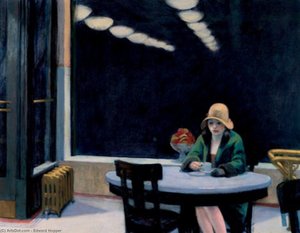
Automat - Edward Hopper
 Automat - Edward Hopper
In Edward Hopper’s 1927 masterpiece, Automat , the darkness is not merely an absence of light, but a profound presence that breathes with urban melancholy. As one of the most poignant entries in our exploration of paintings dominated by black and deep tones, this work captures the heavy, velvet shadows of a late-night New York eatery. The composition is anchored by a vast, obsidian-like void reflected in the dark windowpane, creating a sense of infinite, lonely space.
Hopper utilizes stark, directional light to pierce through the gloom, illuminating a solitary woman and a small bowl of fruit, yet the surrounding blacks and deep blues threaten to swallow the scene. This interplay of light and shadow evokes a visceral sense of urban alienation and quiet introspection. Owning Automat by Edward Hopper is not simply an acquisition; it is an inheritance of this profound emotional lineage. At Mus3ums.com, we allow you to bring this legacy into your own home through meticulous, hand-painted oil reproductions that preserve every heavy shadow and evocative brushstroke of the original American Realism movement.
La maja desnuda. . Madrid, Museo del Prado. - Francisco José de Goya y Lucientes
 La maja desnuda. . Madrid, Museo del Prado. - Francisco José de Goya y Lucientes
In Francisco Goya’s La maja desnuda , the darkness does not merely surround the subject; it defines her. As one of the most profound examples of paintings dominated by black tones, this masterpiece utilizes a deep, almost void-like background to push the reclining figure into the immediate foreground. The heavy use of chiaroscuro creates a dramatic tension, where the soft, luminous skin emerges from a somber, shadowy atmosphere, highlighting the delicate textures of the bedclothes and the organic contours of the body.
There is a gaze in La maja desnuda by Francisco Goya that follows you—not with judgment, but with understanding . This isn’t just a portrait; it is a mirror of human vulnerability and quiet strength. The interplay of light and shadow invites a sense of introspection, making the viewer a silent participant in this private moment. Now, imagine that gaze in your space. Not watching you, but reminding you: you are seen. You are part of the story. For those looking to anchor a room with historical gravity, our hand-painted oil reproductions capture every meticulous brushstroke and tonal depth of Goya’s original, bringing this timeless Spanish Romanticism into your home.
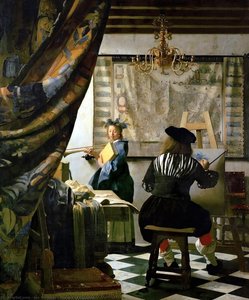
The Art of Painting - Johannes Vermeer
 The Art of Painting - Johannes Vermeer
In The Art of Painting , Johannes Vermeer invites us into a profound moment of quietude, where the shadows of a 17th-century studio hold a weight of immense intellectual gravity. The composition is anchored by deep, velvety blacks and rich, dark umbers that swallow the periphery, forcing the viewer to focus on the luminous interplay of light upon the artist’s subject. This mastery of chiaroscuro creates a psychological depth that transcends the canvas; the heavy, dark tones do not merely represent shadow, but rather provide the necessary silence for contemplation.
As one of the most significant works dominated by dark, somber pigments, this masterpiece serves as a universal mirror of human creativity and the sanctity of the inner life. The way the light catches the textures of the heavy drapery against the obsidian depths of the background offers a sense of quiet prestige. Bringing such a powerful emotional resonance into your home can transform a personal sanctuary into a space for profound reflection, where the dramatic, dark-toned elegance of the Dutch Golden Age inspires a lasting sense of calm and scholarly grace.
Man and Woman Contemplating the Moon - Caspar David Friedrich
 Man and Woman Contemplating the Moon - Caspar David Friedrich
In Caspar David Friedrich’s 1824 masterpiece, Man and Woman Contemplating the Moon , darkness is not merely an absence of light; it is a profound, breathing presence. As a titan of German Romanticism, Friedrich does not simply paint a nocturnal landscape; he composes a visual sonata where deep blacks, midnight blues, and somber earth tones act as the primary instruments. The silhouettes of the two figures, anchored against the gnarled, ancient textures of the forest, invite us into a realm of spiritual introspection and the sublime.
The artist masterfully manipulates light to invent emotion, using the ethereal glow of a crescent moon to pierce through the heavy, monochromatic shadows. This stark contrast creates a sense of mystery and infinite depth, turning the canvas into a portal for quiet reflection. To possess a hand-painted oil reproduction of this work is to bring that very atmosphere into your own space. Our artists meticulously recreate every visible brushstroke and tonal nuance, ensuring the velvety depths of Friedrich’s night sky retain their transformative power on your walls.
Conclusion
As the light fades on our exploration of these shadowed masterpieces, we are reminded that the use of black in art is never merely an absence of light, but a profound presence of depth, mystery, and soul. These ten works stand as more than just historic treasures held within museum walls; they are living presences that continue to move hearts, shape the quiet corners of our modern lives, and inspire a boundless sense of creativity. To live with such art is to invite a dialogue with history, allowing the weight and elegance of these dark tones to anchor our most personal spaces.
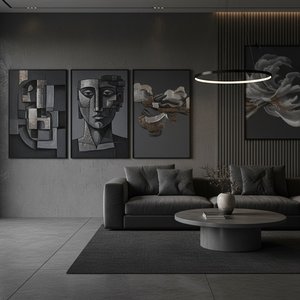
At Mus3ums.com , we view ourselves as your creative partner in this enduring legacy. Whether you are an interior designer curating the atmosphere of a luxury hotel, an architect defining the character of a private villa, or a collector seeking to transform a refined residence into a gallery of thought, we provide the tools to turn every project into a definitive artistic statement. Through our professional digital mockup service, we allow you to visualize these heavy, emotive tones within your specific architectural context, ensuring that each custom-commissioned oil reproduction harmonizes perfectly with your vision.
From large-scale murals that command a room to bespoke multi-panel sets that flow across expansive walls, our mission is to bring the museum experience into the heart of your design. We invite you to discover more depth and shadow within our full collection , where every brushstroke is a testament to the timeless human connection to the beautiful, the dark, and the divine.