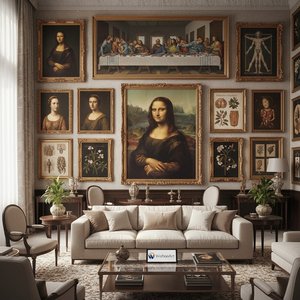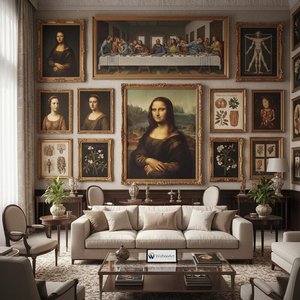
who painted The Last Supper?
 The Last Supper
The Last Supper, Leonardo da Vinci
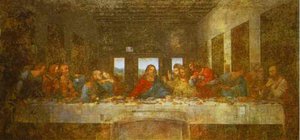
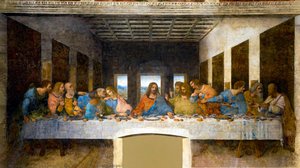
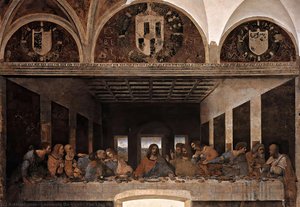
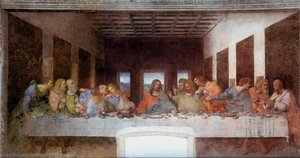
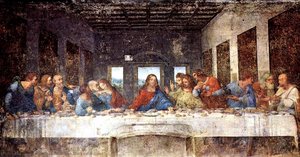
The famous mural known as The Last Supper was painted by the Italian High Renaissance master Leonardo da Vinci. He created this iconic work to capture the intense human emotions and psychological drama that occurred immediately after Jesus announced that one of his twelve apostles would betray him.
Leonardo’s approach to this subject revolutionized art through his use of perspective and sfumato—a technique involving soft, smoky transitions between light and shadow. While many artists have tackled this biblical scene, Leonardo's version remains the most recognizable due to how he used every gesture to narrate the unfolding drama.
It is worth noting that other masters have explored this same theme with different styles:
- Salvador Dalí: Created a Surrealist interpretation titled "The Sacrament of the Last Supper" in 1955.
- Peter Paul Rubens: Produced a dynamic Baroque version in 1631.
- Andrea del Sarto: Painted a more quiet, naturalistic fresco in Florence.
when was this mural painted?
Leonardo da Vinci worked on The Last Supper during the late 15th century, specifically between approximately 1495 and 1498. While some historical records suggest the work might have begun as early as 1494, most scholars agree on this roughly four-year period of creation.
The timeline of the painting is actually quite complex because Leonardo did not work continuously. He often paused to focus on scientific observations or other engineering projects. In fact, a monastery prior once complained about the delays, leading Leonardo to famously threaten to use the man's face as the model for Judas.
The technical choices made during this time also impacted the painting's longevity. Rather than using traditional fresco—which requires painting on wet plaster—Leonardo experimented with a mixture of oil and tempera on a dry wall. This allowed him to achieve richer colors, but it unfortunately led to much faster deterioration.
where can the original painting be viewed?
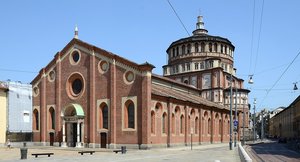 Church Santa Maria delle Grazie
A Sanctuary of Time: Unveiling Santa Maria delle Grazie Nestled within the vibrant heart of Milan, Italy, Santa Maria delle Grazie isn’t merely a church; it's an immersive experience, a testament to centuries of artistic evolution and spiritual contemplation.
The original masterpiece is located in Milan, Italy. It is permanently housed within the refectory—the communal dining hall—of the Convent of Santa Maria delle Grazie. This historic site serves as a profound setting for viewing the massive mural in its intended architectural context.
The painting is an immense work of art, measuring approximately 460 cm by 880 cm (about 15 feet high and nearly 29 feet wide). It was originally commissioned by Ludovico Sforza, the Duke of Milan, as part of a larger plan to renovate the convent and establish it as a family mausoleum.
Visitors traveling to the site should be aware of the following details regarding the location:
- Location: Church Santa Maria delle Grazie, Milan, Italy.
- Setting: The Refectory (dining hall) of the convent.
- Architectural Style: A blend of Gothic origins and Renaissance innovations by Donato Bramante.
Frequently asked questions
Where is The Last Supper located?
The painting is located in the refectory of the Convent of Santa Maria delle Grazie in Milan, Italy.
Who commissioned Leonardo da Vinci's mural?
The work was commissioned by Ludovico Sforza, the Duke of Milan.
What does the painting depict?
The painting depicts the moment after Jesus announces that one of his apostles will betray him.
What medium did Leonardo da Vinci use for this painting?
Leonardo da Vinci used a mixture of oil and tempera on a dry wall instead of traditional fresco.
Learn more
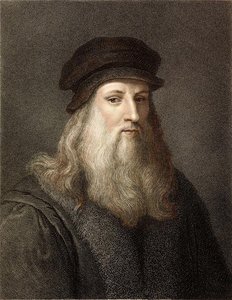
- 1452 – 1519Leonardo da VinciBrowse our extensive catalog of works by Leonardo da Vinci available in multiple sizes.
- Leonardo da Vinci · 1495The Last Supper by Leonardo da VinciView detailed specifications and sizing options for our reproduction of this Renaissance masterpiece.
Sources
- Encyclopedia entry for Leonardo da Vinci's mural painting (en.wikipedia.org)
- Information on Ghirlandaio's Last Supper fresco paintings (en.wikipedia.org)
- Overview of Last Supper depictions in Christian art (en.wikipedia.org)
- Details on the conservation of Leonardo's masterpiece (en.wikipedia.org)