A Life Painted by Sea and Sky: The World of Alexei Petrovich Bogoliubov
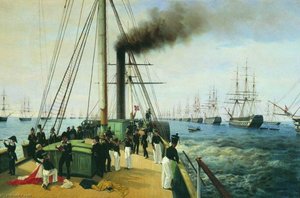
Alexei Petrovich Bogolyubov, a name that resonates deeply within the annals of 19th-century Russian landscape and seascape painting, was an artist whose life unfolded as a rich tapestry woven with threads of naval service, artistic exploration, and profound connection to both the sea and the land. Born in 1824 in the Pomeranian village of Novgorod Gubernia, Russia – a region steeped in maritime history – his early years were shaped by a unique confluence of influences: his father’s distinguished military background, his maternal grandfather's celebrated philosophical legacy (Alexander Radishchev), and ultimately, a deep-seated fascination with the boundless expanse of the ocean. This complex heritage would profoundly inform not only his personal journey but also the very essence of his artistic vision, imbuing his work with a distinctive blend of discipline, romanticism, and an unwavering reverence for nature’s power. Bogolyubov's formative years were inextricably linked to the Imperial Russian Navy. He began his military career at a young age, receiving a rigorous education at a naval academy, followed by service aboard various ships – a period that transported him across vast oceans, exposing him to diverse cultures and landscapes. It was during these voyages, far from the confines of European shores, that his artistic inclinations truly began to blossom. The rhythmic sway of the waves, the dramatic interplay of light on water, the sheer scale of the maritime world—these experiences ignited a passion within him, compelling him to translate the visual poetry of the sea onto canvas. Crucially, he encountered Ivan Ayvazovsky, the renowned master of marine painting, whose techniques and approach to capturing atmospheric effects would become a cornerstone of Bogolyubov’s own artistic development. Ayvazovsky's ability to convey both the physical reality and emotional intensity of the sea profoundly influenced Bogolyubov’s style, shaping his use of color, brushwork, and composition.From Naval Officer to Master of Atmosphere
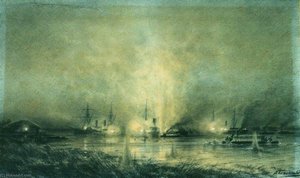
Bogoliubov’s transition from naval officer to a dedicated artist was not merely a career change; it represented a profound shift in perspective – a conscious decision to dedicate himself fully to the pursuit of artistic expression. He formally enrolled at the prestigious Saint Petersburg Academy of Arts in 1849, under the tutelage of Maxim Vorobiev, an influential figure known for his emphasis on realistic depiction and masterful technique. His early studies focused on drawing and composition, laying a solid foundation for his future work. However, it was his time with Professor Villevalde that proved particularly transformative, providing him with invaluable insights into color theory and the nuances of capturing light and shadow. In 1853, he achieved a remarkable milestone: graduating from the Academy with a major gold medal – a prestigious recognition that immediately established him as a rising star within the Russian art world. His graduation works—"View of the Smolny Monastery from Bolshaya Okhta," "Battle of the Mercury brig with two Turkish ships" (from the 1828 Turkish War), and “Departure of Duke Maximilian of Leuchtenberg from Lisbon”—demonstrated his burgeoning talent, showcasing a remarkable ability to blend realism with romanticism. Bogolyubov’s artistic journey extended far beyond the confines of the Academy. Recognizing the importance of experiencing diverse artistic traditions firsthand, he embarked on an extensive period of travel throughout Europe between 1854 and 1860. This sojourn proved pivotal in broadening his horizons and refining his style. In Rome, he encountered Alexander Ivanov, a leading figure of the *Sacred School* of painting, who encouraged him to prioritize fundamental drawing skills – a crucial element that would underpin his later success. Düsseldorf provided an opportunity to study under Andreas Achenbach, whose influence is evident in Bogolyubov’s masterful use of light and color. Crucially, he spent time in Paris, immersing himself in the vibrant artistic scene of the Barbizon School—artists like Camille Corot and Charles-François Daubigny who championed *plein air* painting (painting outdoors) and a direct engagement with nature. This exposure to the Barbizon’s emphasis on capturing the immediacy of experience profoundly shaped Bogolyubov's own approach, fostering a deep connection between his art and the natural world.Bridging Realism and Romanticism: The Essence of His Style
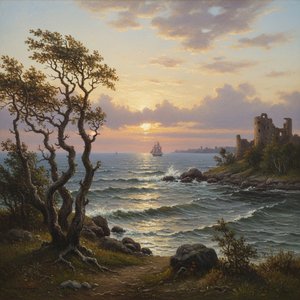
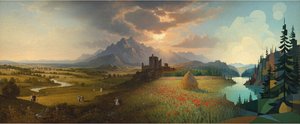
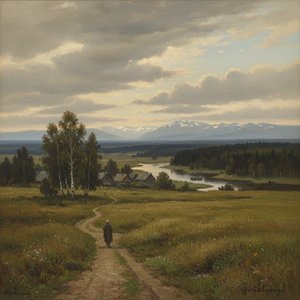
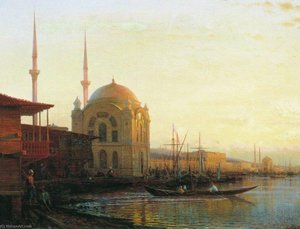
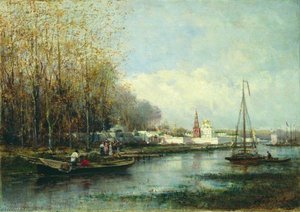
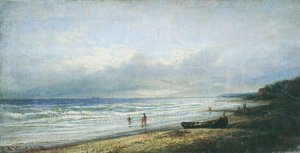
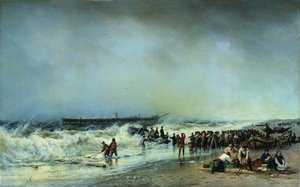
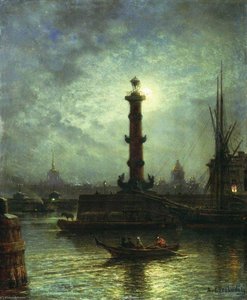
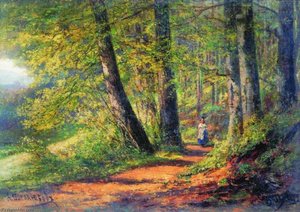
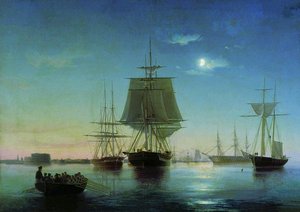
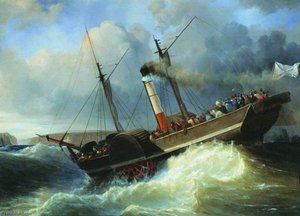
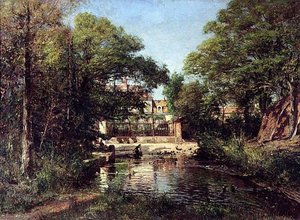
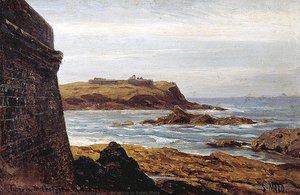
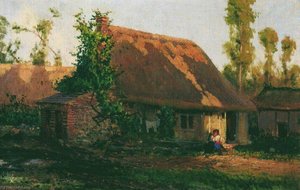
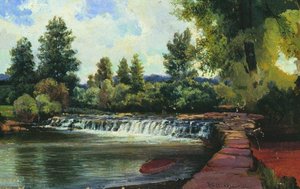
Bogolyubov’s paintings are characterized by a remarkable ability to capture not just the visual appearance of landscapes and seascapes but also their emotional resonance. He wasn't simply recording what he saw; he was conveying how it *felt* to be present in that moment—the power of the wind, the vastness of the ocean, the serenity of a quiet shore. His seascapes are particularly noteworthy for their dramatic lighting effects, often depicting stormy skies and crashing waves with breathtaking realism and an underlying sense of poetic beauty. Yet, even within these dynamic compositions, there’s a subtle undercurrent of romanticism—a feeling of awe and wonder that elevates his work beyond mere documentation. He skillfully balanced meticulous detail with a looser, more expressive brushstroke, creating paintings that are both visually compelling and emotionally evocative. While celebrated for his marine scenes, Bogolyubov also produced numerous landscapes depicting the Russian countryside, often focusing on the Volga River – a symbol of national identity and spiritual significance in Russia. These works showcase his mastery of color and composition, capturing the vastness and beauty of the Russian landscape with remarkable sensitivity.A Legacy of Influence and Artistic Engagement
Throughout his career, Bogolyubov remained actively engaged with the evolving artistic landscape of Russia. He became closely associated with the *Peredvizhniki* (The Wanderers), a group of realist artists who sought to bring art closer to the people through exhibitions held outside of traditional academic institutions. While he participated in their exhibitions and even served on their board, Bogolyubov maintained a degree of independence, occasionally expressing reservations about the movement’s more overtly social and political agendas. In 1873, he left the Academy in solidarity with his fellow itinerants, demonstrating his commitment to artistic freedom and innovation. As his health began to decline, Bogoliubov settled in Paris around 1873, where his home became a vibrant hub for Russian émigré artists and intellectuals. Figures like Ivan Turgenev, Ilya Repin, and Vasily Polenov frequented his salon, engaging in lively discussions about art, literature, and politics. He continued to paint prolifically until his death in 1896, leaving behind a rich legacy of works that continue to inspire and captivate audiences today. Bogolyubov’s contribution lies not only in the beauty and technical skill of his paintings but also in his ability to bridge the gap between realism and romanticism, creating a uniquely Russian artistic vision that captured the spirit of his time. His work remains a testament to the power of art to evoke emotion, celebrate nature, and reflect the complexities of the human experience.Gyakori kérdések és válaszok
Mely történelmi korszakban alkotott Bogolyubov Alexey Petrovics?
Bogolyubov Alexey Petrovics a 19. század korszakban alkotott. Ez az időszak a művész tevékenységét a történelembe helyezi.
Honnan származik Bogolyubov Alexey Petrovics?
Bogolyubov Alexey Petrovics Oroszország-ban született.
Hol és 어느 해 született Bogolyubov Alexey Petrovics?
Bogolyubov Alexey Petrovics Novgorod városban született, 1824 évben.