A Life Painted in Elegance: The World of Louise Élisabeth Vigée Le Brun
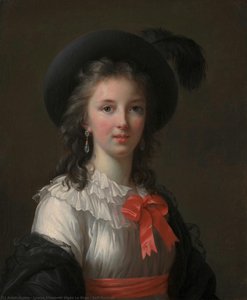
Louise Élisabeth Vigée Le Brun, a name that echoes through the halls of French art history, was far more than just a painter—she was a chronicler of an era, a master of capturing not merely likeness but the very soul of her subjects. Born in Paris in 1755, her artistic journey began within a family already deeply rooted in the world of beauty and creativity. Her father, Louis Vigée, a celebrated pastel portraitist, recognized and nurtured her innate talent from an incredibly young age, providing her with early instruction that would lay the foundation for a career brimming with both success and poignant personal challenges. This familial encouragement proved invaluable, particularly after his untimely death when she was just twelve years old—a loss that spurred her mother to tirelessly pursue further training for Louise with some of Paris’s most esteemed artists, including Blaise Bocquet, Pierre Davesne, and Gabriel Briard. These formative years instilled in her not only a profound technical skill but also an acute appreciation for the subtle nuances of light, color, and composition—elements that would become instantly recognizable hallmarks of her distinctive style. Even as a young woman, Vigée Le Brun was already establishing herself as a professional artist, demonstrating a remarkable precocity and unwavering dedication to her craft.Royal Favor and Artistic Flourishing
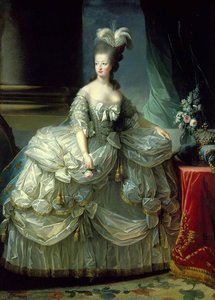
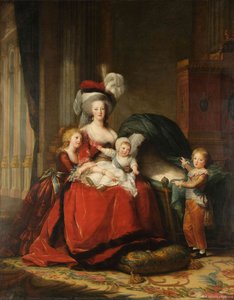
The pivotal moment in Vigée Le Brun’s career arrived with her commission to paint Marie Antoinette in 1778. This wasn't simply an artistic opportunity—it was a gateway into the very heart of French society, a world brimming with opulent courts, discerning patrons, and intricate social dynamics. The Queen, initially somewhat hesitant about sitting for a portrait, quickly found herself captivated by Vigée Le Brun’s extraordinary ability to portray her not just as royalty but also as a woman—a delicate balance that few artists could achieve with such grace and sensitivity. This commission ignited a cascade of further royal portraits, firmly establishing Vigée Le Brun as the official portraitist to Marie Antoinette and solidifying her position within the highest echelons of French aristocracy. Her studio transformed into a vibrant hub for the elite—a place where members of high society flocked to have their likenesses immortalized on canvas. She possessed an unparalleled gift for capturing not only physical resemblance but also the personality, social standing, and even the unspoken emotions of her subjects. This remarkable talent, combined with her innate charm, diplomatic skills, and a keen understanding of courtly etiquette, allowed her to navigate the complex world of royal patronage with astonishing success. Her artistic style during this period skillfully blended elements of Rococo’s playful elegance—characterized by delicate pastel shades and intricate decorative flourishes—with a burgeoning Neoclassical sensibility, resulting in portraits that were both undeniably fashionable and remarkably timeless.A Style Defined by Grace and Naturalism
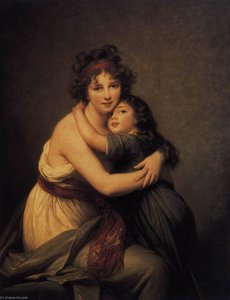
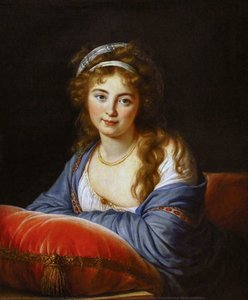
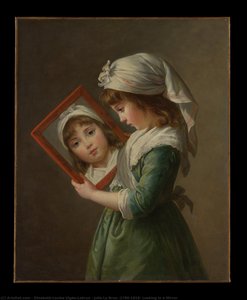
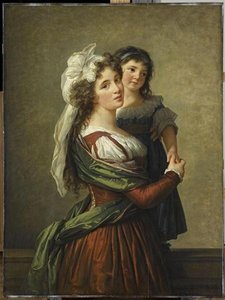
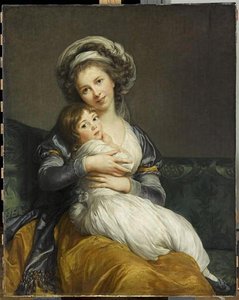
Vigée Le Brun's artistic approach was distinguished by her extraordinary ability to infuse her portraits with life and genuine emotion. She deliberately moved away from the often-stiff formality of earlier portraiture, opting instead for more natural poses and expressions that seemed to capture a fleeting moment of intimacy. Her brushwork was fluid and remarkably delicate—creating a sense of softness and luminosity in her paintings that drew viewers into the scene. She paid meticulous attention to detail, particularly when rendering fabrics, jewelry, and hairstyles—elements that served not only as decorative embellishments but also as powerful symbols of status and refinement. While undeniably influenced by Rococo’s emphasis on pastel shades and elaborate ornamentation, she skillfully embraced Neoclassical principles of clarity, balance, and a focus on the subject's inner life. This unique combination resulted in portraits that were both exquisitely elegant and profoundly insightful. Notable works such as *Self-Portrait with Her Daughter, Julie*, offer compelling evidence of her mastery in capturing intimate moments—moments filled with tenderness, maternal affection, and a quiet sense of beauty. The numerous portraits she created of Marie Antoinette, including the iconic depiction of the Queen holding a rose—a symbol of both fragility and resilience—demonstrate her ability to portray royalty not just as an image of power but also as a complex and deeply human figure. Beyond portraiture, Vigée Le Brun also explored landscape and genre scenes, showcasing her remarkable versatility as an artist and expanding the scope of her creative expression.Exile, Resilience, and Lasting Legacy
The French Revolution dramatically altered the course of Vigée Le Brun’s life—a period marked by upheaval, uncertainty, and ultimately, exile. As a close associate of the royal family, she faced increasing scrutiny and suspicion following the storming of the Bastille, and in 1789, she fled France to avoid persecution. This initiated a long and arduous journey across Europe—to Russia, Italy, England, Switzerland, and beyond—a period during which she continued to paint, securing patronage from European aristocrats and establishing herself as an internationally renowned artist despite the political turmoil surrounding her. Her travels broadened her artistic horizons considerably, exposing her to diverse styles, techniques, and cultural influences that enriched her own creative vision. Upon returning to France in 1809—after the restoration of the monarchy—she resumed her career with renewed vigor, though the political landscape had undergone a profound transformation. She published her memoirs, *Souvenirs*, offering a fascinating and remarkably candid account of her life, artistic experiences, and observations of the art world during her time—a valuable historical document that provides invaluable insights into the complexities of French society in the late 18th and early 19th centuries. Vigée Le Brun’s legacy extends far beyond her technical skill and artistic achievements; she remains a pioneering figure for women in the arts, having achieved remarkable success in a field historically dominated by men. Her paintings continue to be celebrated for their beauty, elegance, and historical significance—offering a captivating window into the world of 18th-century France and solidifying her place as one of history’s most accomplished portraitists. Her ability to capture not just appearances but also the inner lives of her sitters ensures that her work continues to resonate with audiences today.Kérdések és válaszok
Milyen más nevét vagy álneveit használ még Vigée Le Brun Louise Élisabeth?
Vigée Le Brun Louise Élisabeth a következő más néven is ismert: Vigée Le Brun Elisabeth Louise, Vigée Le Brun.
Hol és 어느 해 született Vigée Le Brun Louise Élisabeth?
Vigée Le Brun Louise Élisabeth Párizs városban született, 1755 évben.
Mely történelmi korszakban alkotott Vigée Le Brun Louise Élisabeth?
Vigée Le Brun Louise Élisabeth a Korai modern kor korszakban alkotott. Ez az időszak a művész tevékenységét a történelembe helyezi.