Octavio Medellín (1907–1999): Spirit and Form
Octavio Medellín was a Mexican American sculptor who shaped the Texas art scene for six decades. Explore his Mayan-inspired reliefs, abstract works & lasting legacy.- Early Life: Born in Matehuala, San Luis Potosí, Mexico in 1907, Medellín’s early life was profoundly impacted by the Mexican Revolution. His father Manuel instilled a love of art in Octavio, who worked as a mineworker. Due to violence caused by the revolution in his country, Medellín’s family relocated several times before they would eventually settle in San Antonio, Texas in 1920. Before moving to San Antonio, Medellín demonstrated an intriguing passion for the arts when he was able to attend school at the age of 11. Medellín's father had been reported to have been imprisoned during their time in Mexico but was released as the fighting began to dwindle. Due to this, it remains a mystery as to why Medellín’s father had returned to Mexico, where he would tragically die by the same forces of the revolution that caused him to move his family to San Antonio.
- Education and Influences: Medellín studied painting at the San Antonio Art School with José Arpa y Perea (1858-1952), a Spanish-born painter who arrived in San Antonio in 1923. He later moved in 1928 to continue his art studies at the Chicago Art Institute. A year into his college education in 1929, he returned to Mexico for eighteen months and studied the country’s art, style, customs, and history. Medellín traveled “throughout the Gulf Coast, including the Yucatan” and explored the various talent and art created by the rural areas and the many “ancient ruins and sculpture of the Mayan and Toltec Indians.” He was deeply inspired by the Mexican art (both ancient and modern) that helped him define his heritage and that enabled him to create his own artworks.
- Return to Mexico and Artistic Evolution: Medellín returned to San Antonio in 1931 to teach at the Witte Museum of Art and at La Villita Gallery. He later helped to open La Villita Art Gallery in cooperation with some other local artists. Medellín went on to become a prolific and successful artist with works exhibited throughout Texas and the United States, including the New York’s 1939 World’s Fair and the MoMA.
- The Medellin School of Sculpture: Medellín moved to Mendocino Art Center in California in 1964 and founded the Medellin School of Sculpture at famed western artist Frank Reaugh’s former studio, El Sibil, where he taught all levels of students in numerous different media.
- Recognition and Legacy: Medellín's contributions have been increasingly recognized in recent years. The 2022 retrospective, “Octavio Medellín: Spirit and Form” at the Dallas Museum of Art, was a landmark event—the artist’s first major museum exhibition—bringing renewed attention to his remarkable body of work.
, , - , , and . Other formatting elements are excluded.
Kérdések és válaszok
Mely történelmi korszakban alkotott Octavio Medellín?
Octavio Medellín a Modern kor korszakban alkotott. Ez az időszak a művész tevékenységét a történelembe helyezi.
Honnan származik Octavio Medellín?
Octavio Medellín Mexiko-ban született.
Melyik városban és melyik országban született Octavio Medellín?
Octavio Medellín Matehuala, Mexiko városában született.


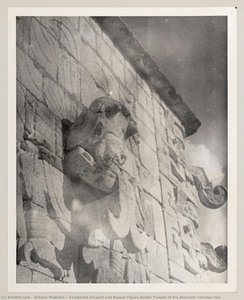
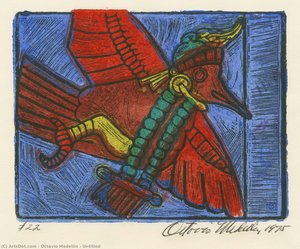
![[kőfaragott Alak, Szüzegyházi Kvadrát, Uxmal] — Octavio Medellín](/media/artworks/images-thumb/cd/72/cd72ede773e8f67633d88d21707b2444.jpg)
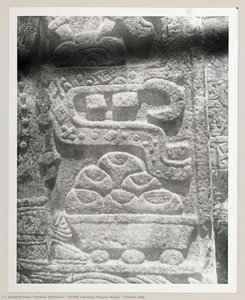
![[kőfaragott Maja Figura, Majáközépülete Chichen Itza] — Octavio Medellín](/media/artworks/images-thumb/3e/74/3e7411e624d6a7864e9a67148e78f93c.jpg)

![[chac Mool, Temple Of The Warriors, Chichen Itza] — Octavio Medellín](/media/artworks/images-thumb/51/2f/512fe9e07a7b8879b896b3a926d27f0e.jpg)
![[relief Carving, Mayan Ruins, Chichen Itza] — Octavio Medellín](/media/artworks/images-thumb/35/67/3567d62fed8ff025fad1ec7099d10b4a.jpg)
![[front View Of Stone Jaguar. Temple Of The Jaguars] — Octavio Medellín](/media/artworks/images-thumb/fb/24/fb24cc9cbf62fec18531cf7c09f13227.jpg)
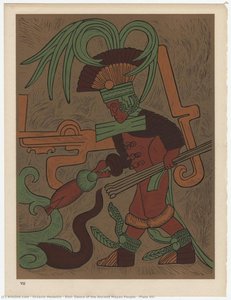
![Xtol: Dance Of The Ancient Mayan People, [plate Viii] — Octavio Medellín](/media/artworks/images-thumb/f7/70/f770dbc0dcc4255fefd37ee543983d49.jpg)
![[relief Carving, Mayan Ruins, Chichen Itza] — Octavio Medellín](/media/artworks/images-thumb/ae/af/aeaf0973d6fcf2dc314ffa5073a98171.jpg)
![Xtol: Dance Of The Ancient Mayan People, [front Cover] — Octavio Medellín](/media/artworks/images-thumb/ad/ff/adff41ab54d5acefec786d3397a0ee26.jpg)