



Origins and History of Florence Court
The history of Florence Court is rooted in the 18th century, beginning when Sir John Cole commissioned a small house for his family in the early 1700s. The estate was named in honor of his wife, Florence Bourchier Wrey. Over the following decades, the residence evolved from this initial structure into a larger mansion. The Cole family maintained ownership of the house and its surrounding lands for many generations, establishing the estate as the seat for the Earls of Enniskillen.
The lineage of the Earls of Enniskillen remained tied to the property until the mid-20th century. In 1953, the 5th Earl gave the house and its grounds to the National Trust. This transition ensured the preservation of the estate, which had served as a primary residence for the family until 1973. The site remains a significant presence in Northern Ireland, situated against the backdrop of the Benaughlin Mountain.
The Building and its Architecture
Florence Court represents one of Ireland’s finest examples of Georgian architecture. The house, a Grade A listed building, possesses a presence shaped by successive generations of the Cole family. In 1771, the Sardinian architect David Ducart added open colonnades and pavilions, lending the structure a Palladian character. These additions integrate the house into the surrounding landscape, which is framed by the Benaughlin Mountain backdrop.
Inside, the interiors hold significant decorative detail, most notably a baroque plastered ceiling. The scale of the architecture is matched by the formal arrangement of the grounds. A four-acre walled garden is situated near the house, providing a structured transition between the masonry of the mansion and the wider estate. The estate remains a significant example of the evolution of Irish country house design.
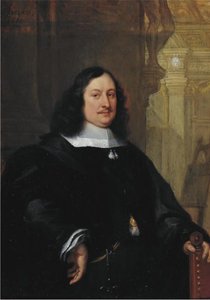
- An Unknown Gentleman with a Sword, 1700 - Charles Jervas
- Kitchen Interior with a Toper and Other Peasants Beyond, 1634 - David Teniers the Younger
- A Grey Racehorse in a Stable - James Barenger
- The Cole Arabian in an Indian Landscape, 1810 - Charles Henry Schwanfelder
Recent Projects and Restoration
The restoration of the estate has focused heavily on the recovery of its horticultural history. Following the departure of the last Head Gardener in 1947, the kitchen garden and its original glasshouses fell into a period of decline. However, archaeological excavations conducted by the National Trust in 2014 successfully rediscovered the original footprint of these glasshouses, providing a clear map for future reconstruction efforts.
A significant project is currently underway to re-instate the two glasshouses. This work is supported by £417,800 in National Lottery funding, which has been allocated specifically for the reinstatement of the glasshouse structures. The initiative aims to bring the kitchen garden back to life, restoring a space that once required the labor of twelve full-time gardeners to maintain.