
The Fiddler, National Gallery of Art at Wasマルク・シャガール · 1913
 Oil On Canvas
- WallArt
- Cubism
 1913
1913- Modern
マルク・シャガール(1887 – 1985)
シャガールは、夢幻的な色彩とユダヤの民話が織りなす独特の世界観で知られる20世紀を代表する芸術家。絵画、ステンドグラスなど多彩な作品が生み出し、モダニズム美術に大きな影響を与えました。
A Portrait of Vitebsk and the Soul
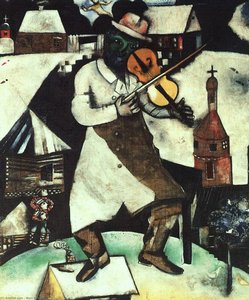
Marc Chagall’s “The Fiddler,” painted in 1913 during his formative years in Paris, isn't merely a depiction of a musician; it’s a vibrant distillation of memory, folklore, and the artist’s deeply rooted connection to his Belarusian homeland. Born Moishe Shagal in Liozna, Belarus, Chagall carried with him the rich tapestry of his Jewish upbringing – a blend of Orthodox traditions, Hasidic mysticism, and the bustling energy of a small provincial town. Vitebsk, his birthplace, became an enduring motif throughout his career, appearing repeatedly as a fantastical landscape populated by flying figures, whimsical animals, and a profound sense of nostalgia. “The Fiddler” is arguably one of the most potent expressions of this longing for home, capturing not just a scene but an entire emotional universe.
Cubist Roots, Dreamlike Visions
Stylistically, “The Fiddle” resides within the nascent stages of Cubism, though it transcends a strict adherence to the movement’s geometric deconstruction. Chagall employs flattened planes and fragmented forms – particularly evident in the architecture of the village and the figure of the fiddler himself – yet these elements are infused with an intensely personal and symbolic language. The composition is dominated by bold contrasts of color: deep blues, greens, and purples create a sense of nocturnal mystery, while bursts of yellow and red highlight key figures and details. This deliberate use of color isn’t simply decorative; it serves to heighten the emotional impact and imbue the scene with an almost hallucinatory quality.
- Technique: Oil on canvas – Chagall's signature impasto technique adds texture and depth, particularly noticeable in the fiddler’s coat.
- Composition: A dynamic arrangement featuring a towering figure of the fiddler set against a simplified village landscape.
- Color Palette: Dominated by cool blues and greens contrasted with warm yellows and reds, creating a sense of drama and mystery.
Symbolism and Narrative
The painting is rich in symbolic meaning. The oversized fiddler immediately commands attention, suggesting both power and vulnerability. He’s not simply playing music; he's embodying the spirit of the village, a conduit between the earthly realm and something beyond. The snow-covered landscape evokes a sense of isolation and perhaps even hardship, while the church steeple rising in the background represents faith and tradition – key elements of Chagall’s Jewish heritage. The presence of other figures, though less defined, hints at a community gathered around this central figure, suggesting themes of shared experience and communal life. The painting can be interpreted as a meditation on memory, longing, and the enduring power of folklore.
A Window into Chagall’s Soul
“The Fiddler” is more than just a beautiful image; it's a profound expression of Marc Chagall’s inner world. It reflects his deep connection to his roots, his fascination with Jewish mysticism, and his ability to transform personal memories into universal symbols. Reproductions of this iconic work offer a remarkable opportunity to bring this dreamlike vision into your home, allowing you to experience the emotional depth and artistic brilliance of one of the 20th century’s most beloved artists. Consider commissioning a hand-painted reproduction from Mus3ums.com – a faithful recreation that captures not only the visual details but also the very essence of Chagall's vision.
この作品について
- 作品名: The Fiddler, National Gallery of Art at Was
- 作家: マルク・シャガール
- 制作年: 1913
- 形式: Portrait
- 著作権の状態: 著作権保護下
- 動き: Cubism
- 技法・素材: Oil On Canvas
- 制作時期: Early Period
- カラーパレット: Neutrals
- キーワード: folklore, snow, color
作品情報
- Notable elements: Surreal scene, fiddler
- Year: 1913
- Influences:
- Russian folklore
- Jewish culture
- Dimensions: 188 x 158 cm
- Subject or theme: Village life, music
- Medium: Oil on canvas
よくあるご質問
マルク・シャガール作「The Fiddler, National Gallery of Art at Was」の構図を主導している色は何ですか?
マルク・シャガール作「The Fiddler, National Gallery of Art at Was」の主色(メインカラー)はRosy Brown (#a3af8c)です。
マルク・シャガール作「The Fiddler, National Gallery of Art at Was」の全体的な雰囲気はどのようなものですか?
「The Fiddler, National Gallery of Art at Was」は、Romanticな雰囲気を纏っています。
「The Fiddler, National Gallery of Art at Was」のフォーマット(形状)は何ですか?
マルク・シャガール作「The Fiddler, National Gallery of Art at Was」はPortraitの構図です。プリントサイズを選択する前に、縦横比をご確認いただくことをお勧めします。