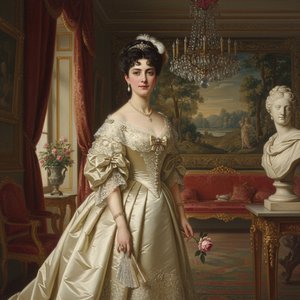
A Legacy of Elegance and Light
Born in Rome into one of Spain's most illustrious artistic dynasties, Federico de Madrazo y Kuntz carried the weight of a profound heritage within his very lineage. As the son of the influential neoclassical painter José de Madrazo y Agudo and Isabel Kuntz Valentini, his early life was steeped in the atmosphere of European high culture. His maternal grandfather, the Polish painter Tadeusz Kuntze, further anchored him to a tradition of mastery that spanned borders. This cosmopolitan upbringing, moving from the sacred halls of Saint Peter’s Basilica where he was baptized to the vibrant artistic centers of Madrid, allowed him to develop a perspective that was both deeply Spanish and broadly European.
His formative years were shaped by the rigorous training of the Academy of San Fernando, where his talent was recognized with startling speed. By the age of sixteen, he had already secured admission as an honorary academician, a feat that signaled the arrival of a prodigious talent. His education was not confined to the classroom; rather, it was a journey through the great art capitals of the era. In Paris, he walked the same paths as the masters, absorbing the refined sensibilities of French academicism and finding inspiration in the works of Ingres. This period of wandering and study infused his brushwork with a sophisticated grace, blending the structural clarity of his neoclassical roots with the emotive depth of the Romantic movement.
The Master of the Portrait
While his early repertoire included ambitious history paintings—such as Godfrey of Bouillon Proclaimed King of Jerusalem, created for the prestigious Versailles Palace—it was in the intimate realm of portraiture that Federico truly found his voice. He possessed an extraordinary, almost supernatural gift for idealizing his subjects without ever sacrificing the raw truth of their character. His portraits became much more than mere likenesses; they were psychological studies wrapped in the exquisite textures of silk, lace, and velvet. Whether capturing the regal presence of Isabella II of Spain or the soulful gaze of the Spanish aristocracy, his work radiated a sense of lived dignity.
The artist’s technique was characterized by an unsurpassed skill in rendering light and material. He had a remarkable ability to capture the way light dances across a satin gown or settles into the heavy folds of a cloak, creating a tactile reality that drew the viewer into the scene. This mastery made him the most sought-after portraitist among Madrid’s bourgeoisie and nobility. His studio became a crossroads of culture, where he trained future masters such as Léon Bonnat and Jean-Léon Gérôme, ensuring that his stylistic influence would ripple through subsequent generations of European painters.
A Life of Cultural Eminence
Beyond the easel, Federico de Madrazo y Kuntz occupied a position of immense power and prestige within the Spanish cultural landscape. His career was marked by a series of monumental appointments that saw him guiding the very institutions that defined Spanish art. He served with distinction as the Director of the Museo del Prado and held the presidency of the Academy of Fine Arts of San Fernando. These roles were not merely administrative; they were expressions of his role as a guardian of national heritage. His influence extended into the political sphere as well, serving as a Senator of the Realm, a testament to the respect he commanded across all strata of society.
His contributions to the intellectual life of Spain were equally significant. Through publications such as El Artista, El Renacimiento, and El Semanario pintoresco, he helped shape the discourse of art criticism and aesthetic appreciation in his homeland. Even as his family name became synonymous with the dominance of 19th-century Spanish painting, Federico remained a singular figure—a painter who could bridge the gap between the classical traditions of his father and the burgeoning Romantic spirit of his age. His life remains a testament to the power of art to define an era, leaving behind a legacy of beauty that continues to captivate the modern eye.
კითხვები და პასუხები
სად და რა წელს დაიბადა ფედერიკო დე მადრაზო ი კუნცი?
ფედერიკო დე მადრაზო ი კუნცი დაიბადა რომი-ში, 1815 წელს.
რა ფსევდონიმებით ან ალტერნატიული სახელებით არის ცნობილი ფედერიკო დე მადრაზო ი კუნცი?
ფედერიკო დე მადრაზო ი კუნცი ასევე ცნობილია როგორც ფედერიკო დე მადრაზო, მადრაზო ი კუნცი.
რომელ ისტორიულ პერიოდში მოღვაწეობდა ფედერიკო დე მადრაზო ი კუნცი?
ფედერიკო დე მადრაზო ი კუნცი მე-19 საუკუნე პერიოდში მოღვაწეობდა. ეს ეპოქა ხელოვანის შემოქმედებას ისტორიულ კონტექსტს სვამს.