
The Sacrifice of Iphigeniaშარლ-ანდრე ვან ლუო · 1757
 Acrylic On Canvas
- WallArt
- Rococo
 1757
1757 Metropolitan Museum of Art
A Moment Frozen in Time: Charles-André van Loo’s “The Sacrifice of Iphigenia”
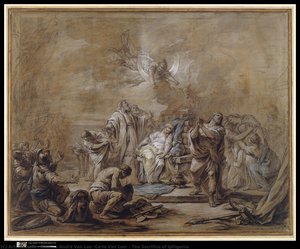
Charles-André van Loo's "The Sacrifice of Iphigenia," painted in 1757, is more than just a depiction of a tragic myth; it’s a masterclass in Baroque drama rendered with the elegance and meticulous detail characteristic of the Rococo style. Housed within The Metropolitan Museum of Art, this gouache on canvas transports us to a pivotal moment – the agonizing farewell of Agamemnon and his daughter Iphigenia before her sacrifice to appease Artemis. Van Loo doesn’t simply illustrate the event; he captures its emotional weight with an almost unbearable intensity, utilizing light, gesture, and composition to draw the viewer into the heart of the scene.
Rococo Grandeur and Baroque Intensity
Van Loo, a member of a distinguished artistic dynasty originating in the Netherlands, firmly established himself within the French court as a leading Rococo painter. However, “The Sacrifice of Iphigenia” transcends mere decorative elegance; it’s infused with the heightened drama and emotionalism often associated with Baroque painting. The composition is meticulously balanced – a vast, open space dominated by the figures, creating a sense of both grandeur and vulnerability. Notice how Van Loo employs diagonal lines, particularly in the positioning of Iphigenia and Agamemnon, to heighten the tension and direct our gaze towards the impending tragedy.
The use of color is equally significant. The cool blues and greens of the background contrast sharply with the warm tones of the figures’ clothing, emphasizing their isolation and highlighting the emotional turmoil within the scene. The subtle gradations of light and shadow – a hallmark of Baroque technique – create a sense of depth and volume, lending a palpable realism to the figures and their surroundings.
Symbolism and Mythological Resonance
The painting is steeped in symbolism, drawing upon the rich tapestry of Greek mythology. Iphigenia’s sacrifice represents a profound loss—the price of victory, the necessity of appeasing the gods, and the heartbreaking fate of innocence. The presence of the angel, a recurring motif in depictions of sacrificial scenes, underscores the divine judgment at play. Agamemnon's posture – his head bowed, hand raised in a gesture of despair – speaks volumes about his grief and acceptance of this terrible necessity. Even the details, such as the bowl and vase held by some figures, contribute to the narrative, hinting at rituals and offerings associated with Artemis.
A Window into 18th-Century French Court Life
Beyond its mythological subject matter, “The Sacrifice of Iphigenia” offers a glimpse into the artistic conventions and social dynamics of 18th-century France. Van Loo’s meticulous attention to detail—the elaborate costumes, the richly furnished background, the carefully rendered faces—reflects the opulence and sophistication of the French court. The painting served as both a historical record and a demonstration of artistic skill, intended to impress patrons and secure commissions. It's a testament to Van Loo’s ability to seamlessly blend classical mythology with the prevailing aesthetic sensibilities of his time.
Today, reproductions of “The Sacrifice of Iphigenia” continue to captivate viewers with their dramatic intensity and emotional resonance. Whether adorning a grand salon or a more intimate space, this painting serves as a powerful reminder of the enduring themes of sacrifice, loss, and the complex relationship between humanity and the divine.
შარლ-ანდრე ვან ლუო (1705 – 1765)
გა khámეთ შარლ-アンドრე ვან ლუო (კარლ ვან ლუო) ხელოვნება, XVIII საუკუნის საფრანგეთის წამყვანი როკოკოს მხატვარი. ცნობილია პორტრეტებით, მითოლოგიური და არისტოკრატიული ცხოვრების სცენებით; ის იყო ლუი XV-ის პირველი მხატვარი. აღმოაჩინეთ მისი მემკვიდრეობა Mus3ums-ზე!
Metropolitan Museum of Art (ნიუ-იორკი, ამერიკის შეერთებული შტატები)
აღმოაჩინეთ მეტროპოლიტენის ხელოვნების მუზეუმი: 5000 წლის ხელოვნება მთელი მსოფლიოდან! შედევრები, უძველესი არტეფაქტები და იმერსიული გამოფენები – გლობალური სახელოვნებო დანიშნულების ადგილი გელოდებათ.
ნამუშევრის შესახებ
- სათაური: The Sacrifice of Iphigenia
- ავტორი: შარლ-ანდრე ვან ლუო
- წელი: 1757
- ფორმატი: Landscape
- საავტორო უფლების სტატუსი: საჯარო დომენი
- სად შეიძლება ნახვა: Metropolitan Museum of Art
- მოძრაობა: Rococo
- კორპუსის კონტექსტი: family legacy, van loo dynasty
- დანიშნულება: Accent
- საკვანძო სიტყვები: sacrifice, tragedy, charles van loo
მოკლე ფაქტები
- Notable elements: Angel figure present
- Subject or theme: Greek mythology
- Medium: Gouache on canvas
- Artistic style: Rococo
- Location: Metropolitan Museum, NYC
კითხვები და პასუხები
როგორ უკავშირდება „The Sacrifice of Iphigenia“-ის სტილი მისი ავტორის ეპოქას?
"The Sacrifice of Iphigenia" მიეკუთვნება Rococo სტილს, მისი ავტორი კი ადრეული თანამედროვეობა ეპოქაში მოღვაწეობდა.
დაშვებია თუ არა კანონიერად შარლ-ანდრე ვან ლუო-ის „The Sacrifice of Iphigenia“-ის რეპროდუცირება, რომელიც Metropolitan Museum of Art-ში ინახება?
ორიგინალი „The Sacrifice of Iphigenia“ დაცულია Metropolitan Museum of Art-ში, ნამუშევარი კი არის საჯარო საკუთრებაშია - მისი საავტორო უფლებები ამოწდა.
სათანადო ფერების გათვალისწინებით, რომელ ოთახშია რეკომენდებული შარლ-ანდრე ვან ლუო-ის „The Sacrifice of Iphigenia“-ის განთავსება?
Earthy ფერების გათვალისწინებით, „The Sacrifice of Iphigenia“ რეკომენდებულია Living Room-ისთვის.