
Origins and History of the Foundation
The Calouste Gulbenkian Foundation emerged from the specific intentions of Calouste Sarkis Gulbenkian, an Armenian oil magnate based in Portugal. In his will, dated 18 June 1953, he outlined a vision for a legacy that extended beyond personal wealth. This foundation was formally established in 1956 to fulfill his final wishes. The fundamental purpose of the institution is to improve the quality of life for others through a commitment to art, charity, science, and education.
The physical presence of the foundation arrived in Lisbon when its premises opened in 1969. This development transformed the landscape of the city, creating a space dedicated to intellectual and cultural pursuits. The foundation operates as a private institution of general public utility, maintaining its activities through various branches and specialized institutes. It remains a permanent entity, shaped by the philanthropic conviction of its founder to foster human development through diverse disciplines.
The Architecture and the Surrounding Park
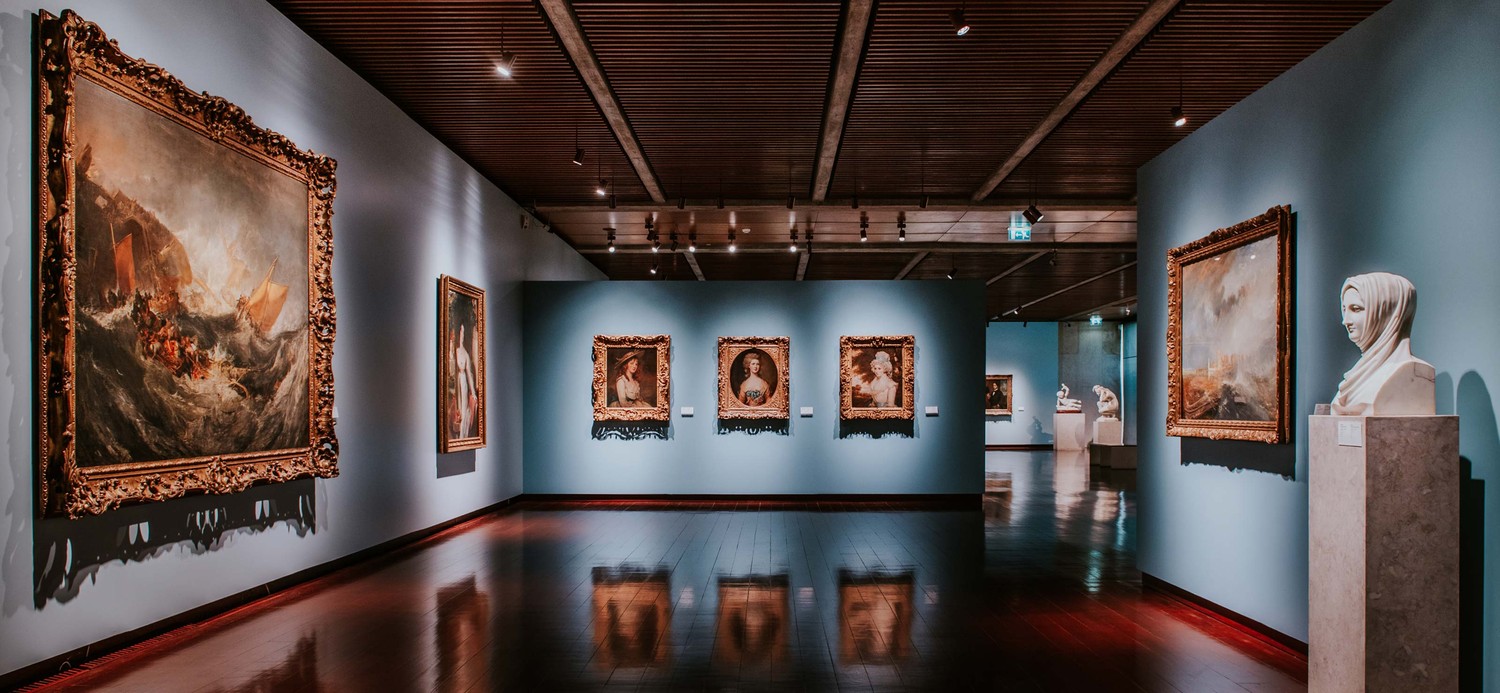
The architecture of the Calouste Gulbenkian Foundation complex, completed in 1969, reflects a deliberate harmony between built form and the natural landscape. Designed by Ruy Athouguia, Pedro Cid, and Alberto Pessoa, the low-slung buildings appear to emerge organically from the earth. This horizontal emphasis ensures the structures do not dominate the horizon but instead integrate into the environment. The site is a multifaceted complex, housing an auditorium, exhibition spaces, congress facilities, and a dedicated building for the museum and art library.
Surrounding these structures is Gulbenkian Park, a space designed by Ribeiro Telles. The layout of the park encourages a slow pace, inviting a sense of quietude through its winding paths and shaded areas. It functions as an extension of the museum, where the transition between indoor galleries and the outdoor greenery feels seamless. The presence of water features and strategically placed sculptures creates a sense of serenity that complements the contemplative atmosphere of the interior spaces.
The Diverse Art Collections
The collection spans a vast chronology, containing works from Ancient Egypt to the early 20th century. It brings together the arts of the Islamic World, China, and Japan alongside French decorative arts. Within these halls, one finds an impressive selection of Chinese porcelain and Japanese lacquerware, as well as pre-Columbian art. These objects exist as physical witnesses to different eras and geographies, placed in a dialogue that transcends a simple timeline.
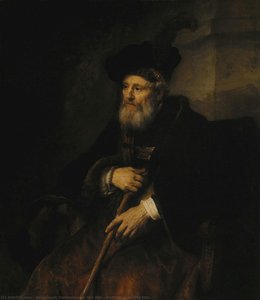
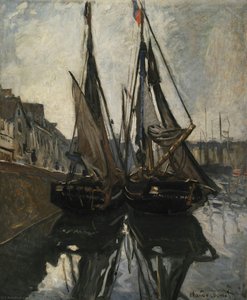
European painting is represented by a significant presence of works by Rembrandt, Monet, Rubens, Manet, Renoir, Degas, and Turner. These paintings offer a study of light and form across several centuries. Alongside these canvases, the foundation holds a significant portion of Armenian artifacts, providing a vital link to the founder's own roots. The collection also features one of the largest ensembles of works by René Lalique, specifically focusing on his jewelry and decorative designs.
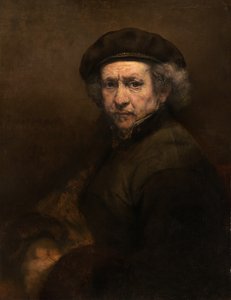
- Portrait of an Old Man, about 1645 - Rembrandt van Rijn
- Boats, 1868 - Claude Monet
- ‘Cockerel’ diadem, 1893 - René Jules Lalique
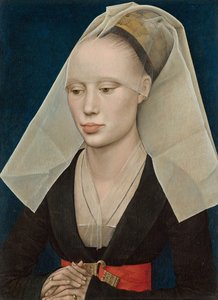
- St Joseph, 1445 - Rogier van der Weyden
Masterpieces of the Collection
The presence of the collection is felt through approximately 1,000 items on permanent exhibition, drawn from a total of 6,000 items held by the foundation. These works represent a significant gathering of European painting, where the brushstrokes of Rembrandt and Rubens meet the light of Monet and Renoir. One finds the quiet intensity of Degas and the atmospheric studies of Turner within these walls. The selection emphasizes quality and a specific eye for detail, allowing for a direct encounter with the evolution of Western art through the 19th century and beyond.
Beyond the canvas, the collection holds a significant assembly of René Lalique's jewellery. These pieces reflect the precision of Art Nouveau and the intricate craftsmanship of the early 20th century. The objects possess a physical weight and a clarity of form that demand close observation. Alongside these decorative arts, the museum houses works by Manet and other essential figures of the era, creating a dialogue between the fine arts and the decorative arts.
- Portrait of an Old Man, about 1645 - Rembrandt van Rijn
- Boats, 1868 - Claude Monet
- ‘Cockerel’ diadem, 1893 - René Jules Lalique
- Portrait of Madame Claude Monet, 1872 - Pierre-Auguste Renoir
- ‘Dragonfly-woman’ corsage ornament, 1897 - René Jules Lalique
Exhibitions and Scientific Research
The Foundation maintains a continuous presence through a public program of lectures and workshops. These activities accompany the regular temporary exhibitions that examine specific themes or movements, such as the influence of Islamic art on European painting or the evolution of portraiture. Such programming ensures the space remains a site of active intellectual exchange rather than a static repository.
Beyond the visual arts, the Foundation’s commitment to knowledge extends into the biological sciences. The Instituto Gulbenkian de Ciência, located in Oeiras, functions as an international centre for biological and biomedical research. Within this framework, the Gulbenkian Science Institute conducts research in diverse fields, ranging from cell biology to neuroscience. This dedication to scientific inquiry mirrors the founder's original intent to support both the arts and science through his legacy.
The institution also supports various cultural and academic initiatives. These include the Gulbenkian Orchestra and the Gulbenkian Prizes, which recognize excellence across multiple disciplines. The breadth of these activities reflects a multifaceted approach to human knowledge and creativity.
The Modern Art Centre
The Centro de Arte Moderna (CAM) was added to the foundation in 1983, established as Portugal's first museum of modern art. It occupies a distinct space within the complex, focusing on the evolution of 20th and 21st-century artistic thought. The holdings within this center number 12,000 pieces, tracing a narrative of Portuguese modernity alongside global trends. This collection captures the shifts from early 20th-century realism and abstraction toward the experimental nature of contemporary practice.
Following a €58 million redevelopment, the CAM re-opened in 2024. The space remains a site for the examination of national identity and social change through various media. Beyond traditional canvases, the center holds works in photography, video art, and immersive installations. The presence of Paula Rego is particularly significant here, with her paintings and sculptures offering a study of psychological depth and folklore.