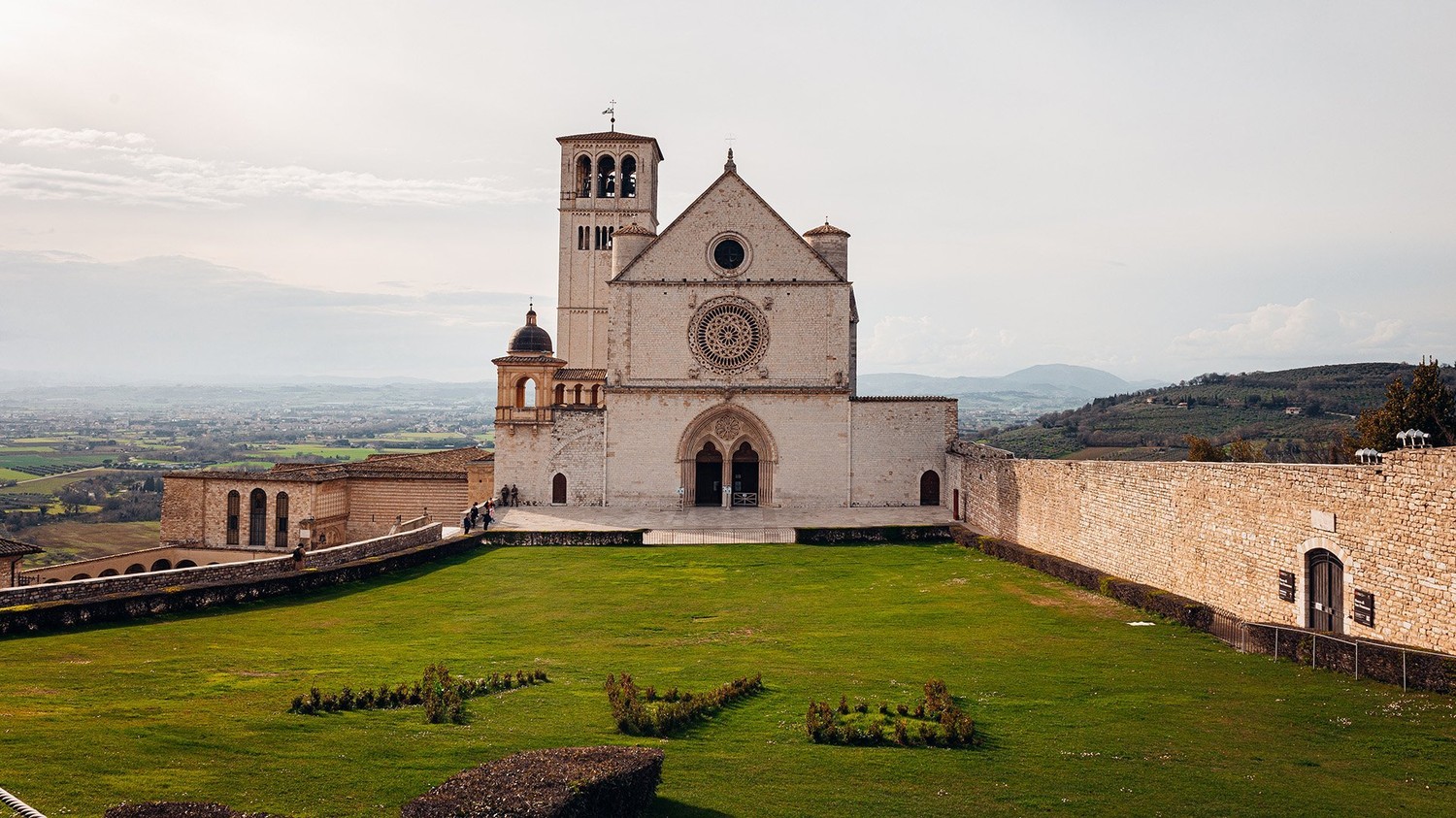


Origins and History of the Convent
The Convent of San Francesco is located in Assisi, Italy. Construction of the site began shortly after the canonization of Saint Francis in 1228. The landscape here underwent a significant transformation over the centuries. Previously known as the Hill of Hell, the area was renamed the Hill of Paradise following the spiritual legacy of Saint Francis.
The complex was established to serve as a memorial to the saint. It functions as the mother church of the Roman Catholic Order of Friars Minor Conventual. The site remains a central location for Christian pilgrimage. In 2000, UNESCO designated the Basilica and the surrounding areas as a World Heritage site, recognizing the historical importance of the location.
The Architecture of the Basilica
The Basilica of Saint Francis is a two-tiered structure that reflects a transition in architectural styles. It masterfully blends the solid, grounded character of Romanesque design with the soaring verticality of Gothic elements. This evolution in form is visible as one moves through the different levels of the complex. The Lower Church, or Basilica Inferiore, maintains a Romanesque character, providing an intimate space for contemplation. In contrast, the Upper Church is defined by its height and the light that enters through stained-glass windows.
Beneath these two levels lies the crypt. This hushed sanctuary houses the remains of Saint Francis, serving as the spiritual center of the site. The architectural arrangement directs the movement of those within the space, transitioning from the heavy, earthbound stone of the lower levels toward the light-filled volumes above. The construction of the complex began shortly after the saint's canonization in 1228.
The F.M. Perkins Collection
The F.M. Perkins Collection arrived at the Convent of San Francesco through the inheritance of Fred Mason-Perkins. This American art critic left 57 works to the Sacred Convent. The assembly provides a focused study of various Italian regional styles. It includes pieces from the Florentine, Sienese, Venetian, Veronese, and Emiliana schools.
The collection contains works by several significant figures of the late medieval and early Renaissance periods. Pietro Lorenzetti, Lorenzo Monaco, and Sassetta are represented among the holdings. The selection also features the work of Taddeo of Bartolo and Masolino from Panicale. These pieces contribute to the historical depth of the site's artistic holdings.
Masterpieces of the Collection
The artistic significance of the convent is anchored by the frescoes of Giotto di Bondone. In the North transept of the Lower Church, the 1311 work The Visitation offers a study in human emotion and spatial depth. This piece marks a departure from the flat, stylized conventions of the preceding era, introducing a sense of weight and three-dimensional presence to the sacred narrative.
Within the Upper Church, the Ascension of Christ continues this shift toward naturalism. The composition utilizes a rhythmic movement of figures and a layered atmosphere of blues and whites to depict the divine ascent. This work demonstrates a sophisticated understanding of volume, grounding the celestial event within a palpable, physical space.
Beyond the frescoes, the collection includes a Flemish piece of tapestry dating from 1479. This textile provides a different material perspective on the devotional traditions preserved within these walls.
The Museum of the Treasure
The collection of sacred medieval art and jewellery within the convent began in the middle of the XIII Century. This assembly was initiated by Gregory IX. The objects held here reflect the devotional practices and material traditions of the era in which the Franciscan order was established.
Among the primary liturgical objects is Guccio di Mannaia’s Chalice. The museum also preserves various sacred missals and breviaries. These manuscripts and metalworks provide a direct link to the liturgical life of the community. The items are kept within the sanctuary to maintain their historical and religious context.


